4th Grade Reading Worksheets: 10 Fun Ways to Build Strong Reading Skills
Reading takes a big leap in fourth grade. At this stage, children aren’t just learning how to read—they’re reading to understand, analyze, compare, and think critically. That’s why 4th grade reading worksheets are such valuable learning tools. They provide structured practice while keeping lessons engaging and manageable.
Whether you’re a parent helping with homework, a teacher planning classroom activities, or a homeschool educator searching for fresh resources, the right worksheets can make reading practice feel less like a chore and more like an adventure.
Let’s explore why these worksheets matter and which types can help fourth graders become more confident readers.
Why 4th Grade Reading Worksheets Matter
Fourth grade introduces students to more complex texts. Stories become longer. Vocabulary grows tougher. Questions require children to explain their thinking instead of simply finding one correct answer.
Good reading worksheets help students:
- Improve reading comprehension
- Learn new vocabulary naturally
- Develop critical thinking skills
- Strengthen grammar and language usage
- Practice identifying themes and main ideas
- Prepare for classroom assessments
And perhaps most importantly…they help build reading confidence through regular practice.
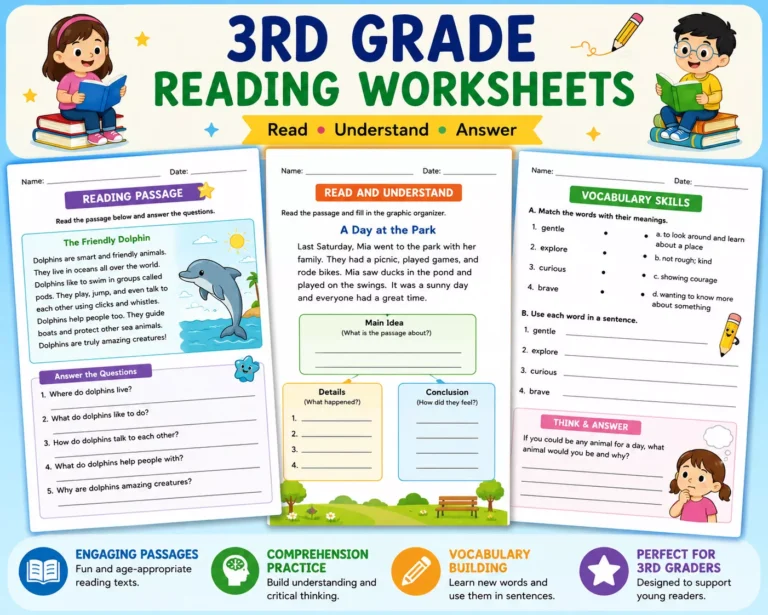
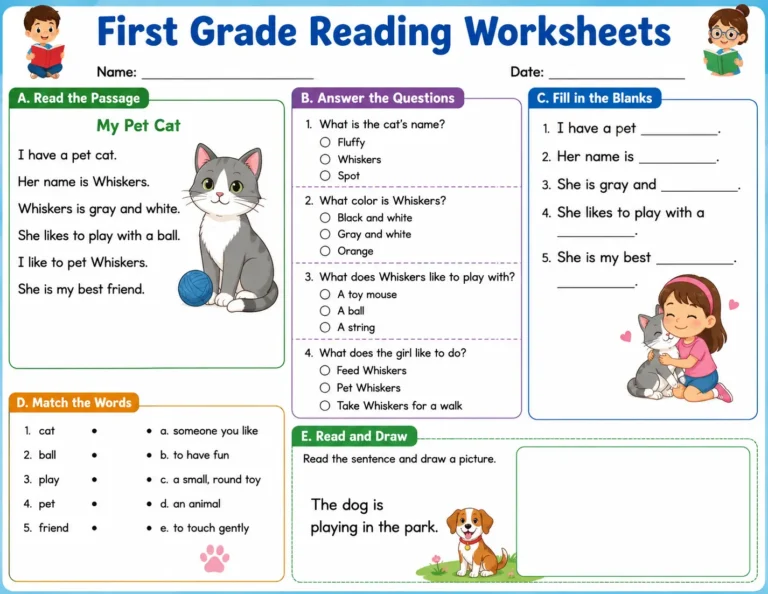
1. Reading Comprehension Passages
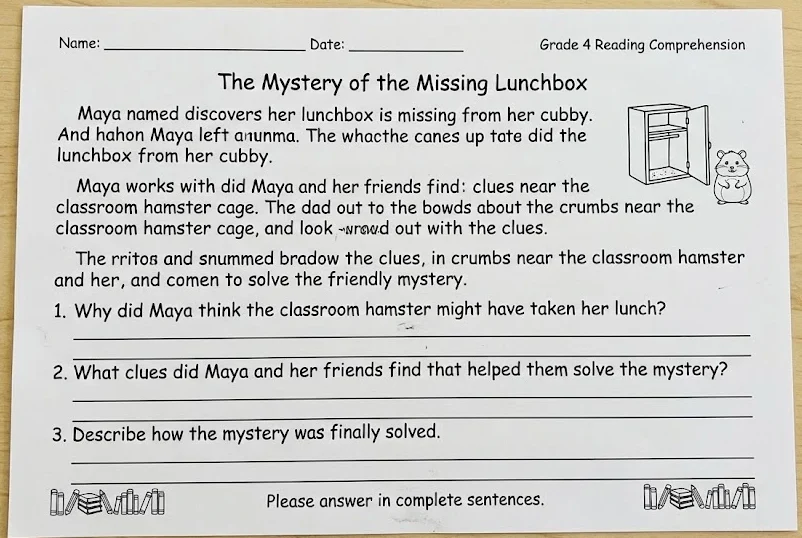
Reading comprehension worksheets remain the foundation of fourth-grade literacy.
These worksheets usually include an interesting passage followed by multiple-choice and open-ended questions. Students learn to identify important details, understand character motivations, recognize cause and effect, and summarize information.
Topics may include:
- Adventure stories
- Historical events
- Animal facts
- Science articles
- Fiction and fantasy
- Real-life biographies
The variety keeps learning fresh while exposing students to different writing styles.
2. Vocabulary Building Worksheets
Fourth graders encounter dozens of unfamiliar words every week.
Vocabulary worksheets help children understand word meanings through:
- Context clues
- Synonyms
- Antonyms
- Prefixes
- Suffixes
- Root words
Instead of memorizing definitions, students learn how words function inside sentences. That’s a skill they’ll use throughout school.
And honestly, it’s much more effective than simple word lists.
3. Main Idea and Supporting Details Activities
Finding the main idea sounds easy.
Actually…for many fourth graders, it’s one of the hardest reading skills to master.
These worksheets teach students to distinguish between essential information and extra details. They learn to summarize paragraphs, identify key points, and explain how supporting details strengthen the author’s message.
Over time, this skill improves comprehension across every school subject.
4. Inference Worksheets
Not every answer appears directly in the text.
Inference worksheets encourage students to “read between the lines.”
Children combine clues from the passage with their own background knowledge to figure out:
- Why a character acted a certain way
- What might happen next
- Hidden meanings
- Emotions
- Author intentions
This type of critical thinking prepares students for more advanced reading in middle school.
5. Context Clues Practice
Strong readers don’t stop every time they encounter an unfamiliar word.
Instead, they use surrounding sentences to figure out its meaning.
Context clue worksheets teach children to identify:
- Definition clues
- Example clues
- Contrast clues
- Synonym clues
- Restatement clues
It’s an incredibly practical skill because students become independent readers instead of relying on dictionaries all the time.
6. Sequencing Events Worksheets
Every good story follows a sequence.
Sequencing worksheets help students organize information logically by identifying:
- Beginning
- Middle
- End
- Cause and effect
- Timeline of events
These activities improve comprehension while strengthening writing skills at the same time.
Funny how one simple activity can support multiple learning goals.
7. Character Traits and Story Elements
Stories become richer in fourth grade.
Students begin analyzing characters instead of simply describing them.
Worksheets often ask children to identify:
- Character traits
- Setting
- Plot
- Conflict
- Resolution
- Theme
These exercises encourage deeper reading and better understanding of literature.
8. Nonfiction Reading Worksheets
Not every reading assignment involves fictional stories.
Fourth graders also explore informational texts covering science, geography, history, technology, and current events.
Nonfiction worksheets help students recognize:
- Facts versus opinions
- Text features
- Headings
- Captions
- Charts
- Diagrams
These skills become increasingly important as academic reading grows more challenging.
9. Grammar and Reading Integration
Many 4th grade reading worksheets combine grammar practice with comprehension activities.
Students may identify:
- Nouns
- Verbs
- Adjectives
- Pronouns
- Compound sentences
- Punctuation
Learning grammar within reading passages feels much more natural than isolated grammar drills.
And yes, students often remember the concepts better this way.
10. Reading Response Worksheets
Reading isn’t just about answering questions.
It’s also about thinking.
Reading response worksheets encourage students to express opinions, make predictions, compare characters, and connect stories to their own experiences.
Some prompts include:
- What surprised you?
- Which character would you like to meet?
- What lesson did the story teach?
- How would you change the ending?
- What would you do differently?
These activities develop both reading comprehension and writing skills.
Tips for Using 4th Grade Reading Worksheets
Worksheets work best when they’re part of a balanced reading routine.
Here are a few simple ideas:
- Read together before completing activities.
- Discuss unfamiliar vocabulary.
- Encourage students to explain their answers.
- Mix fiction and nonfiction passages.
- Practice consistently rather than completing many worksheets at once.
- Celebrate improvement, not just correct answers.
Even fifteen to twenty minutes of focused reading practice each day can make a noticeable difference over several months.
What Makes a Great Reading Worksheet?
Not every worksheet is equally effective.
The best resources include:
- Age-appropriate reading passages
- Clear instructions
- Challenging but manageable questions
- Colorful layouts when possible
- Multiple reading skills in one activity
- Opportunities for critical thinking
A good worksheet shouldn’t feel repetitive. Instead, it should keep students curious and motivated to continue reading.
Benefits Beyond the Classroom
Reading worksheets aren’t only useful for school assignments.
Families often use them during:
- Summer learning
- Weekend review
- Homeschool lessons
- Tutoring sessions
- Holiday breaks
- After-school enrichment
Regular practice helps prevent learning loss and keeps reading skills sharp all year long.
Even reluctant readers often become more engaged when worksheets include interesting stories, puzzles, or interactive activities.
Final Thoughts
Choosing the right 4th grade reading worksheets can have a lasting impact on a child’s literacy journey. From comprehension passages and vocabulary exercises to inference activities and nonfiction texts, these resources build the skills students need to become thoughtful, independent readers.
The secret isn’t finding the hardest worksheets. It’s finding engaging ones that challenge students without overwhelming them. Little by little, page by page, children develop stronger comprehension, richer vocabulary, and greater confidence.
Reading is a lifelong skill, and fourth grade is one of the most important stages in that journey. With consistent practice, encouraging support, and high-quality worksheets, every child can continue growing into a capable and enthusiastic reader.