3rd Grade Reading Worksheets: 10 Fun Ways to Build Strong Reading Skills
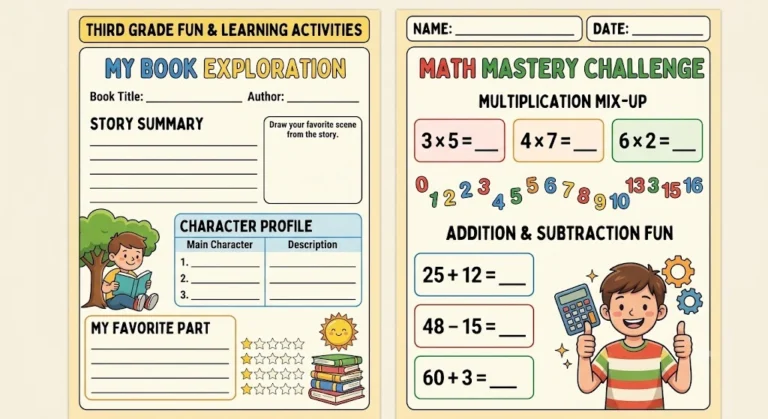
Reading is one of the biggest milestones for third graders. At this stage, children move beyond simply recognizing words—they begin reading to understand, analyze, and think critically about what they read. That’s exactly why 3rd grade reading worksheets have become such a valuable learning tool for parents, teachers, and homeschool families.
The best worksheets don’t feel like extra homework. They turn reading practice into enjoyable activities that improve comprehension, vocabulary, grammar, fluency, and confidence. And honestly… that’s what every child needs.
If you’re looking for engaging ways to help a third grader become a stronger reader, this guide covers everything you need to know.
Why 3rd Grade Reading Worksheets Matter
Third grade is often called the “bridge year” in reading education.
Children stop focusing mainly on learning how to read and begin reading to learn new information. Science, social studies, math—even everyday instructions—depend on strong reading skills.
Well-designed 3rd grade reading worksheets help students:
- Improve reading comprehension
- Learn new vocabulary naturally
- Practice identifying the main idea
- Build reading fluency
- Strengthen grammar and sentence structure
- Develop critical thinking skills
- Gain confidence while reading independently
And perhaps the biggest benefit? Regular worksheet practice creates consistent reading habits without overwhelming young learners.
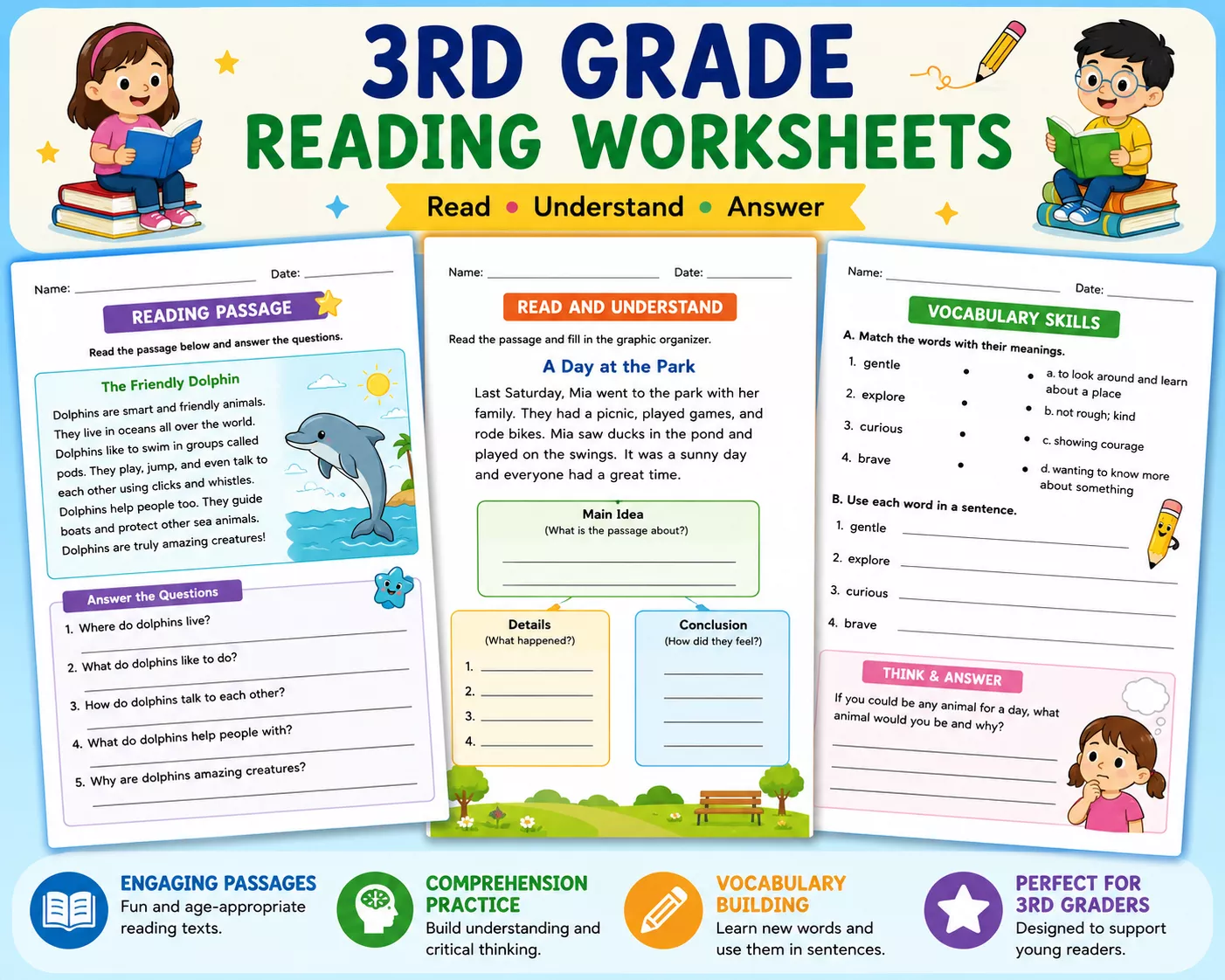
1. Reading Comprehension Worksheets
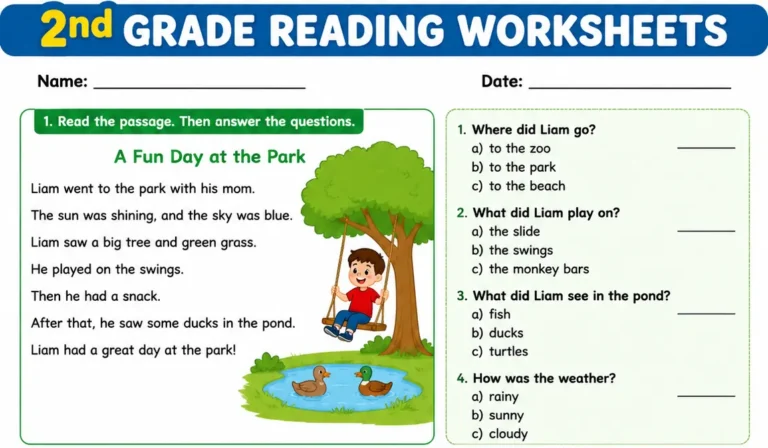
Reading comprehension worksheets are the foundation of third-grade literacy.
Students read a short story, nonfiction article, or informational passage before answering questions about what they’ve read.
Common activities include:
- Multiple-choice questions
- Short written responses
- True or false questions
- Sequencing events
- Identifying characters
- Finding supporting details
These worksheets teach children to slow down and actually understand the text instead of rushing through it.
2. Main Idea and Supporting Details Activities
Many third graders can read a story.
Finding the main idea? That’s a different challenge.
Worksheets focused on this skill encourage students to:
- Identify the central message
- Recognize supporting facts
- Separate important information from minor details
- Summarize paragraphs
Once children master this skill, reading becomes much easier across every school subject.
3. Vocabulary Building Worksheets
A larger vocabulary makes reading smoother.
Instead of stopping every few sentences to ask what a word means, students begin recognizing words automatically.
Vocabulary worksheets often include:
- Matching definitions
- Synonyms and antonyms
- Context clues
- Word families
- Prefixes and suffixes
- Multiple-meaning words
And the nice thing is that these activities don’t usually feel like memorization. They’re interactive and often connected to interesting reading passages.
4. Reading Fluency Practice
Fluent readers sound natural.
They don’t pause after every word.
Reading fluency worksheets combine repeated reading with short passages that help children improve:
- Speed
- Accuracy
- Expression
- Confidence
Some worksheets even include timing activities that let students measure their progress week after week.
Kids love seeing those improvements.
5. Fiction Story Worksheets
Stories capture children’s attention.
That’s why fiction worksheets remain one of the most popular types of 3rd grade reading worksheets.
Students may explore:
- Fairy tales
- Adventure stories
- Mystery stories
- Animal stories
- Fantasy
- Historical fiction
After reading, they’ll answer questions about:
- Characters
- Setting
- Plot
- Conflict
- Theme
- Predictions
Learning feels a lot easier when the story is actually fun.
6. Nonfiction Reading Worksheets
Not every child enjoys fictional stories.
Some are fascinated by animals, space, weather, sports, or inventions.
Nonfiction worksheets introduce real-world topics while teaching students how informational texts are organized.
Children practice identifying:
- Facts versus opinions
- Text features
- Headings
- Captions
- Diagrams
- Cause and effect
These activities also prepare students for higher-grade academic reading.
7. Context Clues Worksheets
Nobody knows every word.
Good readers figure out unfamiliar words by using surrounding sentences.
Context clue worksheets teach children how to:
- Infer meanings
- Use examples
- Recognize comparisons
- Analyze sentence structure
- Predict word definitions
It’s a skill they’ll use throughout school—and long after.
8. Inference and Critical Thinking Activities
One of the biggest reading upgrades happens when students begin reading “between the lines.”
Inference worksheets ask questions that aren’t directly answered in the passage.
Instead, students combine clues with what they already know.
For example:
- Why did the character look nervous?
- What will probably happen next?
- How is the character feeling?
- Why did the author include this detail?
These activities strengthen analytical thinking while making reading much more engaging.
9. Grammar and Reading Integration
Reading and grammar work together.
Many worksheets combine short reading passages with grammar practice, helping students reinforce both skills at once.
Activities may include:
- Identifying nouns
- Finding verbs
- Correcting punctuation
- Capitalization practice
- Sentence editing
- Choosing correct verb tenses
Instead of practicing grammar in isolation, students learn it through meaningful reading.
10. Seasonal and Holiday Reading Worksheets
Let’s be honest.
Kids are often more excited to complete worksheets when the theme matches the season.
Popular options include:
- Halloween reading passages
- Thanksgiving stories
- Christmas reading activities
- Spring worksheets
- Summer reading practice
- Back-to-school reading pages
- Earth Day activities
Changing themes throughout the year keeps learning fresh and prevents boredom.
Tips for Choosing the Best 3rd Grade Reading Worksheets
Not every worksheet is equally helpful.
Here are a few things to look for before printing or downloading resources:
Age-Appropriate Reading Level
The text should challenge students without becoming frustrating.
If every paragraph contains several unfamiliar words, the worksheet may be too difficult.
Engaging Topics
Children stay motivated when reading about subjects they actually enjoy.
Look for worksheets featuring:
- Animals
- Nature
- Space
- Sports
- History
- Science
- Funny stories
- Adventures
Interest often matters just as much as reading level.
Variety of Question Types
The best worksheets include a mix of:
- Multiple choice
- Fill-in-the-blank
- Short answers
- Matching
- Drawing conclusions
- Writing responses
This keeps students actively thinking rather than repeating the same task.
Clear Layout
A cluttered worksheet can overwhelm young readers.
Choose pages with:
- Large readable fonts
- Plenty of white space
- Clear instructions
- Simple formatting
- Helpful illustrations when appropriate
Sometimes less really is more.
How Often Should Third Graders Practice Reading?
Consistency beats marathon study sessions.
Around 15–20 minutes of reading practice several days each week is often enough to build strong literacy skills.
A simple routine could include:
- Reading a short passage
- Completing one worksheet
- Discussing the story
- Learning two or three new vocabulary words
This manageable schedule keeps reading enjoyable while steadily improving comprehension.
Final Thoughts
The right 3rd grade reading worksheets do much more than fill classroom time. They help children become thoughtful, confident readers who can understand, question, and enjoy what they read.
Whether you’re teaching in a classroom, homeschooling, or simply supporting learning at home, high-quality worksheets provide structured practice without making reading feel like a chore.
Remember, every child progresses at a different pace. Some will race through passages. Others will pause, reread, and think a little longer. That’s perfectly okay.
With engaging stories, meaningful comprehension questions, vocabulary practice, and plenty of encouragement, 3rd grade reading worksheets can turn everyday reading practice into lasting reading success.