Free Cursive Writing Worksheets: 10 Easy Ways to Improve Handwriting at Home
Learning cursive writing is one of those skills that never really goes out of style. Sure, most of us type on keyboards every day. But there’s still something satisfying about writing your name in smooth, flowing letters or finishing a handwritten note that actually looks neat.
That’s where free cursive writing worksheets come in.
Whether you’re a parent helping your child, a teacher preparing classroom activities, or even an adult looking to improve handwriting, printable worksheets make practice simple. No fancy supplies. No expensive workbooks. Just consistent practice—and yes, that’s what really makes the difference.
Let’s explore the best types of cursive worksheets and how to use them effectively.
1. Start with the Cursive Alphabet
Every great handwriting journey begins with the alphabet.
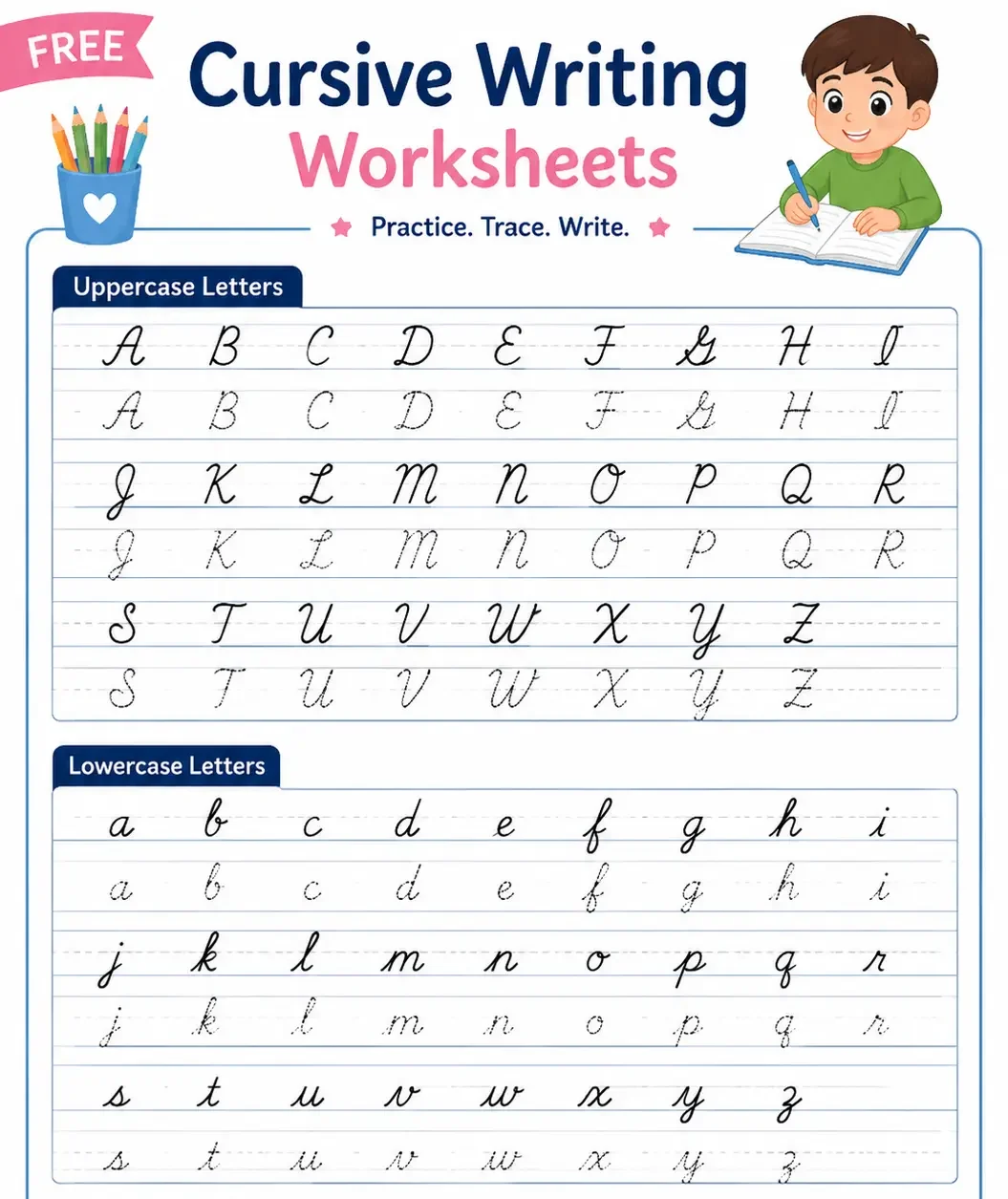
Printable cursive alphabet worksheets introduce both uppercase and lowercase letters in a clear, structured way. Instead of rushing into full words, learners build confidence by mastering individual letter shapes.
A good alphabet worksheet usually includes:
- Letter tracing guides
- Directional arrows
- Multiple practice lines
- Independent writing space
And don’t worry if the first few pages look messy. That’s completely normal. Cursive writing develops through repetition.
2. Practice Letter Connections
Writing individual letters is only half the story.
The real challenge comes when letters connect naturally. Some combinations feel effortless, while others… not so much.
That’s why many free cursive writing worksheets focus specifically on joining letters together.
Examples include:
- aa
- ch
- th
- ing
- ou
- st
Practicing these combinations helps improve writing speed and creates smoother handwriting over time.
3. Move on to Simple Words
Once letter connections feel comfortable, it’s time for complete words.
Word practice worksheets usually contain familiar vocabulary like:
- cat
- tree
- house
- friend
- family
- school
- happy
- summer
These everyday words allow learners to concentrate on letter flow rather than spelling.
And honestly… writing meaningful words feels much more rewarding than endlessly tracing random letters.
4. Build Confidence with Short Sentences
Sentence worksheets are where cursive starts becoming practical.
Instead of isolated words, students practice writing complete thoughts while improving spacing, punctuation, and consistency.
Some examples include:
- I love reading books.
- Practice makes progress.
- Today is a beautiful day.
- Kindness makes everyone smile.
These activities also strengthen reading comprehension and language skills at the same time.
A nice bonus.
5. Use Seasonal and Holiday Worksheets
Children stay motivated when handwriting feels fun.
Seasonal worksheets keep lessons fresh throughout the year by incorporating holidays and special occasions.
Popular themes include:
- Christmas
- Halloween
- Easter
- Valentine’s Day
- Thanksgiving
- Summer vacation
- Back to school
- Spring flowers
Instead of repeating the same exercises every week, themed worksheets make practice something children actually look forward to.
Well… most of the time.
6. Include Fun Activities and Games
Not every handwriting lesson needs to feel like homework.
Many printable cursive worksheets combine writing practice with engaging activities such as:
- Word searches
- Mazes
- Coloring pages
- Hidden messages
- Matching games
- Positive affirmations
- Copywork challenges
These worksheets keep younger learners focused while reinforcing handwriting skills in a relaxed way.
Sometimes kids don’t even realize they’re practicing.
7. Help Adults Improve Handwriting Too
Cursive worksheets aren’t just for elementary school students.
Many adults want cleaner handwriting for journals, planners, greeting cards, note-taking, or personal letters.
Adult-friendly worksheets often feature:
- Larger writing spaces
- Inspirational quotes
- Longer paragraphs
- Signature practice
- Daily handwriting exercises
It’s never too late to improve penmanship.
Even practicing for just ten minutes a day can make handwriting noticeably smoother after a few weeks.
8. Print as Many Copies as You Need
One of the biggest advantages of printable worksheets?
Unlimited practice.
Unlike traditional handwriting books, printable worksheets can be used repeatedly.
That means you can:
- Reprint difficult pages
- Practice favorite letters
- Build weekly handwriting packets
- Create customized homework
- Support multiple students
Teachers especially appreciate this flexibility during lesson planning.
And parents save money, too.
9. Create a Daily Handwriting Routine
Consistency beats long study sessions every single time.
Instead of spending an hour once a week, encourage learners to practice for 10–15 minutes each day.
A simple routine might look like this:
- Warm up with alphabet tracing
- Practice letter connections
- Write five vocabulary words
- Complete one sentence
- Review yesterday’s work
Small daily improvements quickly add up.
Before long, writing becomes faster, smoother, and much more natural.
10. Choose Worksheets That Match Skill Level
Not all learners progress at the same pace.
Some children master cursive quickly. Others need additional practice—and that’s perfectly okay.
Choose worksheets based on current ability rather than age.
For beginners:
- Letter tracing
- Alphabet practice
- Basic strokes
- Large writing guides
For intermediate learners:
- Word writing
- Sentence practice
- Paragraph copywork
- Speed exercises
For advanced learners:
- Creative writing
- Journal prompts
- Poems
- Inspirational passages
- Longer handwriting drills
Matching worksheet difficulty keeps learners motivated without creating unnecessary frustration.
Tips for Better Cursive Practice
If you want faster progress, keep these simple habits in mind:
- Sit with proper posture.
- Hold the pencil comfortably.
- Write slowly before increasing speed.
- Focus on neatness instead of perfection.
- Practice regularly.
- Celebrate improvement instead of mistakes.
And here’s something people often forget…
Handwriting isn’t about having flawless penmanship. It’s about creating writing that’s clear, readable, and comfortable.
That’s a much better goal.
Why Free Cursive Writing Worksheets Are Worth Using
Free printable worksheets make handwriting practice accessible for everyone.
They’re affordable, easy to download, and suitable for classrooms, homeschooling, tutoring sessions, or independent learning. Better still, they allow learners to progress at their own pace without pressure.
Whether someone is learning cursive for the very first time or simply refreshing an old skill, regular practice builds confidence. One page leads to another. One sentence becomes a paragraph. Eventually, handwriting starts to feel natural instead of forced.
That’s really the beauty of cursive.
Final Thoughts
Finding quality free cursive writing worksheets is one of the easiest ways to build stronger handwriting skills without spending money. From alphabet tracing and word practice to complete sentences and creative writing activities, printable worksheets provide a clear path for learners of every age.
The secret isn’t finding the “perfect” worksheet. It’s using the right worksheets consistently.
Print a few pages, grab a pencil, and practice a little each day. It won’t happen overnight—but after a few weeks, the difference becomes surprisingly obvious. Sometimes the smallest daily habits create the biggest improvements.