First Grade Reading Worksheets: 10 Fun Ways to Build Strong Reading Skills at Home
Learning to read is one of the biggest milestones in a child’s early education. It’s exciting… and sometimes a little overwhelming, too. One day your first grader is sounding out simple words, and the next they’re confidently reading short stories.
That’s exactly why first grade reading worksheets have become such a valuable learning tool.
The right worksheets don’t just keep children busy. They strengthen phonics, improve comprehension, build vocabulary, and make reading feel less like homework and more like an adventure. And honestly, that’s what every parent and teacher wants.
Whether you’re teaching at home, supporting classroom learning, or simply looking for extra practice after school, these printable activities can make a huge difference.
Let’s look at some of the best types of first grade reading worksheets—and why kids actually enjoy them.
1. Phonics Worksheets Build a Strong Foundation
Everything starts with phonics.
First graders are still learning how letters and sounds work together. Good phonics worksheets help children recognize patterns, blend sounds, and decode unfamiliar words with confidence.
Popular phonics activities include:
- Beginning sounds
- Ending sounds
- Long and short vowels
- Consonant blends
- Digraph practice
- Word families
Kids often enjoy matching pictures with words or coloring objects that begin with a specific letter. It feels like play… but they’re developing essential reading skills every single time.
2. Sight Word Worksheets Improve Reading Speed
Not every word follows phonics rules.
That’s why sight words matter so much.
Words like:
- the
- said
- where
- because
- come
- once
appear frequently in children’s books. Recognizing them instantly helps first graders read more smoothly without stopping to sound out every word.
Many first grade reading worksheets include fun exercises such as:
- Word searches
- Fill-in-the-blank activities
- Sentence writing
- Trace and write pages
- Cut-and-paste games
And yes, repetition really does help.
3. Reading Comprehension Worksheets Encourage Thinking
Reading isn’t just about saying words correctly.
Children also need to understand what they’re reading.
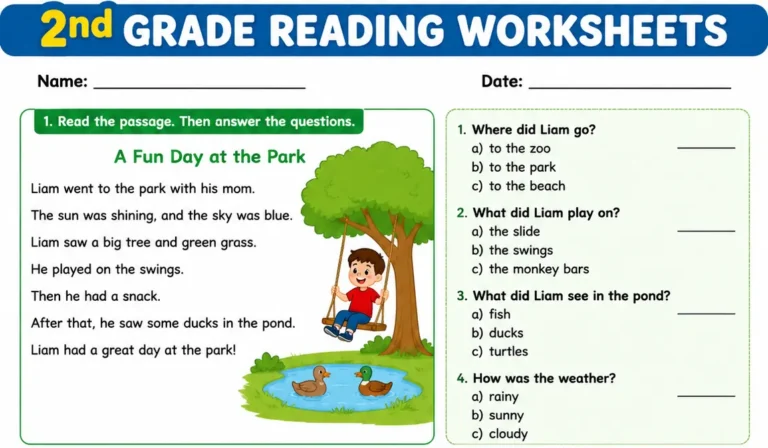
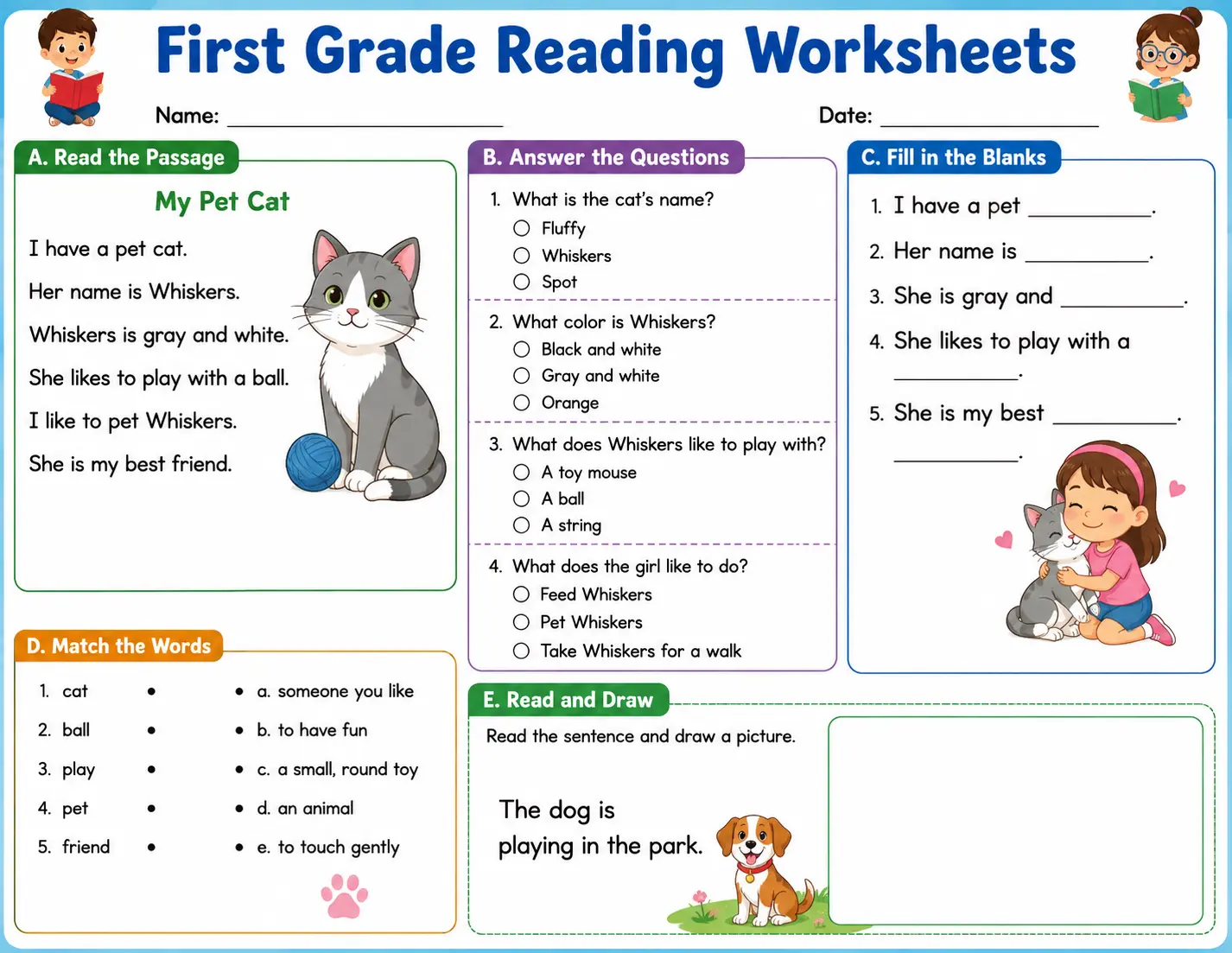
Reading comprehension worksheets usually include a short passage followed by simple questions that encourage students to think about the story.
Questions often ask:
- Who is the main character?
- What happened first?
- Where did the story take place?
- Why did something happen?
- What do you think will happen next?
These activities help children become active readers rather than simply reading words on a page.
4. Vocabulary Worksheets Expand Word Knowledge
Every new word a child learns becomes another building block for future reading success.
Vocabulary worksheets often introduce words through pictures, matching activities, and simple definitions that first graders can easily understand.
Fun activities include:
- Picture matching
- Opposite words
- Synonyms
- Category sorting
- Missing word exercises
Kids love learning new words when they’re presented as puzzles instead of tests.
5. Sentence Building Worksheets Improve Reading and Writing
Reading and writing naturally work together.
Sentence-building worksheets encourage children to arrange words into complete sentences while practicing grammar and punctuation.
For example:
“The dog runs.”
can become
“The happy dog runs quickly through the park.”
Simple exercises like these improve sentence structure, reading fluency, and confidence all at once.
And sometimes kids surprise you with wonderfully creative sentences.
6. Story Sequencing Worksheets Strengthen Logical Thinking
Stories have a beginning, middle, and end.
Sequencing worksheets teach children to recognize that order.
Students might cut out pictures and arrange them correctly or number events in the order they happened.
This skill supports:
- Reading comprehension
- Critical thinking
- Memory
- Storytelling abilities
It may seem like a small activity, but it develops important reading habits that continue throughout school.
7. Fluency Worksheets Build Reading Confidence
Some children know the words…
They just don’t read smoothly yet.
Fluency worksheets encourage repeated reading of short passages until children become comfortable reading naturally.
Common fluency activities include:
- Timed reading
- Partner reading
- Echo reading
- Read-and-repeat exercises
- Poetry practice
Confidence grows surprisingly fast once children hear themselves reading with expression.
8. Rhyming Worksheets Make Reading Fun
Rhyming is often one of the first signs that children are beginning to understand language patterns.
Worksheets featuring rhyming words help students recognize similar sounds while expanding their vocabulary.
Examples include:
- Cat — Hat
- Tree — Bee
- Ball — Tall
- Sun — Fun
These simple activities prepare young readers for more advanced phonics concepts later.
And they’re fun. Really fun.
9. Reading Games and Activity Worksheets Keep Kids Interested
Let’s be honest.
If every worksheet looks exactly the same, children lose interest quickly.
That’s why interactive worksheets work so well.
Look for activities such as:
- Crossword puzzles
- Word mazes
- Picture clues
- Coloring pages
- Hidden words
- Reading bingo
- Mini reading challenges
Changing the activity style keeps learning fresh without sacrificing educational value.
10. Printable Reading Worksheets Make Daily Practice Easy
Consistency matters more than long study sessions.
Just 15 to 20 minutes of reading practice each day can help first graders improve steadily throughout the school year.
Printable worksheets offer flexibility because they can be used:
- At home
- In classrooms
- During tutoring sessions
- While traveling
- As homework
- During summer break
Parents appreciate having ready-to-use activities, while teachers enjoy the variety they bring into lesson planning.
It’s a win for everyone.
Tips for Choosing the Best First Grade Reading Worksheets
Not every worksheet is equally effective.
When selecting reading materials, look for worksheets that:
- Match your child’s current reading level
- Include colorful illustrations
- Focus on one skill at a time
- Offer clear instructions
- Balance learning with fun
- Encourage independent thinking
- Include age-appropriate vocabulary
But don’t worry about finding “perfect” worksheets.
Children learn differently. Some love stories. Others enjoy puzzles. A little variety usually works best.
How Often Should First Graders Practice Reading?
Many educators recommend reading every day.
That doesn’t mean sitting at a desk for an hour.
Instead, try a routine like this:
- Read together for 10 minutes.
- Complete one worksheet.
- Talk about the story.
- Practice a few sight words.
- Finish with praise and encouragement.
That’s it.
Short, positive sessions are often much more effective than lengthy lessons.
Final Thoughts
Choosing high-quality first grade reading worksheets is one of the easiest ways to support your child’s reading journey.
From phonics and sight words to reading comprehension, vocabulary, fluency, and sentence building, these worksheets provide structured practice while keeping learning enjoyable. Small daily activities gradually add up, helping young readers become more confident, independent, and eager to explore new books.
The best part? Learning doesn’t have to feel like work. With engaging, age-appropriate worksheets and a little encouragement, first graders can develop strong reading habits that benefit them throughout their education. Whether you’re a parent, teacher, or homeschool educator, adding a variety of printable reading worksheets to your routine is a simple step that can make a lasting difference.