1st Grade Reading Worksheets: 15 Fun Ways to Build Strong Reading Skills at Home
Learning to read is one of the biggest milestones in a child’s early education. And first grade is where everything starts coming together. Kids begin recognizing sight words faster, reading simple stories, and understanding what they read instead of just sounding out words.
That’s exactly why 1st grade reading worksheets remain one of the most valuable learning tools for parents and teachers.
They’re simple. They’re flexible. And honestly… they work.
Whether you’re homeschooling, helping with homework after school, or searching for extra literacy practice during weekends, the right worksheets can make reading feel less like work and more like an adventure.
Let’s look at the best types of worksheets every first grader should use.
1. Phonics Worksheets Build a Strong Reading Foundation
Before children become fluent readers, they need to understand how letters and sounds work together.
Phonics worksheets help students:
- Match letters to sounds
- Blend simple words
- Practice consonants and vowels
- Learn digraphs like sh, ch, and th
- Identify beginning and ending sounds
Instead of memorizing words, children learn patterns they can apply to thousands of new words later.
That’s a skill they’ll use for years.
2. Sight Word Worksheets Improve Reading Speed
Some words simply can’t be sounded out easily.
Words like:
- the
- said
- where
- come
- because
These appear again and again in children’s books.
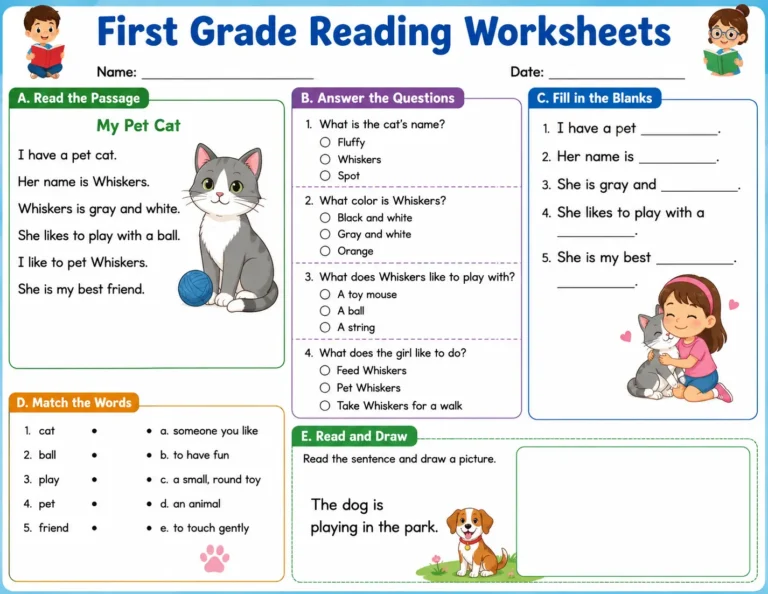
Good 1st grade reading worksheets include tracing, matching, coloring, sentence building, and word searches using high-frequency sight words.
The more children recognize these instantly, the smoother reading becomes.
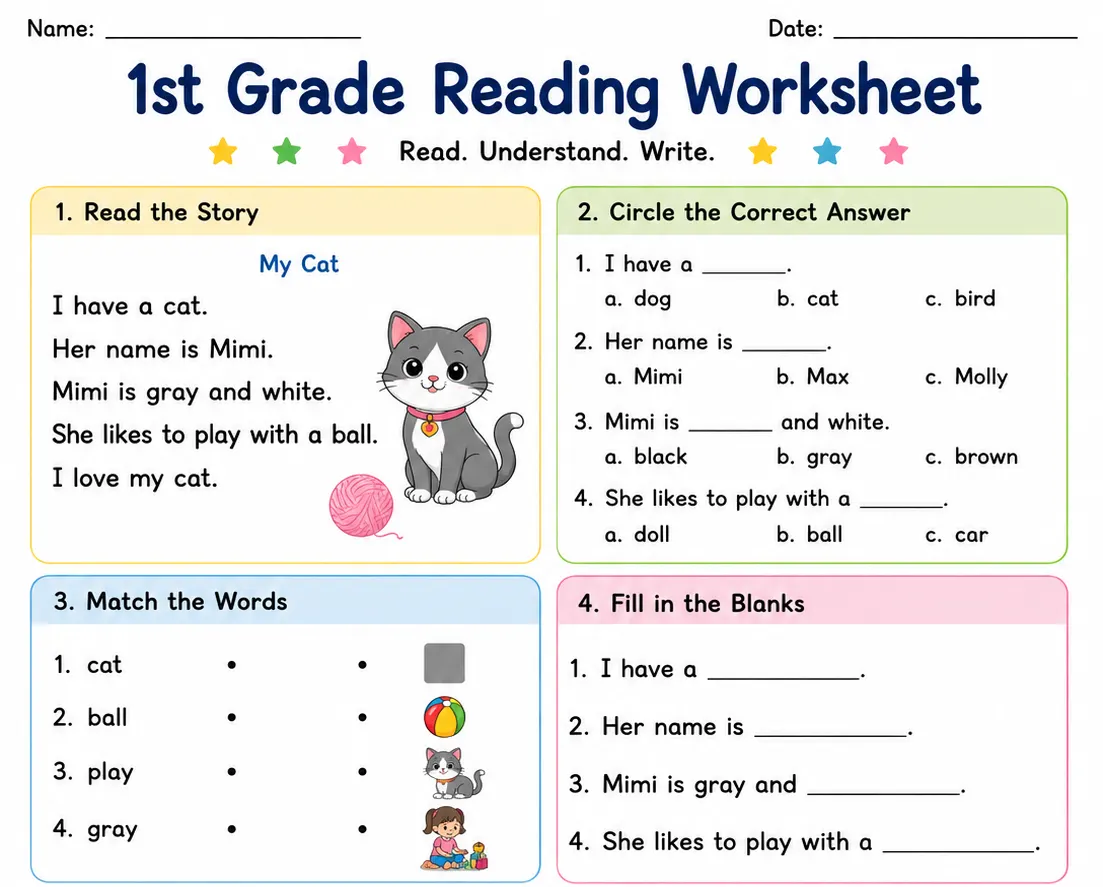
3. Reading Comprehension Worksheets Encourage Thinking
Reading isn’t just saying words correctly.
Kids also need to understand what they’re reading.
Comprehension worksheets often include:
- Short stories
- Simple questions
- Multiple-choice answers
- Drawing activities
- Sequencing events
- Finding the main idea
These activities encourage children to stop and think instead of rushing through the page.
And that’s where real reading begins.
4. Vocabulary Worksheets Expand Word Knowledge
Every new word opens another door.
Vocabulary worksheets introduce first graders to:
- Everyday nouns
- Action verbs
- Adjectives
- Opposites
- Synonyms
- Context clues
Children learn new words while using pictures, matching games, and short sentences.
It’s much more engaging than memorizing a list.
5. Sentence Building Worksheets Improve Grammar Naturally
Grammar lessons don’t have to be complicated.
Simple sentence-building worksheets teach children how sentences work by asking them to:
- Arrange words correctly
- Add punctuation
- Capitalize the first letter
- Complete unfinished sentences
Little by little, writing and reading improve together.
That’s the beauty of integrated learning.
6. Reading Fluency Worksheets Build Confidence
Some children know every word.
But they still read slowly.
Fluency worksheets encourage repeated reading through:
- Short passages
- Timed practice
- Rhyming poems
- Mini stories
- Reader’s theater scripts
Repeated exposure increases speed, accuracy, and expression.
Eventually, reading sounds natural instead of forced.
7. Rhyming Worksheets Strengthen Phonemic Awareness
Rhyming might seem like a simple game.
Actually, it’s one of the strongest predictors of early reading success.
Worksheets may ask children to:
- Match rhyming words
- Circle words with similar endings
- Complete rhyming pairs
- Color matching sounds
Kids enjoy these activities because they feel playful rather than academic.
8. Story Sequencing Worksheets Improve Logical Thinking
Understanding story order helps children remember what they’ve read.
Sequencing worksheets usually include pictures or short paragraphs.
Students arrange events from:
- First
- Next
- Then
- Last
This strengthens both reading comprehension and storytelling skills.
Pretty useful… especially for young learners.
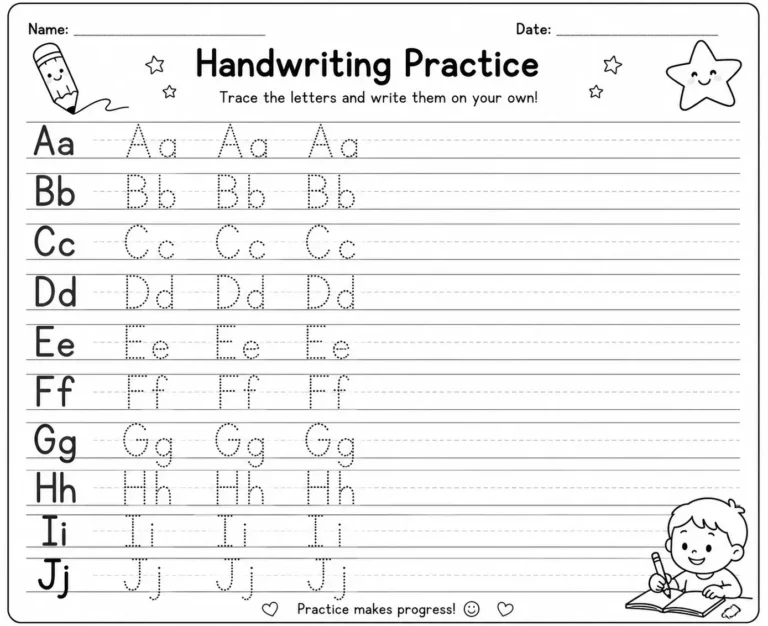
9. Alphabet Review Worksheets Reinforce Early Skills
Even in first grade, alphabet review still matters.
Children continue practicing:
- Uppercase letters
- Lowercase letters
- Alphabetical order
- Letter recognition
- Beginning sounds
Quick review worksheets help struggling readers catch up without feeling overwhelmed.
10. CVC Word Worksheets Build Decoding Skills
Consonant-Vowel-Consonant words are the stepping stones toward fluent reading.
Examples include:
- cat
- dog
- sun
- pig
- bed
These worksheets encourage children to blend sounds confidently before moving to longer words.
Simple… but incredibly effective.
11. Picture Reading Worksheets Keep Children Engaged
Young learners respond well to visuals.
Picture-based worksheets combine:
- Reading
- Matching
- Coloring
- Labeling
- Drawing
This multi-sensory approach keeps attention focused much longer than plain text.
Especially for active learners.
12. Short Story Worksheets Make Practice Enjoyable
Children love stories.
Even tiny ones.
Short reading passages with colorful illustrations help students:
- Predict outcomes
- Identify characters
- Answer questions
- Retell stories
- Practice new vocabulary
Reading becomes enjoyable instead of repetitive.
And that’s the goal.
13. Seasonal Reading Worksheets Add Variety
Routine can become boring.
Seasonal worksheets keep learning fresh throughout the year.
Popular themes include:
- Spring
- Summer
- Fall
- Winter
- Halloween
- Thanksgiving
- Christmas
- Earth Day
Children stay interested because every worksheet feels new.
14. Reading Games Hidden Inside Worksheets
The best worksheets don’t always look like worksheets.
Many include:
- Crossword puzzles
- Mazes
- Word hunts
- Bingo cards
- Matching games
- Color-by-word activities
Kids think they’re playing.
Meanwhile, they’re practicing literacy without realizing it.
That’s a win for everyone.
15. Printable Worksheets Offer Flexible Learning Anywhere
One major advantage of printable worksheets?
Convenience.
Parents can print exactly what their child needs.
Teachers can create literacy centers.
Tutors can customize lessons.
And children can practice without screens for a while—which, honestly, many families appreciate.
Sometimes paper still wins.
How to Choose the Best 1st Grade Reading Worksheets
Not every worksheet is equally effective.
Look for resources that include:
- Age-appropriate reading levels
- Clear instructions
- Large, readable fonts
- Fun illustrations
- Interactive activities
- Progressive difficulty
- Answer keys for parents or teachers
Avoid worksheets that overwhelm children with too much text.
Short, focused practice usually produces better results.
Tips for Using Reading Worksheets Successfully
Worksheets work best when they’re only one part of reading practice.
Try these ideas:
- Read aloud together every day.
- Practice for 15–20 minutes instead of long sessions.
- Celebrate small improvements.
- Let children choose some reading materials.
- Mix worksheets with books and educational games.
- Review mistakes gently rather than rushing ahead.
Learning should feel encouraging—not stressful.
Common Mistakes Parents Should Avoid
Even great worksheets won’t help if they’re used the wrong way.
Try not to:
- Expect perfection immediately
- Use worksheets for hours every day
- Skip reading actual books
- Focus only on speed
- Compare children with classmates
Every child develops reading skills at a different pace.
Patience matters just as much as practice.
Benefits of Using 1st Grade Reading Worksheets
When used consistently, these worksheets help children:
- Improve phonics skills
- Expand vocabulary
- Increase reading confidence
- Develop comprehension
- Read more fluently
- Strengthen spelling
- Build stronger writing skills
- Enjoy independent reading
These benefits continue long after first grade ends.
Final Thoughts
The best 1st grade reading worksheets do much more than fill a few minutes of study time. They help children build confidence, recognize patterns, understand stories, and enjoy reading one page at a time.
Whether you’re a parent, teacher, or homeschool educator, choosing engaging, age-appropriate worksheets can make a noticeable difference in a child’s literacy journey. Keep sessions short, mix different worksheet types, and celebrate every small success along the way.
Reading is a lifelong skill. And with the right practice, first graders can develop strong habits that support learning for years to come
How often should first graders use reading worksheets?
About 15 to 20 minutes a day is usually enough when combined with reading books aloud and independent reading practice.
Are printable reading worksheets effective?
Yes. Printable worksheets provide structured practice in phonics, vocabulary, comprehension, and fluency while allowing parents and teachers to customize learning.
What skills do 1st grade reading worksheets teach?
They commonly focus on phonics, sight words, reading comprehension, vocabulary, sentence structure, fluency, spelling, and critical thinking.
Can reading worksheets replace books?
No. Worksheets should support reading instruction, but children should also spend time reading storybooks, picture books, and beginner readers every day.
What makes a good reading worksheet?
A quality worksheet is age-appropriate, visually engaging, easy to follow, and focused on one or two literacy skills at a time.