Second Grade Worksheets: 10 Fun Ways to Build Skills and Confidence Every Day
Learning in second grade is exciting. Kids begin reading longer stories, solving bigger math problems, writing complete paragraphs, and exploring science with growing curiosity. It’s a year full of progress—but it also comes with new challenges.
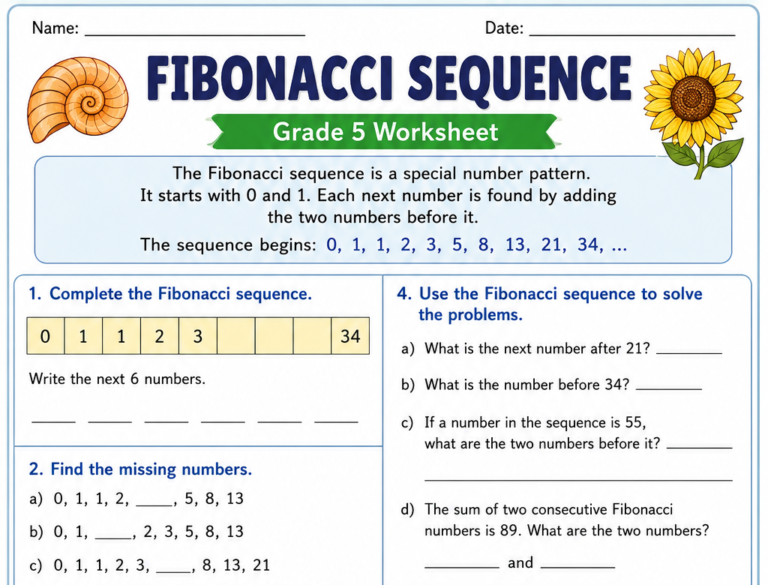
That’s where second grade worksheets become incredibly useful.
A well-designed worksheet isn’t just another piece of paper. It gives children a chance to practice at their own pace, strengthen important concepts, and build confidence one activity at a time. Whether you’re a parent helping with homework or a teacher planning classroom lessons, the right worksheets can make learning feel enjoyable instead of overwhelming.
Let’s look at the different types of second grade worksheets that truly make a difference.
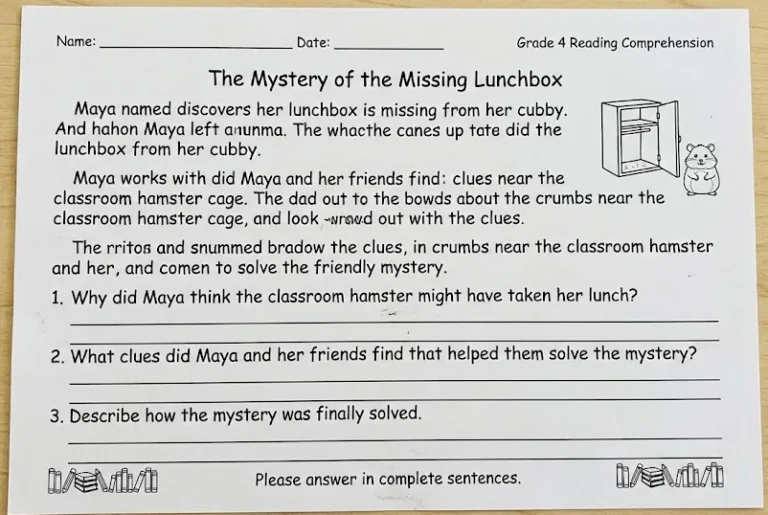
1. Reading Comprehension Worksheets Improve Understanding
By second grade, children move beyond simply recognizing words. They begin understanding characters, settings, main ideas, and story details.
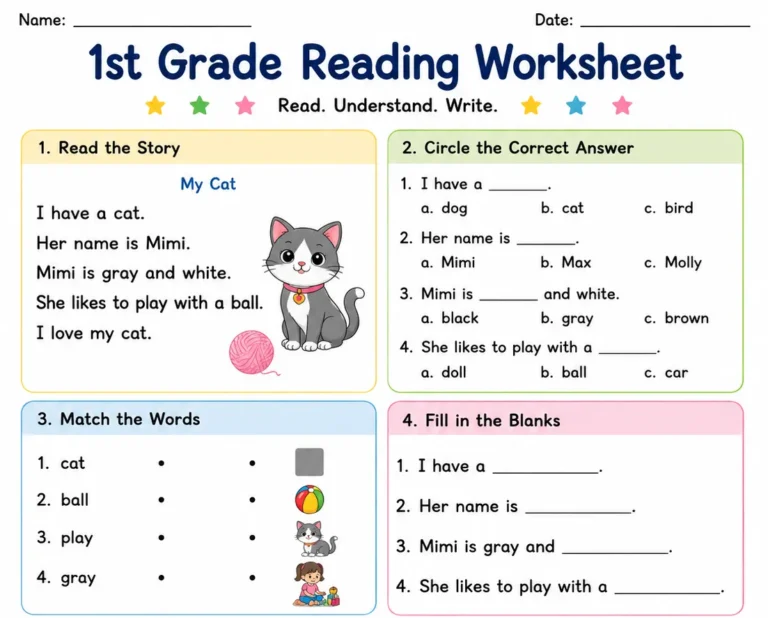
Reading comprehension worksheets help students:
- Answer questions about short passages
- Identify the main idea
- Practice sequencing events
- Learn new vocabulary
- Make predictions while reading
Some worksheets include colorful illustrations, while others feature fun stories about animals, space, or everyday adventures. And honestly… kids tend to stay engaged when the topics are interesting.
Even ten to fifteen minutes of reading practice each day can improve comprehension over time.
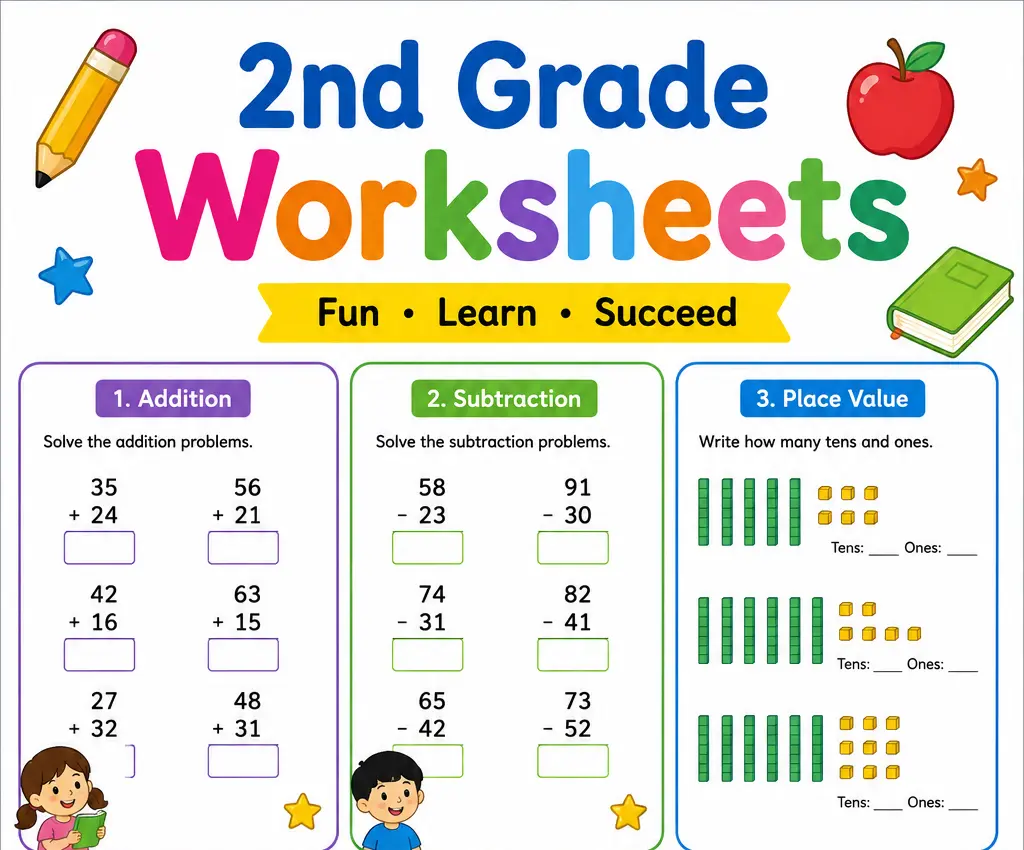
2. Math Worksheets Build Strong Problem-Solving Skills
Math becomes much more exciting during second grade.
Students begin learning:
- Two-digit addition
- Two-digit subtraction
- Place value
- Time
- Money
- Measurement
- Basic multiplication concepts
- Simple word problems
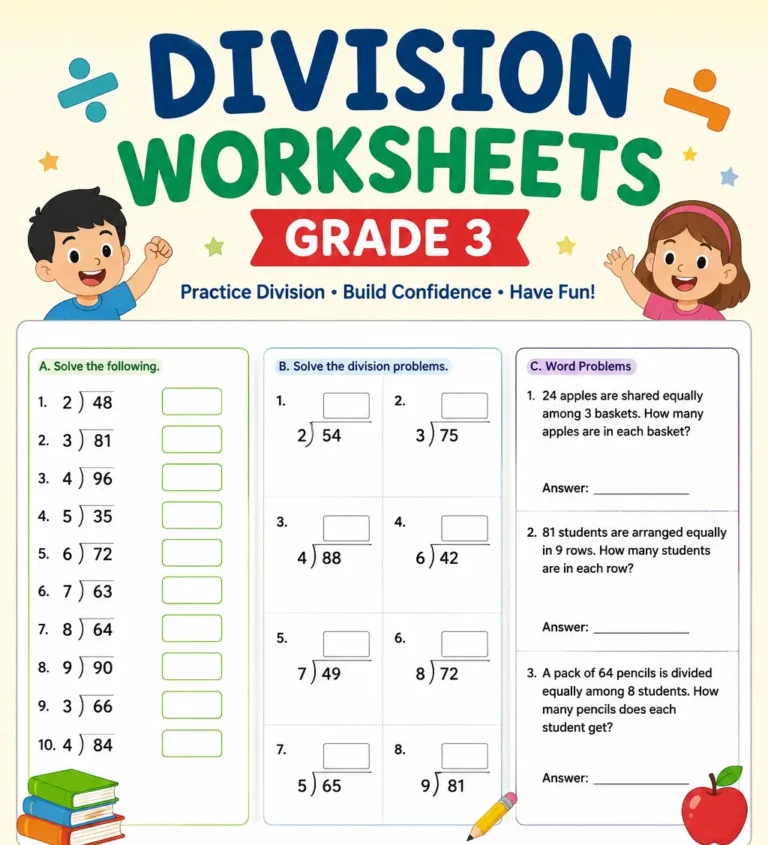
Using second grade worksheets for math allows children to practice these skills repeatedly without feeling pressured.
Many worksheets turn numbers into games or puzzles. Instead of solving twenty identical questions, students might complete mazes, color-by-number activities, or mystery pictures after answering correctly.
That small change keeps motivation surprisingly high.
3. Writing Worksheets Encourage Creativity
Writing is no longer just copying sentences.
Second graders start expressing their own thoughts.
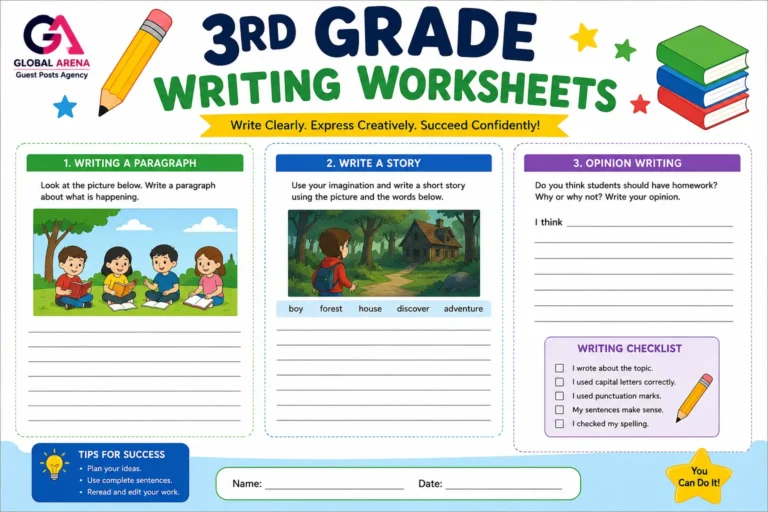
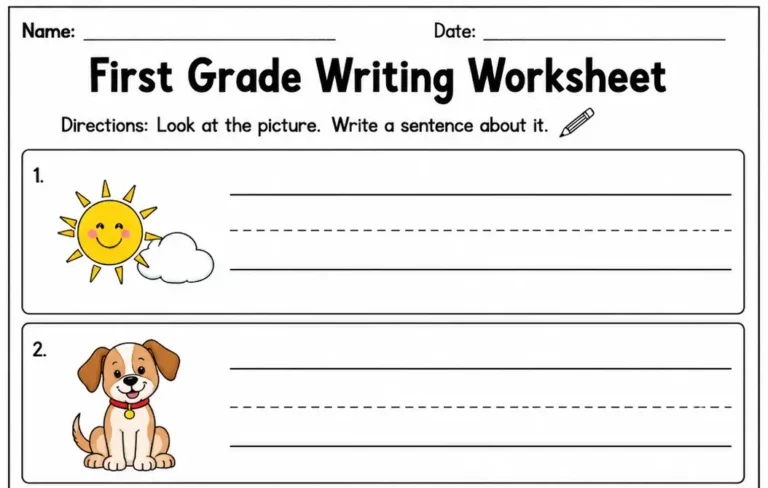
Writing worksheets often include:
- Story starters
- Journal prompts
- Opinion writing
- Descriptive paragraphs
- Friendly letters
- Creative storytelling
Some children naturally enjoy writing.
Others need a little encouragement.
A simple prompt like “If I could spend one day with a dinosaur…” can spark pages of creative ideas.
And that’s exactly what good worksheets are supposed to do.
4. Grammar and Language Worksheets Strengthen Communication
Grammar may not sound exciting at first.
But learning grammar helps children become stronger readers and writers.
Popular grammar worksheets cover:
- Nouns
- Verbs
- Adjectives
- Pronouns
- Punctuation
- Capitalization
- Complete sentences
- Singular and plural nouns
Instead of long grammar lectures, worksheets allow students to practice through matching activities, fill-in-the-blanks, and short exercises.
Little by little… those skills stick.
5. Spelling and Vocabulary Worksheets Expand Word Knowledge
A growing vocabulary improves every subject.
Children who know more words usually understand books better and communicate their ideas more clearly.
Vocabulary worksheets often include:
- Word searches
- Crossword puzzles
- Matching definitions
- Synonyms
- Antonyms
- Context clues
- Alphabetical order
Spelling worksheets also reinforce weekly spelling lists through fun activities instead of endless copying.
That makes practice feel much less repetitive.
6. Science Worksheets Make Learning Hands-On
Science sparks curiosity.
Second graders enjoy discovering how plants grow, animals survive, weather changes, and the human body works.
Science worksheets may include:
- Life cycles
- Seasons
- Habitats
- Plants
- Animals
- Earth science
- Simple experiments
- Observation activities
Many worksheets encourage students to draw conclusions or record observations.
It’s simple learning—but very effective.
7. Social Studies Worksheets Introduce the World
Children begin understanding communities and the world around them.
Social studies worksheets commonly focus on:
- Maps
- Continents
- Community helpers
- National symbols
- Holidays
- Cultures
- Basic history
- Geography
These activities help students connect classroom lessons with everyday life.
And that’s when learning becomes meaningful.
8. Seasonal Worksheets Keep Learning Fun
One reason children lose interest is repetition.
Seasonal worksheets solve that problem.
Teachers and parents often use activities based on:
- Spring
- Summer
- Fall
- Winter
- Halloween
- Thanksgiving
- Christmas
- Valentine’s Day
- Earth Day
Instead of ordinary math problems, children solve pumpkin equations or snowflake puzzles.
Same learning.
Much more excitement.
9. Critical Thinking Worksheets Develop Independent Learners
Not every worksheet needs simple right-or-wrong answers.
Critical thinking activities encourage students to:
- Solve puzzles
- Find patterns
- Compare ideas
- Analyze pictures
- Complete logic challenges
- Make predictions
These exercises strengthen reasoning skills that students use across every subject.
Sometimes the best learning happens when there’s more than one possible answer.
10. Printable Worksheets Make Daily Practice Easy
One of the biggest advantages of printable second grade worksheets is convenience.
Parents can quickly print extra practice before a test.
Teachers can prepare classroom activities in minutes.
Homeschool families can build an entire week’s lesson plan using printable resources.
Many worksheets are organized by subject, making it easy to choose exactly what a child needs.
No complicated setup.
Just print… and start learning.
How to Choose High-Quality Second Grade Worksheets
Not every worksheet offers the same value.
The best resources usually include:
- Clear instructions
- Age-appropriate questions
- Colorful illustrations
- Engaging activities
- Gradually increasing difficulty
- Answer keys when needed
Avoid worksheets filled with endless repetitive questions.
Children learn better when activities stay fresh and interesting.
Sometimes fewer questions with better design produce stronger learning than pages of repetitive drills.
Tips for Using Worksheets at Home
Worksheets work best when they’re part of a balanced learning routine.
Try these simple ideas:
- Practice for 15–20 minutes each day.
- Mix reading, math, and writing throughout the week.
- Praise effort instead of perfect scores.
- Take short breaks when attention starts fading.
- Let children explain their answers aloud.
- Celebrate small improvements.
Learning doesn’t have to feel like homework every single time.
Sometimes it feels like solving puzzles together.
Sometimes it feels like telling stories.
Both count.
Final Thoughts
The best second grade worksheets do much more than provide extra practice. They help children strengthen core academic skills while building confidence, independence, and curiosity.
Whether you’re focusing on reading comprehension, math facts, grammar, science, writing, or critical thinking, worksheets offer structured learning in a simple, engaging format that fits both classrooms and home learning environments.
Every child learns differently. Some race through activities. Others take a little longer—and that’s perfectly okay.
The goal isn’t finishing the worksheet as quickly as possible.
The goal is helping children enjoy learning, understand new concepts, and feel proud of the progress they make every single day. When worksheets are thoughtful, interactive, and age-appropriate, they become one of the most valuable learning tools a second grader can have.