4th Grade Writing Worksheets: 10 Fun Printables to Build Strong Writing Skills
Writing is one of the most valuable skills a child develops in elementary school. By fourth grade, students are expected to organize ideas, write detailed paragraphs, explain opinions, create stories, and use proper grammar with greater confidence. That’s a big step—and it can feel overwhelming without enough practice.
That’s exactly why 4th grade writing worksheets are such a helpful learning tool. They provide structured activities that make writing less intimidating and far more enjoyable. Instead of staring at a blank page, children get prompts, organizers, sentence starters, and creative exercises that guide them through the writing process.
Whether you’re a parent helping with homework, a homeschool educator, or a classroom teacher searching for engaging resources, these worksheets can make writing practice both productive and fun.
Let’s explore the best types of 4th grade writing worksheets and how they help young writers grow.
Why 4th Grade Writing Matters
Fourth grade is often when students move beyond simply writing sentences. They’re expected to communicate ideas clearly and support them with details.
At this stage, children begin learning how to:
- Write organized paragraphs
- Develop introductions and conclusions
- Use descriptive vocabulary
- Support opinions with reasons
- Plan stories with a beginning, middle, and end
- Edit grammar and punctuation
- Revise their own writing
It’s a lot. But regular worksheet practice breaks these skills into manageable pieces.
And honestly, that’s what makes progress happen
1. Narrative Writing Worksheets
Every child loves telling stories.
Narrative writing worksheets encourage students to use imagination while practicing organization and descriptive language.
Common activities include:
- Finish the story prompts
- Picture-based storytelling
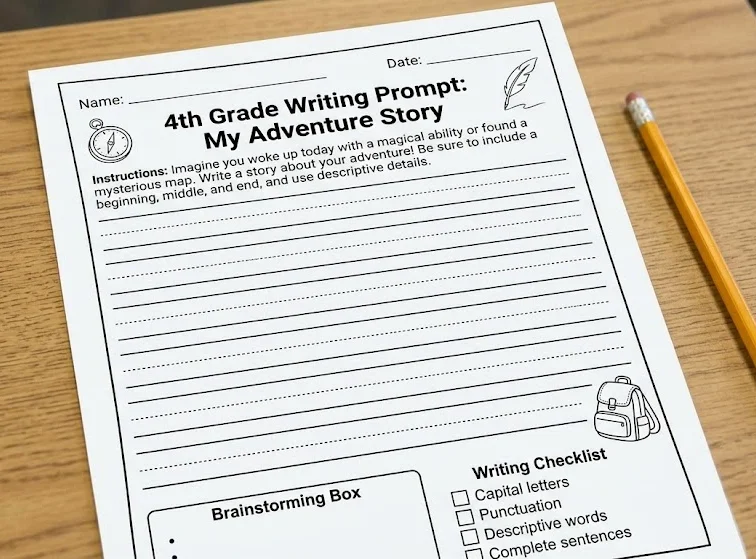
- Create your own adventure
- Personal experience writing
- Story sequencing
These worksheets teach students that every great story includes:
- Characters
- Setting
- Problem
- Solution
- Ending
The more they practice storytelling, the more naturally writing begins to flow.
2. Opinion Writing Worksheets
Fourth graders are full of opinions.
Whether they’re debating the best superhero or explaining why homework should be shorter, opinion writing gives them a chance to express themselves logically.
Opinion worksheets often include prompts like:
- Should school uniforms be required?
- What’s the best season?
- Which animal makes the best pet?
- Is reading better than watching TV?
Students learn how to:
- State an opinion
- Give supporting reasons
- Include examples
- Write a strong conclusion
These activities strengthen both writing and critical thinking.
3. Informational Writing Worksheets
Not every assignment is about imagination.
Informational writing teaches children how to explain facts clearly.
Worksheets may focus on topics such as:
- Animals
- Weather
- Space
- Famous inventors
- Natural disasters
- Healthy eating
Students practice:
- Research skills
- Organizing facts
- Writing topic sentences
- Using supporting details
- Summarizing information
This type of writing becomes especially important in upper elementary grades.
4. Paragraph Writing Worksheets
Many fourth graders know what they want to say…
They just don’t know how to organize it.
Paragraph worksheets solve that problem.
Activities often include:
- Topic sentence practice
- Supporting detail exercises
- Concluding sentence writing
- Rearranging mixed-up paragraphs
- Identifying missing details
Children quickly understand how every paragraph follows a simple structure.
That confidence carries into longer essays later.
5. Creative Writing Prompts
Sometimes kids just need an interesting idea.
Creative writing worksheets provide exciting prompts that spark imagination.
Examples include:
- If I could fly…
- A mysterious door appeared at school.
- I woke up as a superhero.
- My pet started talking.
- A day on another planet.
These prompts encourage students to:
- Expand vocabulary
- Build creativity
- Practice dialogue
- Improve descriptive writing
- Explore new ideas
And best of all, they rarely feel like homework.
6. Grammar and Editing Worksheets
Even talented writers make mistakes.
Editing worksheets help students identify and correct common writing errors.
Practice includes:
- Capitalization
- Punctuation
- Subject-verb agreement
- Run-on sentences
- Fragments
- Verb tense
- Spelling mistakes
Children also learn to proofread their own work before turning it in.
That’s an important habit they’ll use throughout school.
7. Vocabulary Building Worksheets
Better vocabulary leads to better writing.
Vocabulary worksheets introduce stronger word choices instead of repeating simple words like “good,” “nice,” or “fun.”
Activities often include:
- Synonyms
- Antonyms
- Context clues
- Multiple-meaning words
- Prefixes and suffixes
- Word matching
As vocabulary grows, writing naturally becomes richer and more engaging.
8. Descriptive Writing Worksheets
Good writers paint pictures with words.
Descriptive writing worksheets teach students how to use sensory details.
Children learn to describe:
- People
- Places
- Objects
- Animals
- Holidays
- Nature
Instead of writing:
The park was nice.
They begin writing:
The sunny park buzzed with laughter as colorful kites floated across the bright blue sky.
That’s a huge improvement.
9. Writing Process Worksheets
Writing doesn’t happen all at once.
Experienced writers follow a process, and fourth graders can learn it too.
Writing process worksheets cover:
- Brainstorming
- Graphic organizers
- First drafts
- Revising
- Editing
- Publishing
Breaking assignments into smaller steps makes large writing projects much less stressful.
And honestly, it helps students stay organized.
10. Fun Seasonal Writing Worksheets
Holiday-themed worksheets keep students interested throughout the year.
Popular themes include:
- Halloween
- Thanksgiving
- Christmas
- Valentine’s Day
- Easter
- Spring
- Summer
- Back to School
Children enjoy writing letters, stories, poems, and journal entries based on seasonal events.
Learning feels more exciting when it connects to celebrations they already love.
Benefits of Using 4th Grade Writing Worksheets
Regular worksheet practice offers far more than improved handwriting.
Students also develop:
- Better sentence structure
- Improved reading comprehension
- Stronger vocabulary
- Greater confidence
- Critical thinking skills
- Creativity
- Organization
- Grammar accuracy
- Editing habits
- Independent learning skills
Small improvements each week eventually lead to confident writers.
Sometimes slowly…
But steadily.
Tips for Parents and Teachers
Worksheets work best when they’re part of a consistent routine.
Here are a few simple ideas:
- Practice writing 15–20 minutes each day.
- Encourage neat handwriting and complete sentences.
- Celebrate creative ideas instead of focusing only on mistakes.
- Ask children to read their writing aloud.
- Use colorful pens or stickers for encouragement.
- Let students choose prompts that interest them.
- Mix serious assignments with fun creative activities.
Writing becomes much less stressful when children enjoy the process.
What Makes a Great 4th Grade Writing Worksheet?
The best worksheets are clear, engaging, and age-appropriate.
Look for resources that include:
- Easy-to-follow instructions
- Interesting writing prompts
- Graphic organizers
- Editing practice
- Vocabulary support
- Creative challenges
- Space for brainstorming
- Revision checklists
A balanced worksheet doesn’t simply ask students to write.
It teaches them how to write.
Final Thoughts
The best 4th grade writing worksheets help students become thoughtful, confident, and creative writers one activity at a time. Whether children are crafting imaginative stories, sharing opinions, explaining facts, or polishing grammar, consistent practice builds skills that extend far beyond the classroom.
Remember, great writing doesn’t appear overnight. It develops through small, regular efforts—one paragraph, one story, and one worksheet at a time. By choosing engaging and well-designed writing activities, parents and teachers can inspire fourth graders to enjoy the writing process while strengthening essential language skills that will benefit them throughout their education.