Handwriting Worksheets Printable: 10 Easy Ways to Improve Writing
Learning to write neatly takes time. Some children pick it up quickly, while others need a little extra practice—and that’s perfectly normal. The good news? Using handwriting worksheets printable at home or in the classroom makes practice simple, fun, and far less stressful.
Instead of asking children to fill page after page of repetitive exercises, printable handwriting worksheets turn writing into short, manageable activities. A few minutes every day can make a surprising difference. Better pencil control. Cleaner letter formation. More confidence.
If you’re a parent, teacher, or homeschool educator looking for effective handwriting resources, this guide covers everything you need to know.
Why Handwriting Still Matters
In today’s digital world, children spend plenty of time using tablets, phones, and computers. But handwriting hasn’t lost its importance.
Writing by hand helps children:
- Strengthen fine motor skills
- Improve hand-eye coordination
- Build letter recognition
- Develop spelling skills
- Increase reading comprehension
- Improve memory and focus
- Gain confidence in school assignments
And honestly… neat handwriting often makes schoolwork easier for teachers to read, which never hurts.
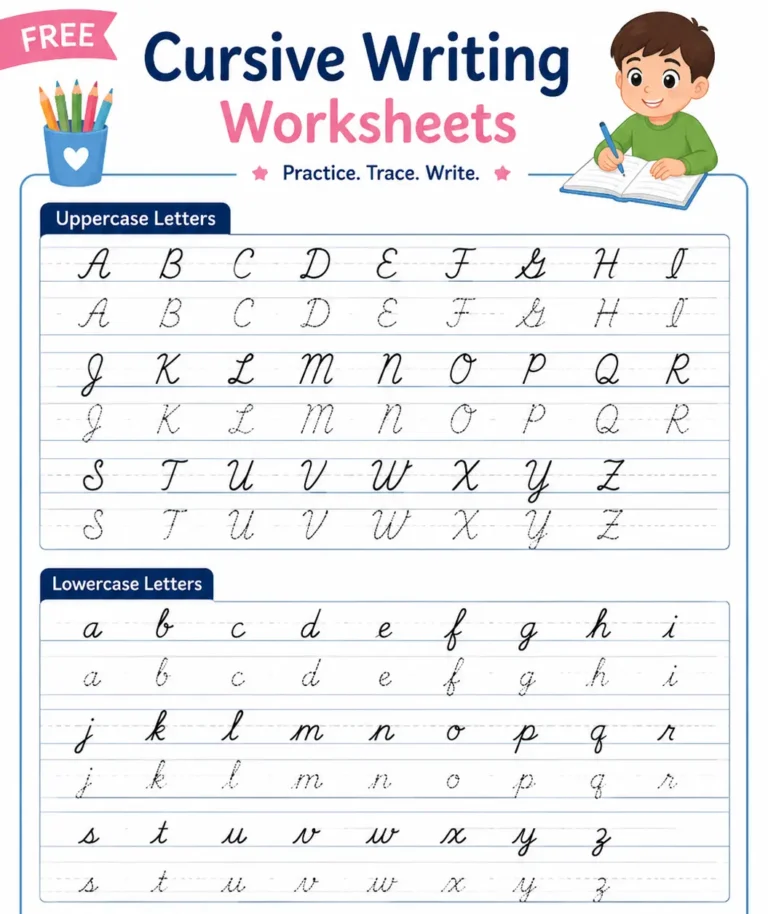
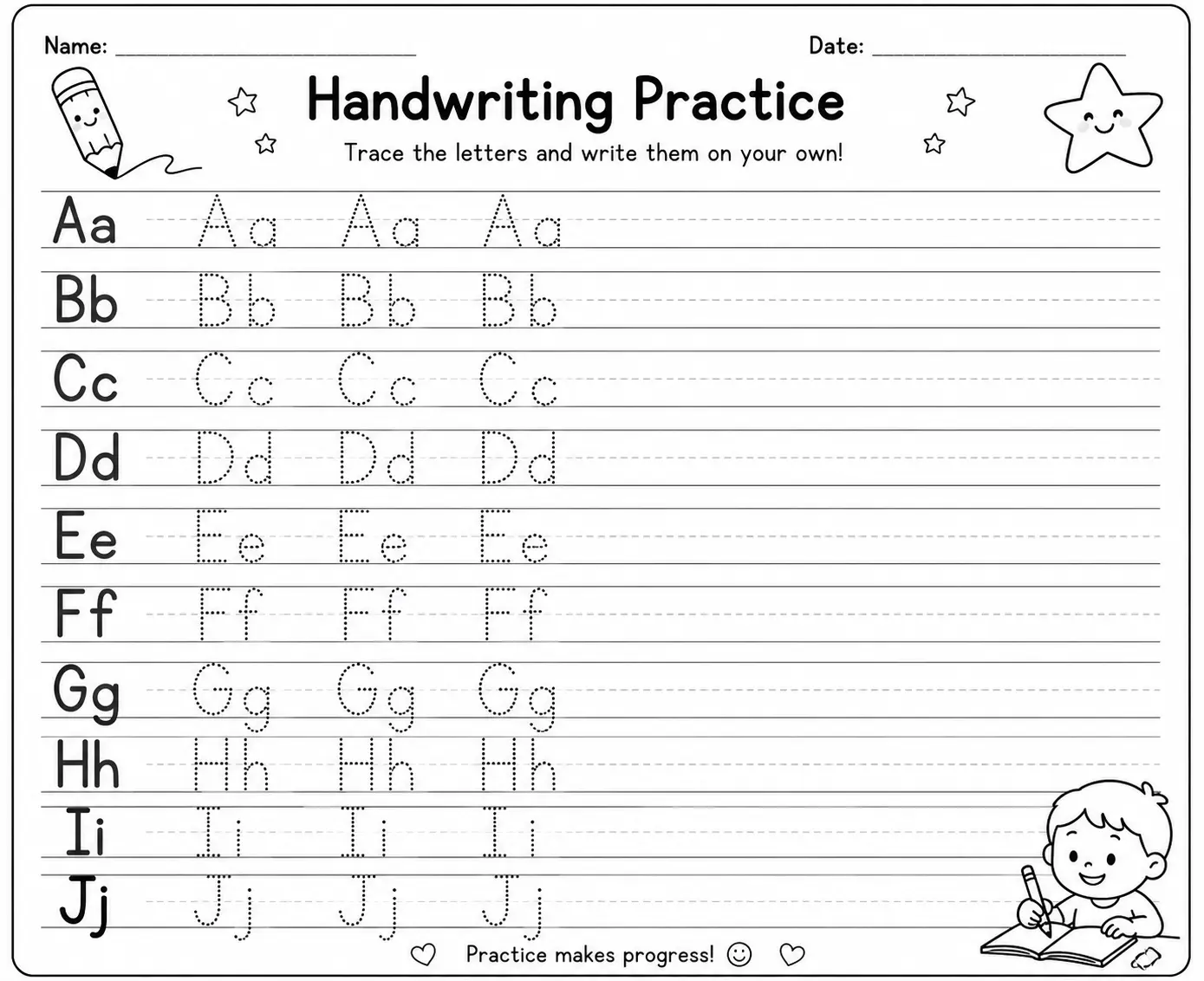
1. Start with Letter Tracing Worksheets
Every handwriting journey begins with tracing.
Printable tracing worksheets allow children to follow dotted letters before attempting to write independently. This helps build muscle memory and teaches the correct stroke order.
Many handwriting worksheets printable include:
- Uppercase alphabet
- Lowercase alphabet
- Directional arrows
- Starting points
- Repetition lines
The more children practice proper formation from the beginning, the fewer bad habits they’ll develop later.
2. Practice One Letter at a Time
It can be tempting to introduce the whole alphabet at once.
But slowing down actually works better.
Focus on just one or two letters each day. Children can trace them, copy them, and then try writing them without guidance.
For example:
- Monday: A and B
- Tuesday: C and D
- Wednesday: E and F
Small daily victories keep motivation high.
And kids usually enjoy seeing how much cleaner today’s letters look compared to last week’s.
3. Use Name Writing Worksheets
One of the first words children want to write is their own name.
Personalized handwriting worksheets printable featuring a child’s name create instant excitement.
These worksheets help children learn:
- Capital letters
- Letter spacing
- Consistent sizing
- Correct sequencing
Writing their own name repeatedly feels meaningful instead of repetitive.
That’s a big win.
4. Move Beyond Letters with Word Practice
Once individual letters become familiar, it’s time to combine them into simple words.
Printable worksheets often include:
- Family words
- Sight words
- Animal names
- Colors
- Numbers
- Everyday objects
Words help children understand how letters connect naturally during writing.
They also reinforce vocabulary and reading skills at the same time.
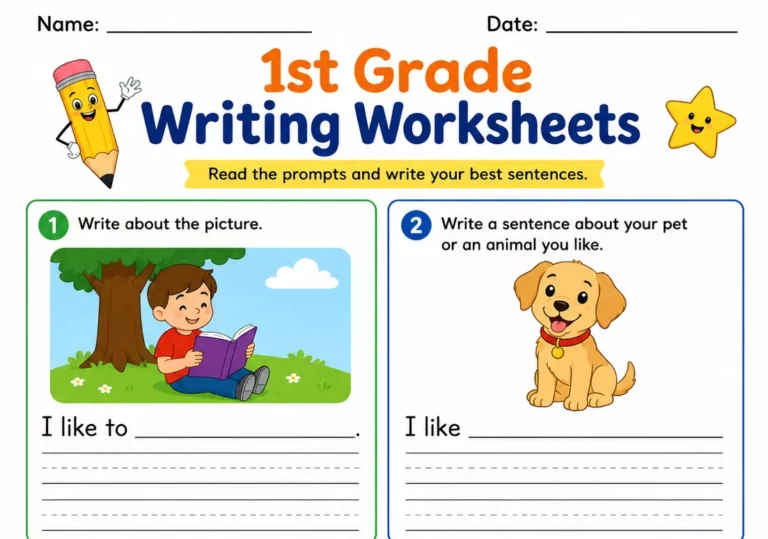
5. Include Sentence Writing Practice
Single words are only the beginning.
Children gradually become more confident when writing short sentences.
Examples include:
- I like cats.
- The sun is hot.
- We play outside.
- My dog is happy.
Sentence worksheets encourage:
- Proper spacing
- Capitalization
- Punctuation
- Smooth writing flow
And yes… they’ll probably make funny mistakes along the way. That’s part of learning.
6. Make Practice Short and Consistent
Long handwriting sessions usually don’t work.
Young learners lose focus quickly.
Instead, aim for:
- 10–15 minutes daily
- One worksheet at a time
- Plenty of praise
- Regular breaks
Consistency matters far more than marathon practice sessions.
A little every day beats an hour once a week.
7. Add Fun Activities to Printable Worksheets
Handwriting doesn’t need to feel like homework.
Many printable worksheets include playful activities like:
- Trace and color
- Alphabet mazes
- Letter matching
- Word searches
- Connect the dots
- Copy funny sentences
- Draw and label pictures
Children stay engaged when writing becomes part of a game.
And when they’re having fun, they rarely complain about practicing.
8. Choose Age-Appropriate Worksheets
Not every worksheet fits every child.
Preschool learners benefit from:
- Thick tracing lines
- Large letters
- Simple shapes
- Basic strokes
Kindergarten students often need:
- Alphabet tracing
- Name writing
- Short words
First and second graders usually enjoy:
- Sentences
- Paragraph copying
- Cursive introduction
- Creative writing prompts
Selecting worksheets that match a child’s skill level prevents frustration.
Too difficult? Confidence drops.
Too easy? They lose interest.
Finding the sweet spot makes all the difference.
9. Encourage Proper Pencil Grip and Posture
Even the best handwriting worksheets printable can’t fix poor writing habits if children hold their pencils incorrectly.
Remember these basics:
- Feet flat on the floor
- Back straight
- Paper slightly tilted
- Relaxed shoulders
- Three-finger pencil grip
Comfortable positioning reduces hand fatigue and improves writing control.
Sometimes a simple posture adjustment produces immediate improvements.
It’s surprising, really.
10. Celebrate Progress Instead of Perfection
Children notice encouragement.
Rather than pointing out every imperfect letter, celebrate improvements.
Say things like:
- “Your spacing looks much better today.”
- “I love how neat that word is.”
- “You’re getting faster every week.”
Positive feedback builds confidence.
And confident children usually practice more willingly.
Over time, handwriting becomes smoother without feeling forced.
Tips for Getting the Best Results from Printable Handwriting Worksheets
A few simple habits can make every worksheet more effective.
Try these ideas:
- Print on quality paper for smoother writing.
- Use pencils with good erasers.
- Keep practice sessions distraction-free.
- Review older worksheets occasionally.
- Save completed pages to show progress.
- Mix tracing with free writing.
- Allow children to decorate finished worksheets.
Watching improvement over several weeks is incredibly motivating.
Even children notice how much neater their writing becomes.
Common Handwriting Mistakes to Watch For
Every learner makes mistakes.
Some are completely normal.
Common issues include:
- Reversed letters
- Uneven spacing
- Inconsistent letter size
- Writing too lightly
- Pressing too hard
- Poor alignment
- Incorrect pencil grip
The key isn’t correcting everything at once.
Choose one skill to improve each week.
Slow progress is still progress.
Why Printable Worksheets Are So Popular
Parents and teachers love printable handwriting resources for good reason.
They’re:
- Affordable
- Easy to download
- Available instantly
- Reusable for multiple children
- Suitable for classrooms and homeschooling
- Flexible for different learning levels
Whether you need alphabet tracing or advanced sentence practice, printable worksheets provide a ready-to-use solution without complicated preparation.
And honestly… that’s a lifesaver on busy days.
Final Thoughts
Using handwriting worksheets printable is one of the simplest ways to help children build strong writing skills. Regular practice improves letter formation, boosts confidence, strengthens fine motor development, and prepares young learners for success in school.
The secret isn’t finding the “perfect” worksheet. It’s creating a routine that children actually enjoy. Ten minutes of focused practice, a little encouragement, and worksheets that match their ability can produce impressive results over time.
So print a few pages, sharpen those pencils, and let the learning begin. Small improvements today often become beautiful handwriting tomorrow—and that’s something every child can feel proud of.