Cursive Worksheets Printable: 10 Fun Ways to Improve Handwriting Skills
Learning cursive is one of those skills that never really goes out of style. Sure, most of us type on keyboards every day. But there’s still something satisfying about writing your name in beautiful cursive, sending a handwritten note, or simply improving fine motor skills.
That’s exactly why cursive worksheets printable resources remain popular among parents, teachers, homeschoolers, and even adults who want to improve their handwriting.
The best part? Printable worksheets let learners practice at their own pace. No subscriptions, no complicated software—just print, grab a pencil, and start writing.
If you’re looking for ways to make cursive practice more enjoyable, these ideas will help.
1. Start with Individual Letter Practice
Every cursive writer begins with the basics.
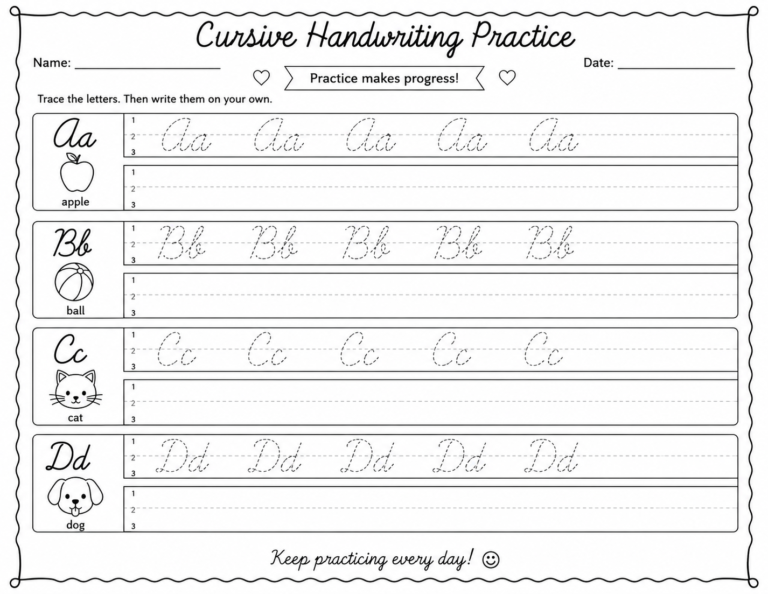
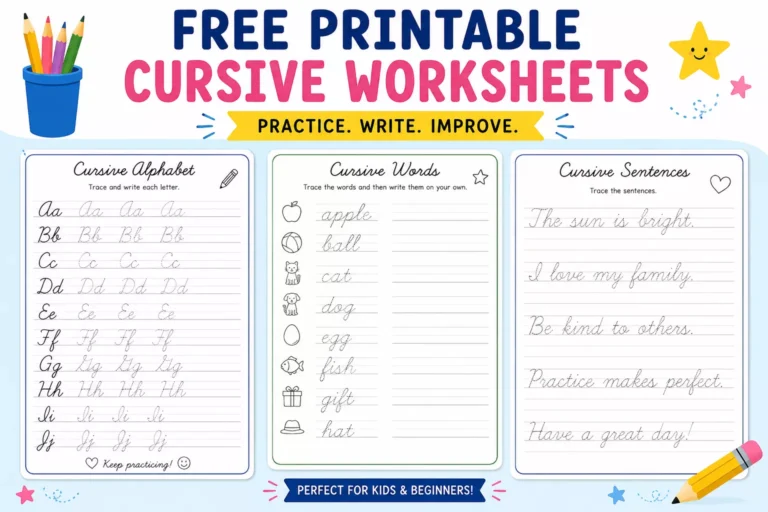
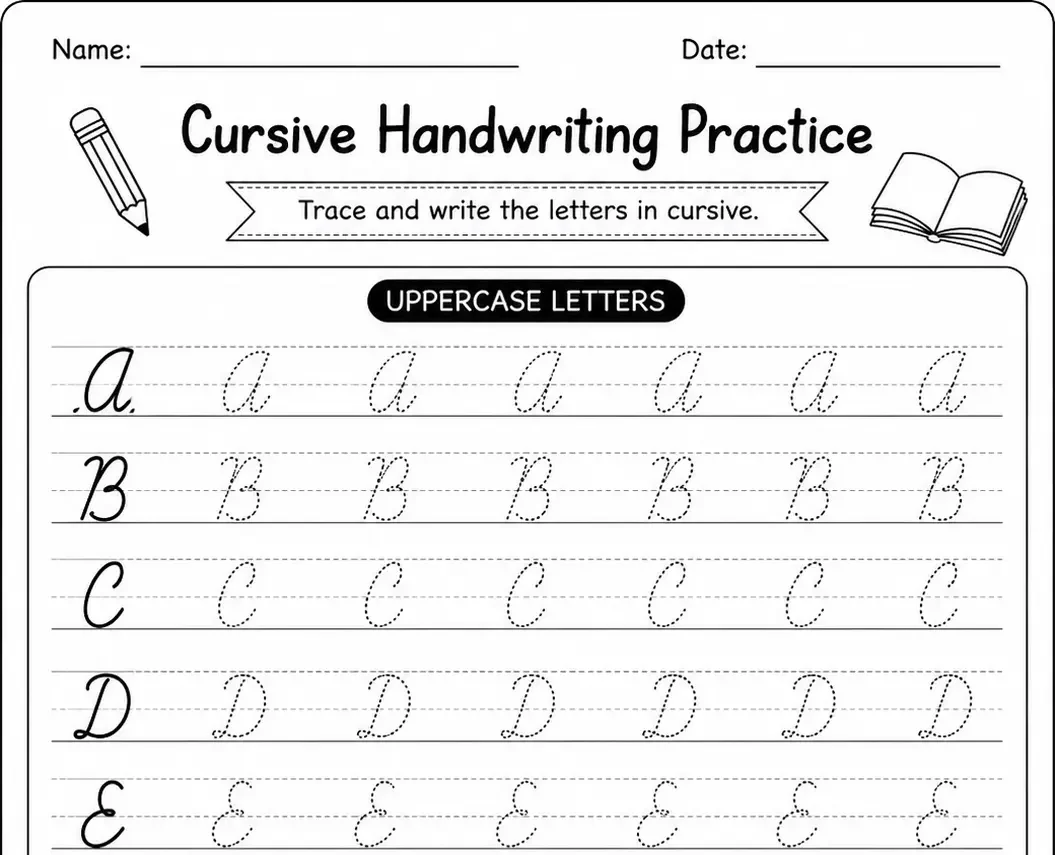
Before writing complete words, learners should practice uppercase and lowercase letters separately. Printable worksheets usually include:
- Letter tracing guides
- Directional arrows
- Stroke order examples
- Independent writing lines
Repeating each letter several times helps build muscle memory. And yes, repetition really works—even if it feels a little boring at first.
2. Practice Common Words Every Day
Once letters become familiar, it’s time to connect them.
Many cursive worksheets printable collections include everyday vocabulary like:
- Family
- School
- Friend
- Happy
- Thank you
- Morning
These familiar words help learners focus less on spelling and more on smooth letter connections.
A few minutes daily often produces better results than one long handwriting session each week.
3. Improve Fine Motor Skills Naturally
Cursive isn’t only about attractive handwriting.
It also strengthens:
- Hand muscles
- Finger coordination
- Pencil control
- Wrist movement
- Visual tracking
Young children especially benefit from repeated tracing exercises because they develop better control over writing tools.
That’s one reason teachers continue including cursive practice in handwriting lessons.
4. Use Printable Sentences for Better Flow
Writing isolated words is useful.
But writing complete sentences teaches rhythm.
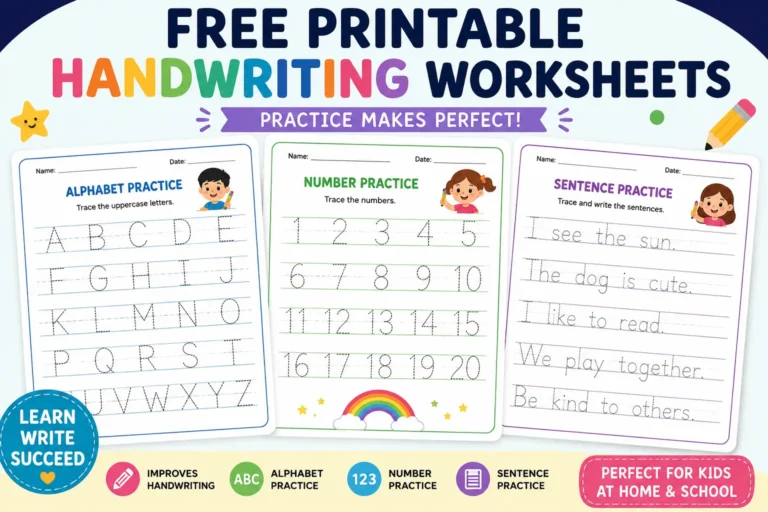
Sentence worksheets encourage learners to:
- Maintain consistent spacing
- Connect letters smoothly
- Keep letters the same height
- Improve writing speed
Simple examples include:
- Practice makes progress.
- Reading helps you learn.
- Kindness matters every day.
These short sentences are much less overwhelming than long paragraphs.
5. Make Learning More Fun with Quotes
Practice doesn’t always have to feel like homework.
Many printable worksheets feature:
- Inspirational quotes
- Famous sayings
- Positive affirmations
- Fun seasonal phrases
Children often enjoy writing encouraging messages instead of random vocabulary lists.
Adults appreciate this style too. It makes handwriting practice feel relaxing rather than repetitive.
6. Choose Age-Appropriate Worksheets
Not every worksheet fits every learner.
For younger students, look for pages with:
- Large writing spaces
- Thick tracing lines
- Simple words
- Clear arrows
Older students can move on to:
- Longer passages
- Paragraph copying
- Signature practice
- Faster writing drills
The right difficulty level keeps learners motivated instead of frustrated.
7. Practice Names and Signatures
One exciting milestone is writing your own name in cursive.
Printable worksheets often include blank practice lines where learners can repeatedly write:
- Their first name
- Family names
- School name
- Favorite places
Adults frequently use these pages to improve their signatures for professional documents.
And honestly…it’s surprisingly satisfying once everything starts flowing naturally.
8. Use Seasonal and Holiday Worksheets
Changing worksheet themes keeps practice interesting.
Popular printable collections include:
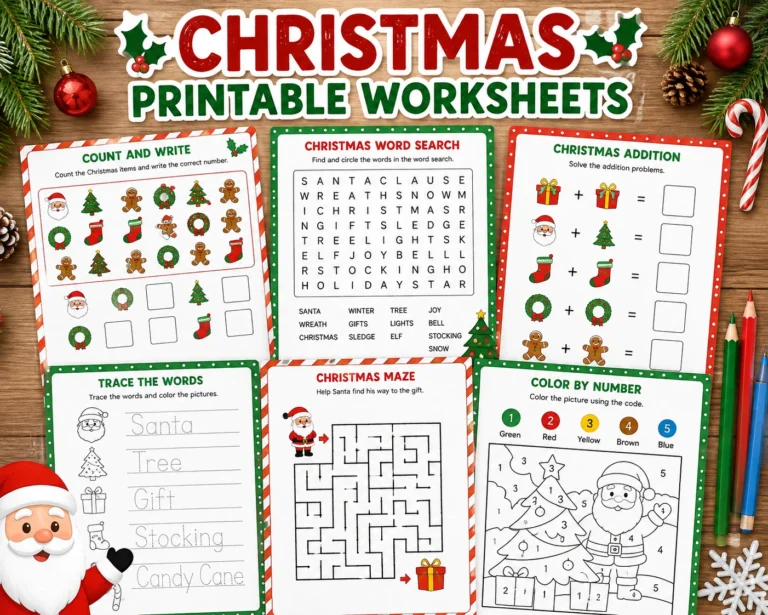
- Christmas cursive worksheets
- Halloween handwriting pages
- Valentine’s Day writing
- Easter activities
- Summer practice sheets
- Back-to-school handwriting
Kids usually stay engaged longer when handwriting matches the season.
A little variety goes a long way.
9. Combine Reading and Writing Practice
Some of the best cursive worksheets printable resources combine multiple skills.
For example:
- Read a short paragraph.
- Trace it.
- Copy it independently.
- Answer simple comprehension questions.
This approach strengthens handwriting while improving reading confidence at the same time.
Teachers love activities that cover multiple learning goals in one lesson.
10. Build a Daily Handwriting Routine
Consistency beats intensity.
Instead of asking children to complete ten pages at once, encourage just 10 to 15 minutes of practice each day.
A simple routine could look like this:
- Trace one letter
- Write one word
- Copy one sentence
- Practice your signature
That’s it.
Small daily habits often produce impressive improvements after just a few weeks.
What Makes Great Cursive Worksheets?
Not all worksheets are created equally.
The most effective printable handwriting resources usually include:
- Clear stroke directions
- Letter formation guides
- Progressive difficulty
- Plenty of writing space
- High-quality print formatting
- Fun illustrations for younger learners
- Word, sentence, and paragraph practice
When worksheets are well designed, learners spend more time practicing and less time feeling confused.
Benefits of Using Printable Cursive Worksheets
Printable handwriting pages remain a favorite because they’re flexible.
Some key advantages include:
- Easy to print anytime
- Budget-friendly
- Great for classrooms
- Perfect for homeschooling
- Ideal for independent learning
- Reusable with sheet protectors and dry-erase markers
- Suitable for children and adults alike
There’s no need for expensive materials. A printer, paper, and pencil are enough to get started.
Tips for Better Handwriting Practice
Learning cursive takes patience.
These simple tips make every practice session more productive:
- Sit with good posture.
- Hold the pencil comfortably.
- Write slowly before increasing speed.
- Focus on neatness instead of rushing.
- Practice consistently.
- Celebrate small improvements.
- Take short breaks if your hand feels tired.
And don’t worry if progress seems slow at first. Every experienced cursive writer started exactly the same way.
Are printable cursive worksheets good for beginners?
Absolutely. Most beginner worksheets include tracing lines, arrows, and guided practice that make learning much easier.
How often should children practice cursive?
About 10–15 minutes each day is usually enough to build steady improvement without causing frustration.
Can adults use cursive worksheets?
Yes. Many adults use printable handwriting worksheets to improve penmanship, create a more polished signature, or simply enjoy handwriting as a relaxing hobby.
What supplies are needed?
Very little:
- Printable worksheets
- Pencil or pen
- Eraser
- Printer
- Paper
Optional tools like handwriting grips or lined writing paper can also help.
Final Thoughts
Learning cursive doesn’t happen overnight—but it doesn’t have to feel difficult either. The right cursive worksheets printable collection provides step-by-step guidance, plenty of practice, and the flexibility to learn at your own pace.
Whether you’re teaching a young student, homeschooling, helping in the classroom, or improving your own handwriting, printable worksheets make the process simple and enjoyable. Start with individual letters, move on to words and sentences, and practice a little each day. Before long, those once-challenging loops and connections will begin to feel natural, turning everyday writing into a skill you can be proud of.