Free Printable Handwriting Worksheets: 10 Easy Ways to Build Better Writing Skills
Handwriting still matters. Even in a world full of tablets, laptops, and smartphones, children benefit from learning how to write neatly and confidently. Good handwriting supports reading, spelling, fine motor development, and even memory. That’s why so many parents and teachers continue searching for free printable handwriting worksheets that are simple, effective, and fun to use.
The best part? You don’t need expensive workbooks to help children improve. A well-designed printable worksheet can make practice enjoyable without adding pressure. Just a few minutes each day can create noticeable progress over time.
If you’re looking for the best ways to use free printable handwriting worksheets, here are ten ideas that actually work.
1. Start with Simple Letter Tracing
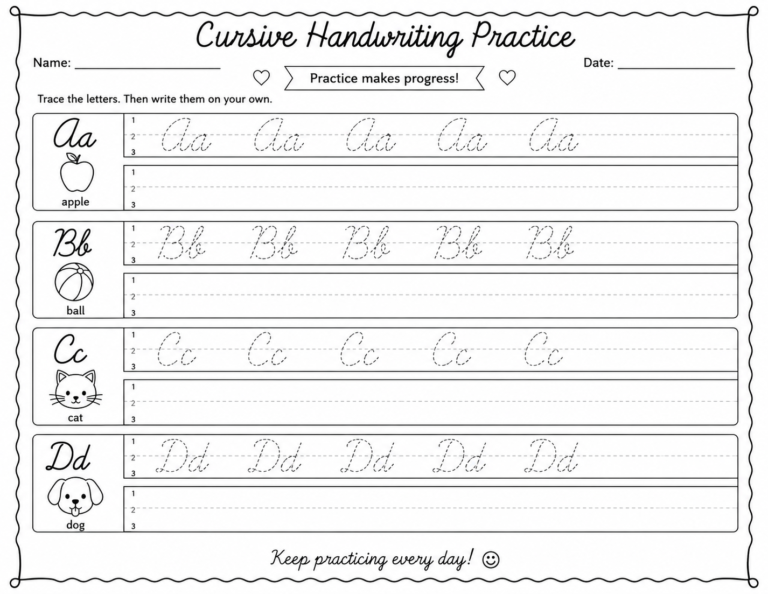
Every strong handwriting journey begins with tracing.
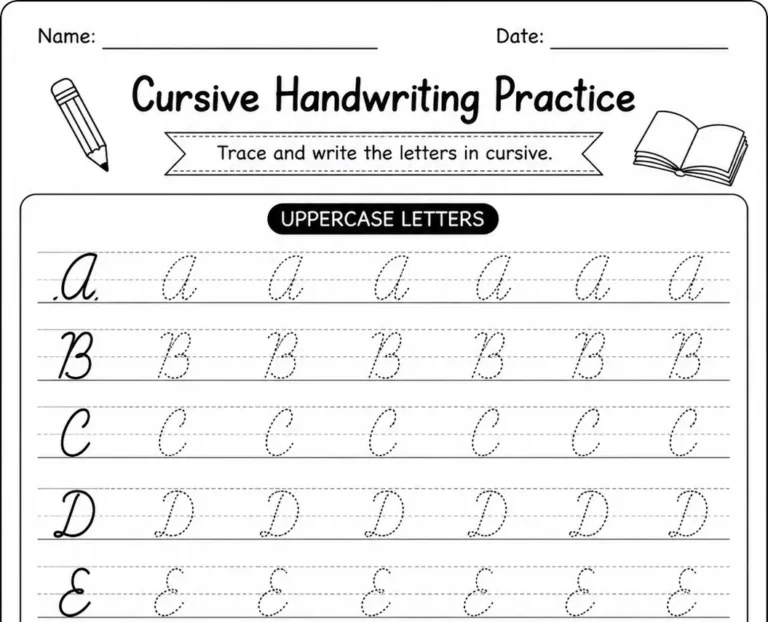
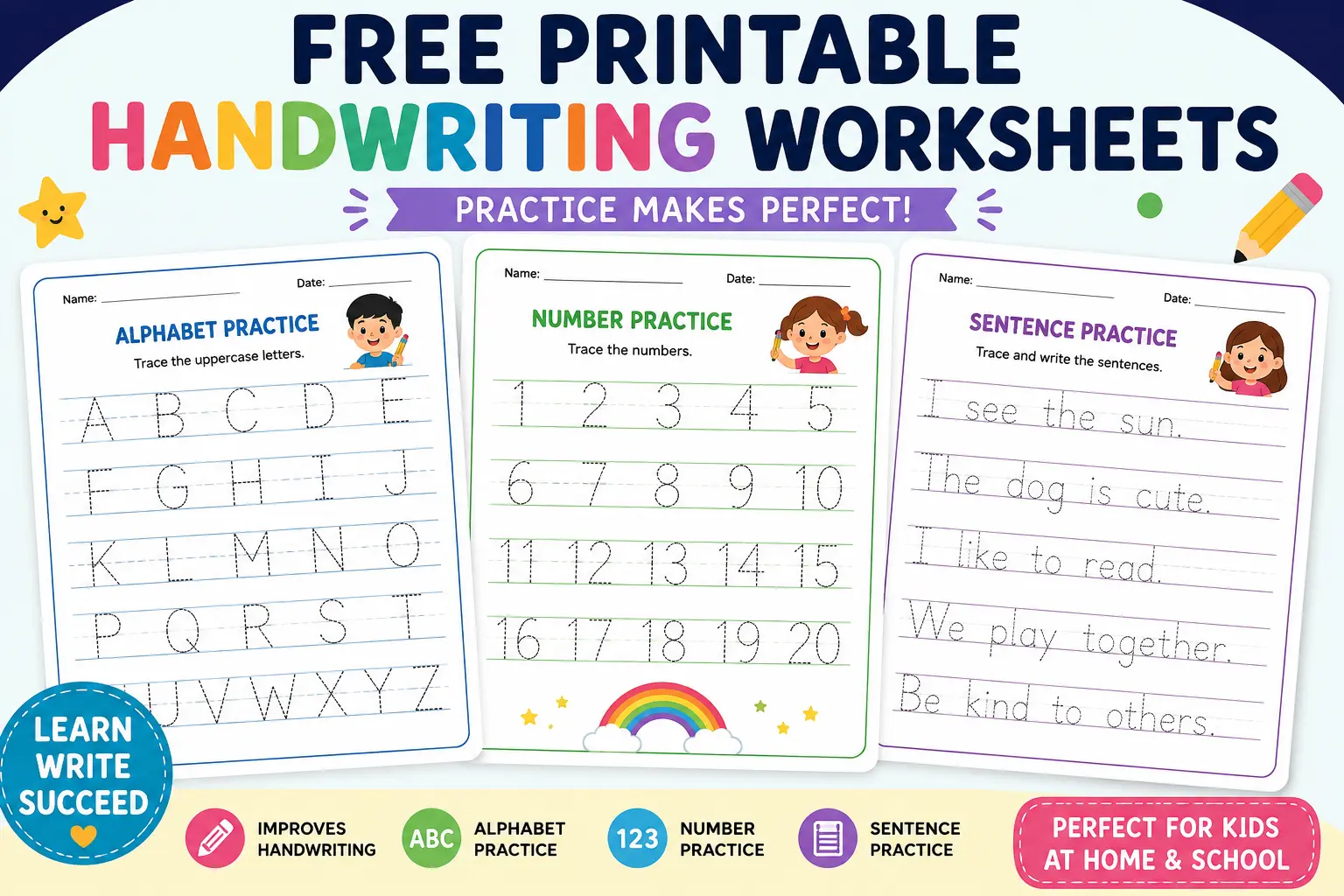
Children first learn how letters are formed by following dotted lines. This helps them understand the correct stroke order while building muscle memory. It may seem repetitive—but that’s exactly what makes it effective.
Start with:
- Uppercase letters
- Lowercase letters
- Individual letter practice
- Alphabet review pages
Once tracing feels comfortable, kids naturally become more confident writing letters on their own.
2. Practice One Letter Family at a Time
Not every letter is formed differently.
Many letters share similar movements, making it easier for children to learn them in groups instead of randomly.
For example:
- c, a, d, g, q
- l, t, i, j
- m, n, h, r
- u, y, v, w
Grouping similar letters reduces frustration and helps children recognize writing patterns much faster.
And honestly…it feels less overwhelming too.
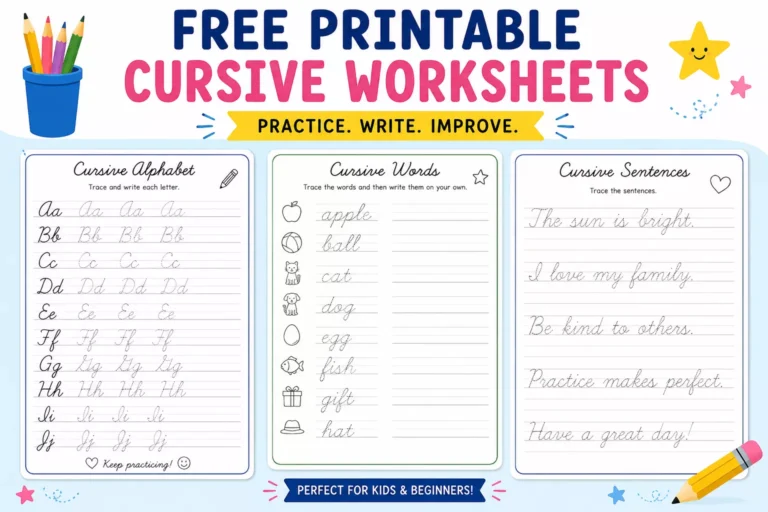
3. Move from Letters to Words
Once individual letters become easier, it’s time to connect them into real words.
Many free printable handwriting worksheets include:
- Sight words
- Family words
- Color words
- Number words
- Days of the week
- Months of the year
Writing familiar words keeps children engaged because they already recognize what they’re writing.
That’s a small win that builds confidence.
4. Add Short Sentences for Daily Practice
Single words are helpful.
But sentences teach spacing, punctuation, capitalization, and rhythm.
Simple handwriting sentences like these work well:
- I love my family.
- The cat is sleeping.
- We play outside.
- Today is sunny.
- My dog runs fast.
These exercises encourage smoother writing while improving reading fluency at the same time.
5. Choose Age-Appropriate Worksheets
Every child develops at a different pace.
Giving preschool worksheets to a second grader can feel boring. On the other hand, advanced pages may discourage younger learners.
Try selecting worksheets based on age.
Preschool
- Line tracing
- Shapes
- Curves
- Basic alphabet
Kindergarten
- Letter formation
- Name writing
- Simple words
Grade 1–2
- Sentences
- Sight words
- Copywork
Grade 3 and Above
- Paragraph writing
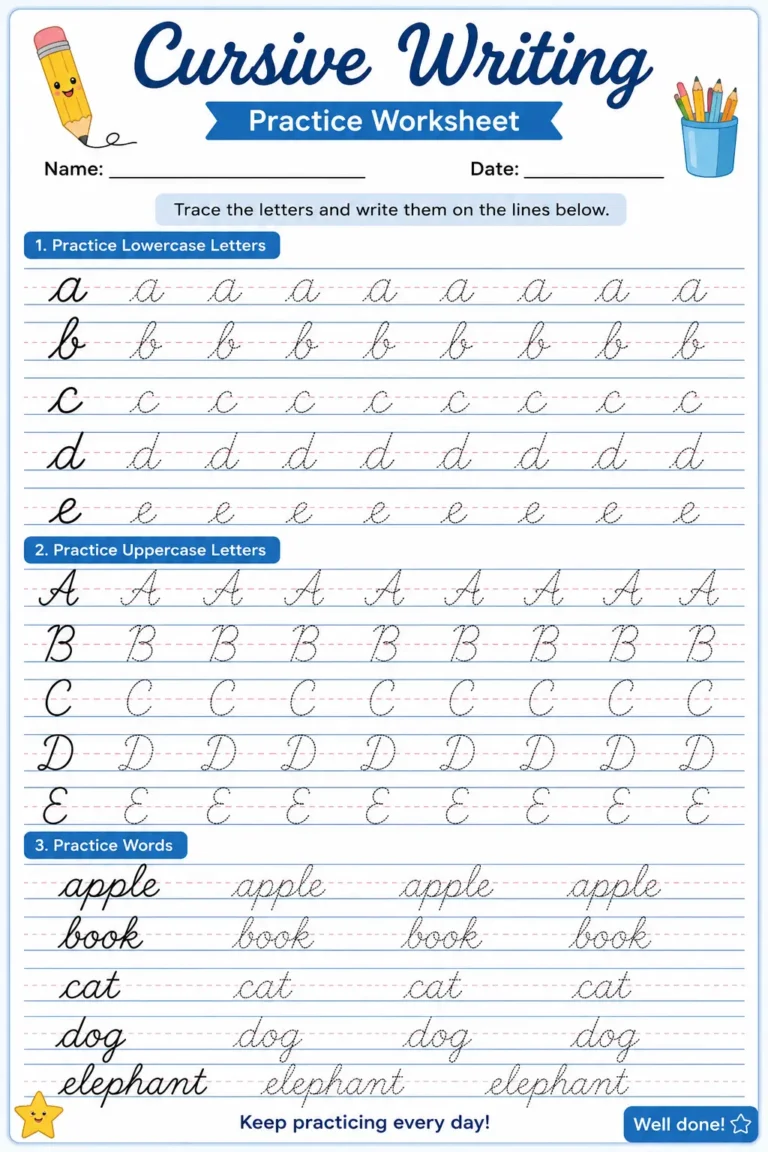
- Cursive practice
- Creative handwriting exercises
Matching the difficulty level makes practice feel achievable instead of stressful.
6. Include Fun Themes
Kids love variety.
Themed worksheets can turn handwriting practice into something they actually look forward to.
Popular themes include:
- Animals
- Dinosaurs
- Space
- Princesses
- Superheroes
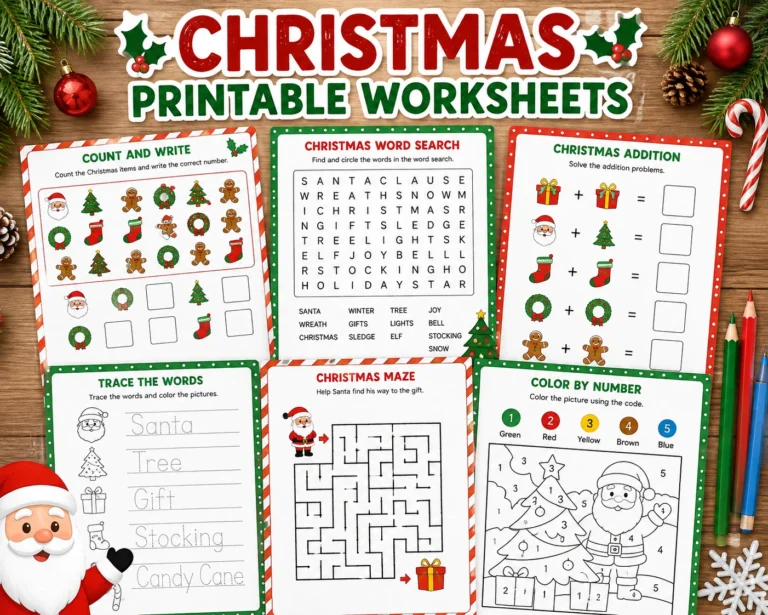
- Holidays
- Seasons
- Ocean life
- Farm animals
Instead of seeing handwriting as homework, children begin treating it like an activity.
And that’s a huge difference.
7. Practice Just 10 Minutes Each Day
Long handwriting sessions usually don’t work.
Young learners often lose focus after ten or fifteen minutes.
A better routine looks like this:
- 5 minutes of tracing
- 5 minutes of independent writing
That’s it.
Consistency matters far more than marathon practice sessions.
Even ten minutes every school day adds up to over fifty practice hours in a year.
Pretty impressive when you think about it.
8. Encourage Proper Pencil Grip
Worksheets alone aren’t enough.
Children should also learn how to hold a pencil correctly.
A proper grip improves:
- Letter control
- Writing speed
- Comfort
- Hand endurance
Parents and teachers can gently remind children to relax their fingers instead of squeezing too tightly.
Sometimes using shorter pencils or pencil grips can make this much easier.
Small adjustments often create big improvements.
9. Celebrate Progress Instead of Perfection
Every child’s handwriting develops differently.
Some master neat printing quickly.
Others need more time.
Instead of correcting every mistake, celebrate improvements like:
- Better spacing
- Straighter letters
- Cleaner lines
- Improved pencil control
- Greater confidence
Positive encouragement keeps children motivated to continue practicing.
Perfection isn’t the goal.
Progress is.
10. Print New Worksheets Regularly
Repetition is important.
But repeating the exact same worksheet too many times can become boring.
Rotate different handwriting pages every week.
You can include:
- Alphabet review
- Seasonal writing pages
- Holiday activities
- Sentence practice
- Creative copywork
- Cursive pages
- Story starters
Fresh worksheets keep children interested while reinforcing the same handwriting skills.
A little variety goes a long way.
Benefits of Free Printable Handwriting Worksheets
There are plenty of reasons these worksheets remain popular among educators and parents.
They help children:
- Improve fine motor skills
- Strengthen hand-eye coordination
- Learn correct letter formation
- Increase writing confidence
- Develop better spelling habits
- Build reading fluency
- Practice independently
- Reduce screen time
- Prepare for classroom assignments
And perhaps most importantly—they’re flexible.
You can print exactly what your child needs without purchasing multiple workbooks.
Tips for Getting the Best Results
A few simple habits make handwriting practice much more successful.
- Keep practice sessions short.
- Use quality pencils and erasers.
- Provide encouragement every day.
- Practice in a quiet environment.
- Focus on neatness before speed.
- Let children take breaks when needed.
- Review previous worksheets occasionally.
- Celebrate small improvements.
These little habits create lasting results over time.
Final Thoughts
Finding high-quality free printable handwriting worksheets doesn’t have to be difficult. With the right collection of tracing pages, word practice, sentence exercises, and fun themed activities, children can strengthen their handwriting while enjoying the learning process.
Remember, handwriting isn’t built overnight. Some days will feel easy. Other days…not so much. That’s perfectly normal.
Keep practice consistent, keep it positive, and let children move at their own pace. Before long, those shaky letters begin turning into neat, confident handwriting—and that’s a rewarding milestone for every young learner.