Free Printable Cursive Worksheets: 10 Fun Ways to Build Better Handwriting Skills
Learning cursive is more than just writing fancy letters. It helps children improve fine motor skills, strengthens hand-eye coordination, and encourages smoother, faster handwriting. The best part? Free printable cursive worksheets make practicing simple, affordable, and even enjoyable.
Whether you’re a parent teaching at home, a classroom teacher, or a homeschool educator, printable worksheets provide structured practice without spending extra money. And honestly… kids often learn better when they have colorful, engaging pages instead of endless notebook lines.
Let’s look at why these worksheets matter and how to use them effectively.
Why Choose Free Printable Cursive Worksheets?
Not every child learns handwriting at the same pace. Some quickly connect letters while others need more repetition—and that’s perfectly normal.
That’s where free printable cursive worksheets become incredibly helpful.
They offer:
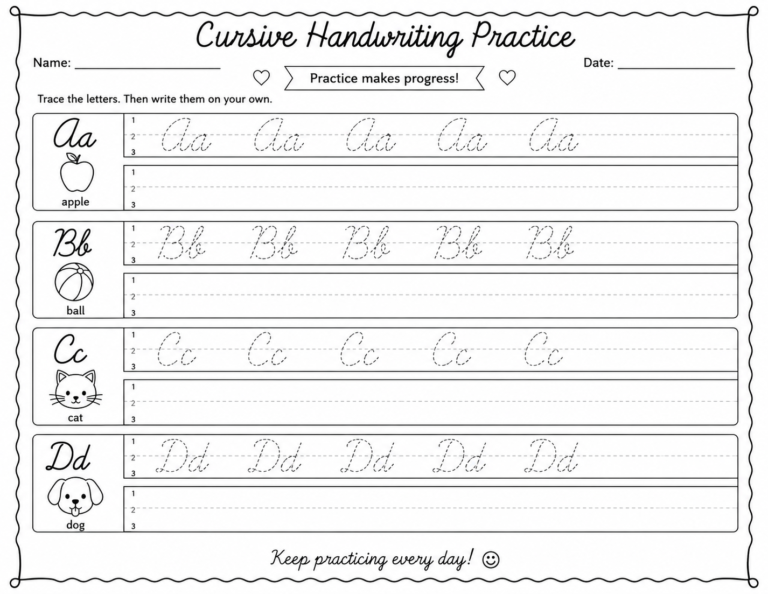
- Step-by-step letter formation
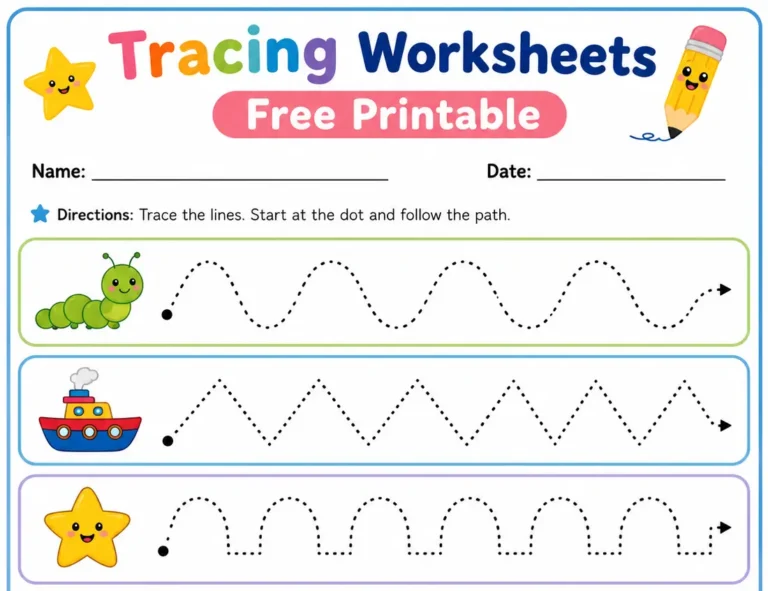
- Guided tracing exercises
- Word and sentence practice
- Fine motor skill development
- Consistent handwriting routines
- Easy practice anywhere
Since they’re printable, you can use them again and again. Print only the pages your child needs instead of buying expensive handwriting books.
1. Start with Individual Letter Tracing
Every handwriting journey begins with the alphabet.
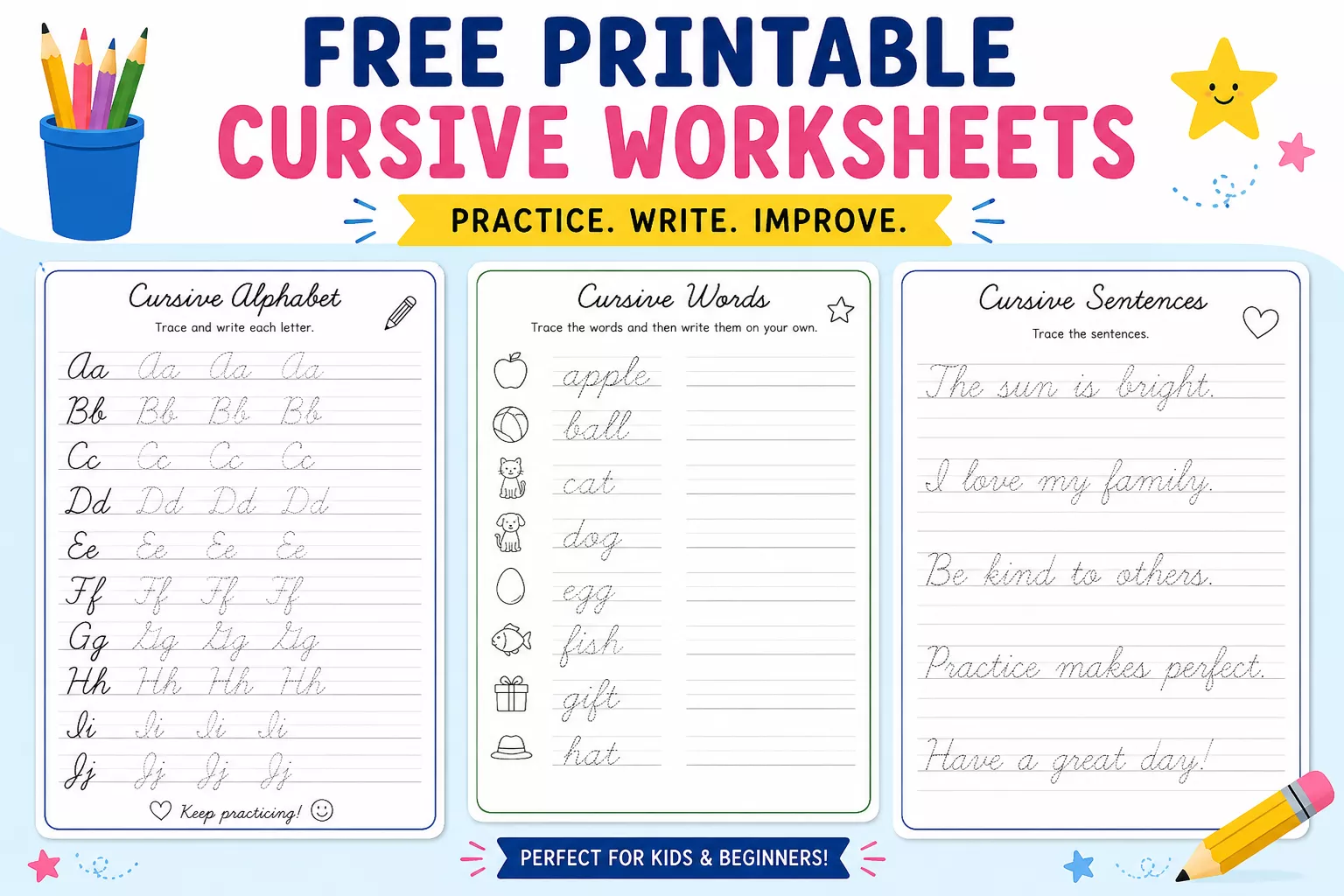
The best worksheets introduce lowercase and uppercase letters separately before combining them into words. Children first trace dotted letters before attempting to write independently.
This gradual process builds confidence.
Instead of feeling overwhelmed by an entire page of cursive writing, students focus on one letter at a time.
For example:
- A
- B
- C
- D
Then continue through the entire alphabet.
Slow progress is still progress.
2. Practice Lowercase Before Uppercase
Many handwriting experts recommend teaching lowercase letters first.
Why?
Because lowercase letters appear most often in everyday writing.
Kids quickly begin recognizing patterns like:
- a
- c
- e
- i
- o
Once these become familiar, uppercase letters feel much easier.
Many free printable cursive worksheets organize lessons this exact way, making learning less stressful.
3. Move from Letters to Simple Words
Writing isolated letters is only the beginning.
Eventually children need to connect letters naturally.
Good worksheet sets include simple words such as:
- cat
- dog
- sun
- tree
- book
- happy
- school
These short words help children understand how cursive letters flow together.
And honestly… that’s where cursive starts becoming fun.
4. Build Confidence with Daily Practice Sheets
Handwriting improves through consistency.
Ten minutes each day often works better than one long practice session every weekend.
A simple schedule might look like this:
Monday
Practice lowercase letters.
Tuesday
Practice uppercase letters.
Wednesday
Trace words.
Thursday
Write short sentences.
Friday
Review everything learned during the week.
Daily routines reduce frustration and make handwriting feel natural over time.
5. Use Sentence Worksheets for Real Writing
Once children can connect words comfortably, sentence practice becomes important.
Examples include:
- The sun is bright.
- My dog likes to run.
- I love reading books.
- We play outside today.
Sentence worksheets teach:
- Proper spacing
- Letter connections
- Punctuation
- Rhythm
- Writing speed
This prepares students for everyday handwriting tasks at school.
6. Improve Fine Motor Skills Naturally
Many people think cursive only improves handwriting.
Actually…
It develops several important physical skills too.
Regular cursive practice strengthens:
- Finger muscles
- Pencil control
- Wrist movement
- Hand coordination
- Writing endurance
These improvements can even support drawing, coloring, and other classroom activities.
That’s one reason teachers still recommend handwriting practice despite today’s digital world.
7. Make Learning More Enjoyable
Kids lose interest quickly when worksheets all look the same.
The best free printable cursive worksheets include fun elements like:
- Animals
- Seasonal themes
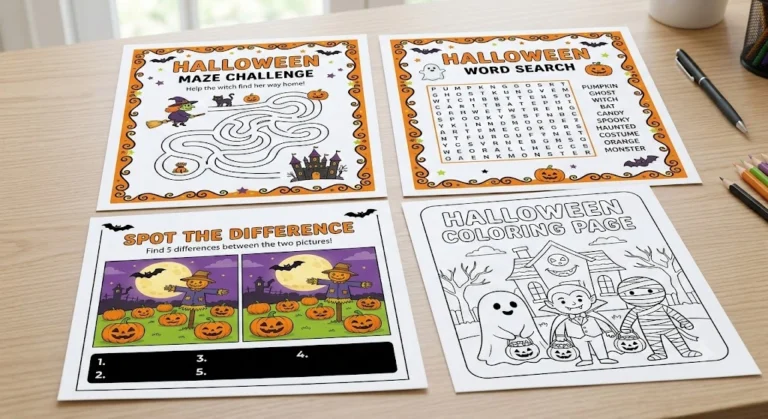
- Holidays
- Positive quotes
- Coloring activities
- Motivational words
Adding variety keeps students engaged.
Sometimes changing the worksheet design is enough to make handwriting practice feel like a game instead of homework.
8. Support Homeschool and Classroom Learning
Printable worksheets fit almost every learning environment.
Teachers often use them as:
- Morning work
- Homework
- Literacy centers
- Small group instruction
- Early finisher activities
Homeschool parents appreciate them because lessons can be customized.
Need extra practice with “R”?
Simply print another R worksheet.
Need sentence practice?
Print only those pages.
It’s flexible…and that’s incredibly helpful.
9. Encourage Independent Learning
One advantage of printable handwriting pages is that many children can complete them with very little guidance.
Tracing arrows, dotted letters, and visual examples make instructions easy to follow.
Older elementary students often enjoy checking their own progress by comparing today’s handwriting with earlier pages.
Watching improvement happen can be surprisingly motivating.
10. Save Money While Providing Unlimited Practice
Handwriting workbooks can become expensive.
Children often complete an entire workbook within a few months.
Printable worksheets solve that problem.
You can:
- Print extra practice pages
- Replace mistakes instantly
- Focus on weak letters
- Create personalized handwriting packets
- Practice throughout the school year
A simple printer and paper provide nearly unlimited handwriting practice.
That’s hard to beat.
Tips for Getting the Best Results
Even the best worksheets work better with good habits.
Here are a few simple ideas:
Keep Practice Sessions Short
Children usually stay focused for 10–15 minutes.
Long sessions often lead to messy handwriting and frustration.
Use the Correct Pencil Grip
A comfortable grip helps maintain smoother letter formation.
Avoid squeezing the pencil too tightly.
Relaxed hands produce cleaner writing.
Celebrate Improvement
Don’t expect perfect handwriting immediately.
Praise effort.
Notice straighter lines.
Celebrate smoother connections.
Confidence grows faster than perfection.
Practice on Different Types of Paper
After completing worksheets, encourage children to write:
- Shopping lists
- Birthday cards
- Journal entries
- Thank-you notes
- Short stories
Real-life writing strengthens everything they’ve learned.
Common Mistakes to Avoid
Many beginners struggle with the same issues.
Watch for:
- Rushing through tracing
- Skipping practice days
- Holding the pencil too tightly
- Writing letters too large
- Ignoring spacing between words
- Pressing too hard on the paper
Correcting these habits early makes learning much easier later.
Who Can Benefit from Free Printable Cursive Worksheets?
These worksheets aren’t only for elementary students.
They’re also helpful for:
- Preschool children preparing for handwriting
- Kindergarten students learning pencil control
- First and second graders transitioning into cursive
- Older students improving messy handwriting
- Homeschool families
- Classroom teachers
- Occupational therapy activities
- Adult beginners learning cursive
Everyone starts somewhere.
And everyone improves with practice.
Final Thoughts
Learning cursive doesn’t have to be complicated or expensive. With free printable cursive worksheets, children can develop stronger handwriting skills one letter at a time while building confidence along the way.
The secret isn’t finding the “perfect” worksheet. It’s creating a consistent routine, encouraging progress, and making practice enjoyable. Some days will go smoothly. Others… maybe not. That’s part of learning.
Print a few pages, grab a pencil, and start small. Over time, those simple tracing exercises grow into neat words, complete sentences, and confident handwriting that lasts well beyond the classroom. That’s a skill worth practicing.