Free Sight Word Worksheets: 10 Fun Ways to Help Kids Read with Confidence
Learning to read is one of the biggest milestones in a child’s early education. And if there’s one skill that makes the journey smoother, it’s recognizing sight words. These are common words that children learn to identify instantly without sounding them out. Words like the, and, is, you, and said appear again and again in books, making them essential for reading fluency.
That’s where free sight word worksheets become incredibly helpful. They give young learners repeated exposure to important words through engaging activities, helping them build confidence while having fun.
If you’re a parent, teacher, or homeschool educator looking for simple, effective learning resources, you’re in the right place. Let’s explore how free sight word worksheets can make reading practice easier—and much more enjoyable.
What Are Sight Words?
Sight words are high-frequency words that children are encouraged to recognize instantly. Instead of sounding out every letter, they learn to identify these words by sight.
Many early reading programs use popular sight word lists such as:
- Dolch Sight Words
- Fry Sight Words
- High-Frequency Word Lists
Since these words appear in nearly every children’s book, mastering them allows kids to read more smoothly and understand stories better.
Use Free Sight Word Worksheets?
Worksheets provide structured practice without overwhelming children.
Here are some benefits:
- Improve word recognition
- Increase reading speed
- Build spelling confidence
- Strengthen handwriting skills
- Encourage independent learning
- Reinforce classroom lessons at home
And honestly…kids usually enjoy worksheets that include coloring, tracing, matching, or simple games much more than repetitive drills.
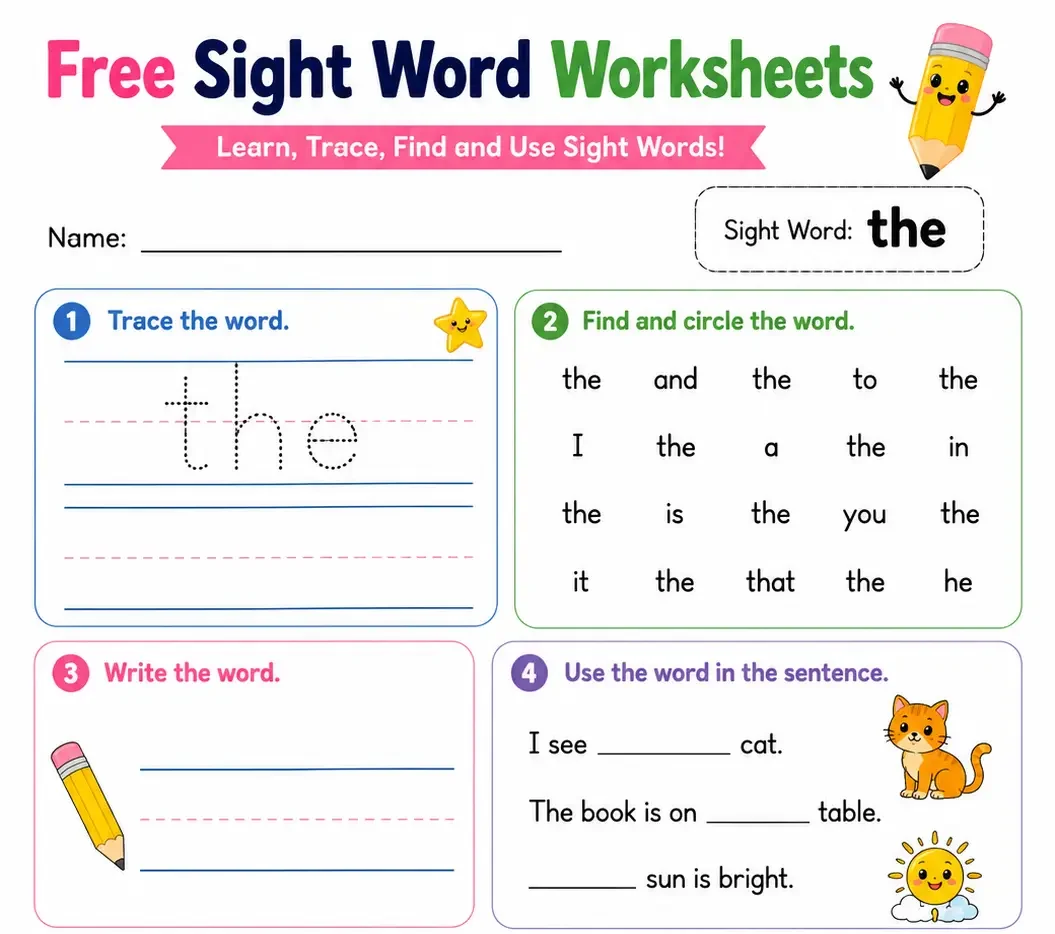
1. Tracing Sight Word Worksheets
Tracing is one of the best ways to introduce new words.
Children trace dotted letters before writing the word on their own.
Benefits include:
- Better letter formation
- Muscle memory development
- Word recognition
- Handwriting improvement
This type of worksheet works especially well for preschoolers and kindergarten students.
2. Color and Find Worksheets
Kids love coloring.
These worksheets ask students to color every matching sight word using different colors.
For example:
Color every “the” blue.
Color every “can” green.
Color every “look” yellow.
Simple? Yes.
Effective? Absolutely.
Children naturally begin recognizing words without realizing they’re practicing reading.
3. Sight Word Search Puzzles
Word searches turn learning into a game.
Students search for hidden sight words inside a grid of letters.
These worksheets improve:
- Visual scanning
- Focus
- Letter recognition
- Word memory
Even reluctant readers often enjoy this activity.
4. Fill-in-the-Blank Worksheets
Reading words inside sentences helps children understand meaning.
Example:
I ____ a dog.
Options:
- have
- blue
- jump
Children choose the correct sight word.
This teaches vocabulary while reinforcing reading comprehension.
5. Cut-and-Paste Sight Word Activities
Hands-on learning keeps young learners engaged.
Students:
- Cut out words
- Match pictures
- Build sentences
- Paste answers
These worksheets combine reading with fine motor skill development.
Perfect for kindergarten classrooms.
6. Sight Word Matching Worksheets
Matching games improve memory through repetition.
Children match:
- Word to picture
- Word to word
- Uppercase to lowercase
- Sentence to missing word
The repetition feels natural rather than boring.
And that’s exactly what makes it effective.
7. Read, Write, and Color Pages
One worksheet.
Three learning activities.
Students:
- Read the word
- Write it several times
- Color a related picture
For example:
Word: apple
Children trace it, write it independently, then color an apple illustration.
Multiple learning styles work together in one activity.
8. Sight Word Sentence Practice
Recognizing words alone isn’t enough.
Kids should also see them used naturally.
Example practice:
- I like my dog.
- We can play.
- She is happy.
- Look at the cat.
These worksheets improve both reading fluency and sentence understanding.
9. Seasonal Sight Word Worksheets
Holiday-themed worksheets keep learning exciting.
Popular themes include:
- Christmas
- Halloween
- Easter
- Spring
- Summer
- Winter
- Thanksgiving
- Back to School
Children stay motivated because every worksheet feels fresh.
Small change. Big difference.
10. Review Worksheets for Daily Practice
Consistency matters more than long study sessions.
Five or ten minutes each day can dramatically improve reading skills.
Review worksheets often include:
- Tracing
- Reading
- Matching
- Writing
- Simple quizzes
- Sentence practice
Daily repetition helps sight words become automatic.
How Often Should Children Practice Sight Words?
Short practice sessions are usually the most effective.
A simple weekly routine could look like this:
| Day | Activity |
|---|---|
| Monday | Trace new words |
| Tuesday | Matching worksheet |
| Wednesday | Word search |
| Thursday | Sentence practice |
| Friday | Review worksheet |
| Weekend | Reading simple books using learned words |
Children stay engaged without feeling overwhelmed.
Tips for Getting Better Results
Worksheets work best when paired with interactive learning.
Try these ideas:
- Read together every day.
- Practice only a few new words at a time.
- Celebrate small achievements.
- Use flashcards alongside worksheets.
- Play simple word games.
- Repeat previously learned words regularly.
Remember, learning to read isn’t a race.
Every child develops at their own pace.
Who Can Benefit from Free Sight Word Worksheets?
These printable resources are useful for many learners, including:
- Preschool children
- Kindergarten students
- First-grade readers
- Homeschool families
- Classroom teachers
- Reading intervention specialists
- English language learners
- Children needing extra reading practice
Their flexibility makes them suitable for both home and school settings.
What Makes a Good Sight Word Worksheet?
Not all worksheets are equally effective.
The best ones usually include:
- Large, easy-to-read text
- Age-appropriate vocabulary
- Fun illustrations
- Clear instructions
- Writing practice
- Reading activities
- Review exercises
- Plenty of white space
Children stay focused when pages are clean and uncluttered.
Common Mistakes to Avoid
Sometimes adults accidentally make sight word practice harder than necessary.
Avoid these common mistakes:
- Teaching too many words at once
- Skipping review sessions
- Using worksheets without reading practice
- Expecting instant memorization
- Making practice sessions too long
Instead, keep lessons short, positive, and consistent.
Little steps add up over time.
Final Thoughts
Using free sight word worksheets is one of the easiest ways to help young readers build confidence and improve reading fluency. Whether children are tracing, coloring, matching, or completing simple sentences, each activity strengthens their ability to recognize common words quickly and accurately.
The best part? These worksheets fit into almost any learning environment. Parents can print them for extra practice at home, teachers can use them during literacy centers, and homeschool families can include them in daily reading lessons.
Keep the sessions fun, celebrate progress, and remember that every new word mastered is another step toward becoming a confident reader. With regular practice and the right resources, free sight word worksheets can turn everyday reading practice into an enjoyable learning adventure for every child.