1st Grade Phonics Worksheets: 10 Fun Ways to Build Strong Reading Skill
Learning to read is one of the biggest milestones in first grade. It’s exciting… but it can also feel a little overwhelming for young learners. That’s exactly why 1st grade phonics worksheets continue to be one of the most effective learning tools for parents, teachers, and homeschool families.
Phonics gives children the ability to connect letters with sounds, recognize word patterns, and read with confidence. The best part? It doesn’t have to feel like hard work. A well-designed worksheet can turn a reading lesson into a fun activity that kids actually enjoy.
If you’re looking for engaging resources that strengthen reading skills while keeping children interested, here are the best ways to use 1st grade phonics worksheets effectively.
1. Start with Letter Sounds Before Moving to Words
Every confident reader begins with a strong understanding of letter sounds.
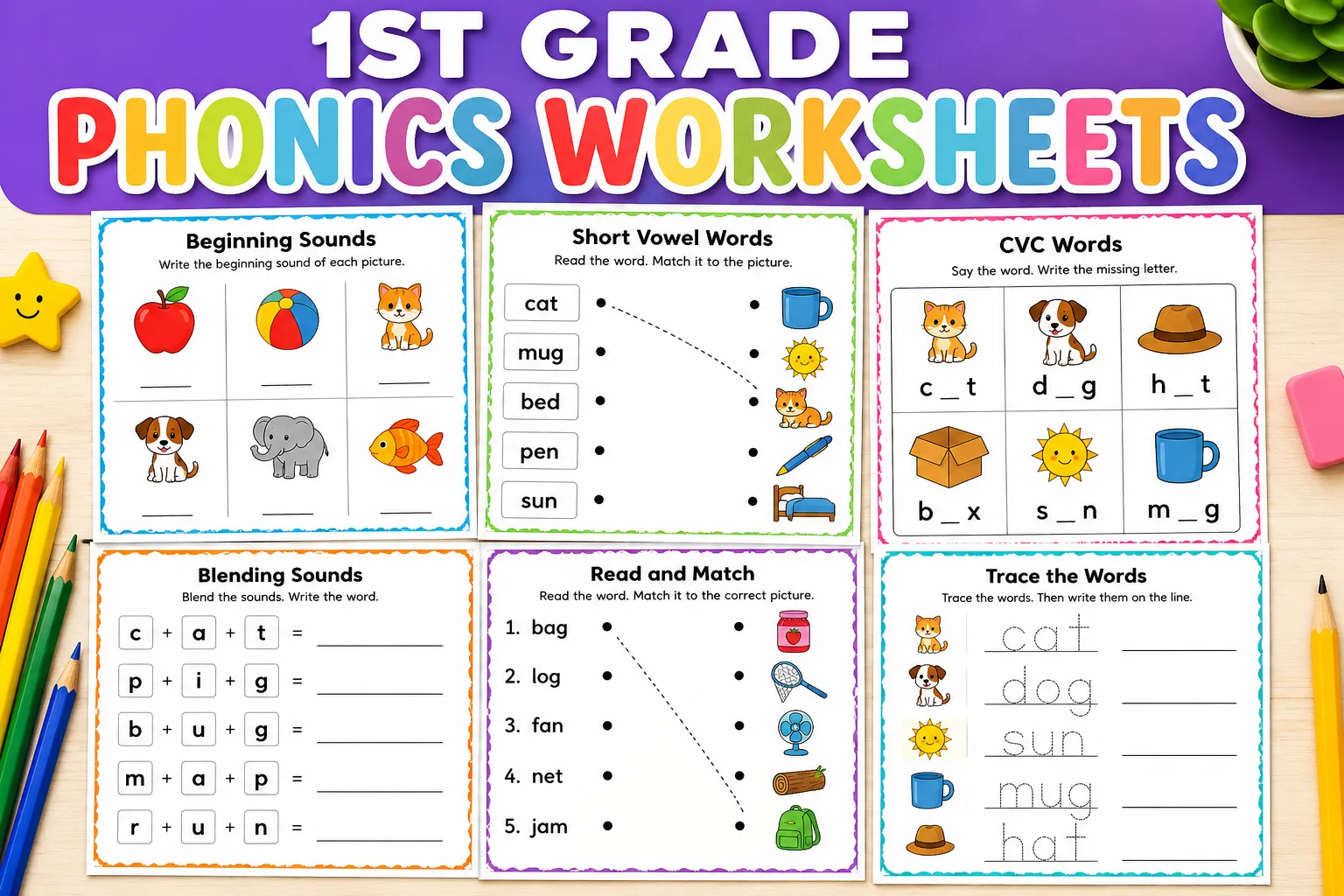
Even though first graders already know most letters, they still need regular practice identifying beginning, middle, and ending sounds. Worksheets that include matching activities, picture identification, and simple tracing exercises help reinforce these important skills.
Children learn faster when they repeatedly hear, say, and write each sound. And honestly, repetition isn’t a bad thing—it builds confidence.
Activities may include:
- Matching pictures to beginning sounds
- Coloring objects that start with a specific letter
- Finding missing beginning letters
- Simple sound recognition games
These activities create a solid reading foundation.
2. Practice Short Vowel Words Every Day
Short vowels are everywhere in early reading books.
Words like:
- cat
- pen
- pig
- dog
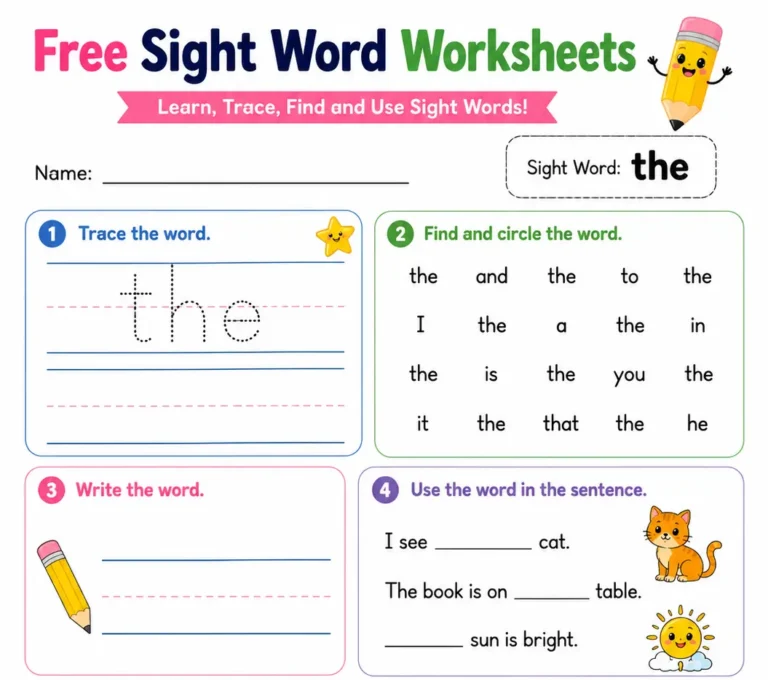
- sun
appear constantly, so mastering them is essential.
Many 1st grade phonics worksheets focus specifically on short vowel families, allowing children to notice spelling patterns naturally.
Instead of memorizing words one by one, students begin recognizing familiar word families like:
- -at
- -ig
- -op
- -et
- -ug
That pattern recognition makes reading much easier.
3. Introduce Long Vowel Patterns Step by Step
Once short vowels become comfortable, it’s time to explore long vowel sounds.
Children often find these patterns confusing at first.
After all…
Why does “cake” sound different from “cat”?
That’s where targeted worksheets help.
Activities often include:
- Silent E practice
- Long vowel matching
- Fill-in-the-blank exercises
- Reading simple long vowel sentences
The gradual approach prevents frustration while helping students recognize common spelling rules.
4. Build Confidence with Word Families
Word families are one of the easiest shortcuts to fluent reading.
Instead of learning hundreds of unrelated words, children recognize groups that share the same ending.
For example:
- cake
- bake
- lake
- make
Or:
- sit
- hit
- fit
- bit
One worksheet can introduce an entire family of words, making vocabulary growth happen surprisingly fast.
Kids also enjoy noticing these patterns themselves—which makes learning feel more like solving a puzzle.
5. Include Fun Blends and Digraph Activities
Once basic phonics is mastered, consonant blends become the next challenge.
Worksheets covering blends like:
- bl
- st
- cl
- gr
- tr
help children read longer words confidently.
Digraphs deserve equal attention:
- sh
- ch
- th
- wh
- ph
Picture matching, crossword puzzles, and word sorting activities make these lessons much more engaging than simple memorization.
And that’s important because first graders learn best while playing.
6. Mix Reading with Writing Practice
Reading and writing strengthen each other.
The best 1st grade phonics worksheets don’t stop at reading words—they encourage children to write them too.
Activities might include:
- Copying words
- Completing simple sentences
- Writing missing letters
- Labeling pictures
- Building words from letter tiles
Writing reinforces sound recognition while improving handwriting and spelling at the same time.
It’s like getting three lessons in one.
7. Use Picture-Based Worksheets
Young learners think visually.
Pictures make phonics easier because children immediately connect images with spoken words.
For example:
A picture of a fish helps reinforce “fish.”
A picture of a chair strengthens recognition of “chair.”
Visual learning improves memory and reduces frustration during reading practice.
Many worksheets include:
- Picture sorting
- Sound matching
- Circle the correct word
- Color-by-sound activities
These keep children focused much longer than text-only exercises.
8. Add Simple Reading Sentences
Eventually, children need to move beyond individual words.
Simple phonics sentences bridge the gap between decoding words and reading books.
Examples include:
- The cat is big.
- Sam can hop.
- Ben has a red hat.
Short reading passages followed by comprehension questions help students build fluency while understanding what they read.
Reading isn’t only about saying words correctly.
Understanding them matters just as much.
9. Make Learning Feel Like a Game
Children don’t always realize they’re learning when they’re having fun.
That’s a good thing.
Many printable phonics worksheets include activities like:
- Word searches
- Mazes
- Cut-and-paste games
- Matching puzzles
- Bingo cards
- Roll-and-read games
These activities increase participation while reducing learning anxiety.
Even reluctant readers often become excited when phonics feels like playtime.
And that’s exactly the goal.
10. Practice a Little Every Day
Long study sessions rarely work well for six-year-olds.
Short daily practice is far more effective.
Just 10 to 15 minutes of phonics each day can significantly improve:
- Reading fluency
- Vocabulary
- Spelling
- Word recognition
- Pronunciation
- Reading confidence
Consistency matters much more than perfection.
Some days will go smoothly.
Other days… maybe not.
That’s completely normal.
The key is simply showing up and practicing regularly.
What Makes Great 1st Grade Phonics Worksheets?
Not every worksheet provides the same learning experience.
High-quality phonics worksheets should include:
- Clear, easy-to-read instructions
- Large child-friendly fonts
- Colorful illustrations
- Progressive difficulty levels
- Reading and writing activities
- Interactive exercises
- Plenty of review opportunities
The best resources challenge students without making them feel overwhelmed.
A child who feels successful is much more likely to keep learning.
Tips for Parents and Teachers
A few simple habits can make phonics practice even more effective.
Try these ideas:
- Read aloud together every day.
- Celebrate small improvements.
- Let children sound out words before helping.
- Repeat favorite worksheets for extra confidence.
- Use positive encouragement instead of correcting every mistake.
- Combine worksheets with storybooks.
- Keep lessons fun and relaxed.
Reading should feel rewarding—not stressful.
Children who enjoy reading usually become lifelong readers.
Final Thoughts
Strong reading skills don’t happen overnight. They grow through small, consistent steps, and 1st grade phonics worksheets make those steps easier, more enjoyable, and far more engaging for young learners.
From letter sounds and word families to blends, digraphs, and simple reading passages, these worksheets provide structured practice that helps children become confident readers at their own pace. Some lessons will click immediately. Others may take a little extra time—and that’s perfectly okay.
The most important thing is creating positive reading experiences every day. With the right worksheets, plenty of encouragement, and just a few minutes of daily practice, first graders can develop the phonics skills they need for success in school and beyond. Before long, those simple sounds and words begin turning into fluent reading… and that’s a wonderful milestone for every child.