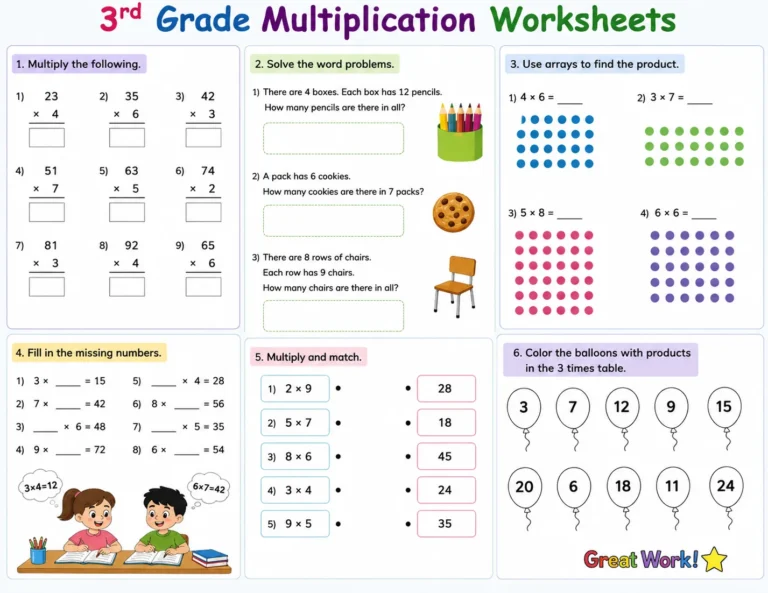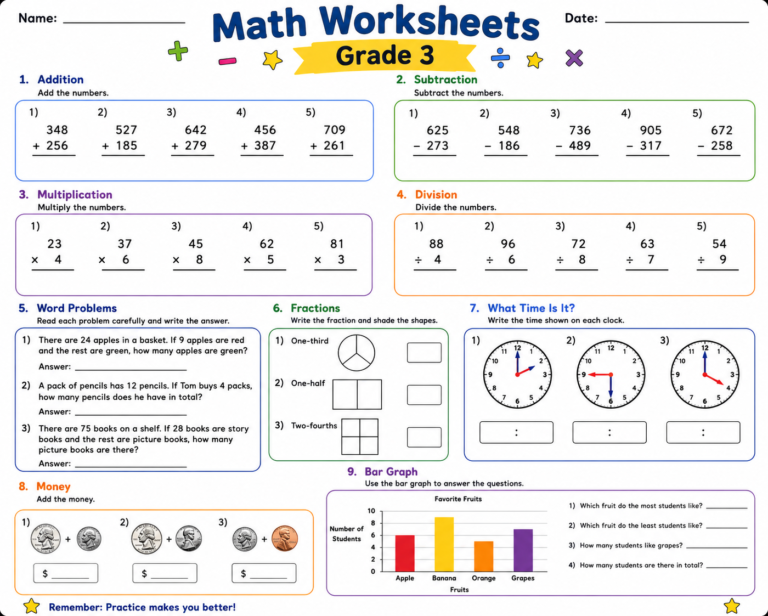
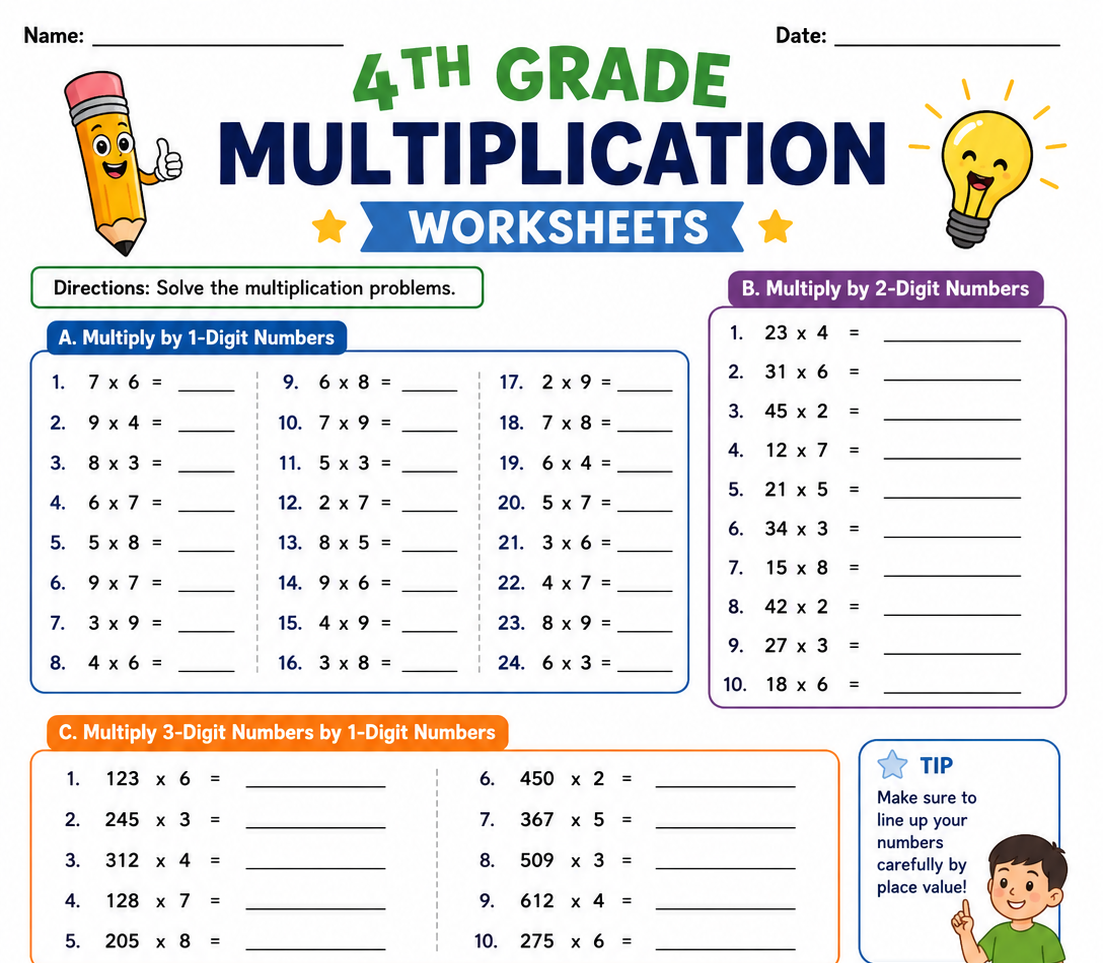
Multiplication Worksheets Grade 4: 10 Fun Ways to Build Strong Math Skills
Fourth grade is where multiplication becomes much more than memorizing facts. Students begin solving multi-digit multiplication problems, tackling word problems, identifying patterns, and using multiplication in everyday math. It can feel challenging at first—but with the right multiplication worksheets grade 4, practice becomes much easier and far more enjoyable.
The best worksheets don’t just give children dozens of problems to solve. They encourage logical thinking, improve confidence, and help students understand why multiplication works. And honestly, that’s what makes the biggest difference.
If you’re a parent, teacher, or homeschool educator searching for effective learning resources, this guide will help you choose worksheets that actually support learning instead of creating frustration.
Why Grade 4 Multiplication Is So Important
By fourth grade, students are expected to move beyond basic multiplication tables. They begin working with:
- Multi-digit multiplication
- Larger multiplication facts
- Word problems
- Missing factor equations
- Multiplication patterns
- Area models
- Place value strategies
- Real-world applications
These skills become the foundation for division, fractions, algebra, geometry, and even middle school mathematics.
Regular practice using multiplication worksheets grade 4 helps students become faster, more accurate, and more confident.
1. Basic Multiplication Fact Review Worksheets
Even fourth graders benefit from reviewing multiplication facts.
Students who instantly recall multiplication tables spend less time calculating simple facts and more time focusing on solving complex problems.
Good review worksheets include:
- Mixed multiplication facts
- Timed practice
- Multiplication table challenges
- Skip counting exercises
- Missing multiplication facts
Just 10–15 minutes of daily review can dramatically improve speed and accuracy.
2. Multi-Digit Multiplication Worksheets
One of the biggest fourth-grade milestones is multiplying larger numbers.
Students typically learn:
- 2-digit × 1-digit
- 2-digit × 2-digit
- 3-digit × 1-digit
Worksheets should gradually increase difficulty.
For example:
- 24 × 6
- 35 × 18
- 124 × 7
- 209 × 14
The gradual progression keeps students challenged without overwhelming them.
3. Area Model Multiplication Worksheets
Visual learners often understand multiplication much better with area models.
Instead of jumping straight into the standard algorithm, area models break numbers into smaller parts.
Example:
23 × 14 becomes:
- 20 × 10
- 20 × 4
- 3 × 10
- 3 × 4
Then students combine the partial products.
These worksheets strengthen number sense and help children understand how multiplication actually works.
4. Word Problem Worksheets
Real-life multiplication problems make math meaningful.
Children solve questions involving:
- Shopping
- Sports
- School supplies
- Animals
- Travel
- Food
- Gardening
For example:
A classroom has 28 students. Each student receives 6 pencils. How many pencils are needed?
Problems like these encourage students to think instead of simply performing calculations.
And that’s where true learning happens.
5. Multiplication Arrays and Groups
Arrays continue to play an important role in fourth grade.
Students learn to recognize multiplication through:
- Equal groups
- Rectangular arrays
- Pictures
- Objects
- Grid models
These worksheets help children connect multiplication with visual representation, making larger problems easier to understand.
6. Missing Number Multiplication Worksheets
These worksheets improve logical thinking.
Instead of solving:
8 × 7 = ?
Students solve:
□ × 7 = 56
or
9 × □ = 81
Sometimes entire equations are missing multiple numbers.
These activities strengthen multiplication and division skills at the same time.
7. Multiplication Patterns Worksheets
Pattern recognition is a major Grade 4 math skill.
Worksheets may include:
- Multiplying by powers of ten
- Number sequences
- Input-output tables
- Pattern rules
- Multiplication charts
Example:
5, 10, 20, 40, ___
Children begin noticing relationships between numbers rather than relying solely on memorization.
8. Timed Multiplication Practice
Speed matters—but only after understanding.
Timed worksheets help students:
- Build fluency
- Improve recall
- Increase confidence
- Reduce test anxiety
Many teachers use:
- One-minute drills
- Three-minute challenges
- Weekly fluency checks
Short practice sessions are usually more effective than long, tiring worksheets.
9. Multiplication Puzzle Worksheets
Not every worksheet needs rows of numbers.
Puzzle-based activities include:
- Color by multiplication
- Crosswords
- Number mazes
- Crack-the-code games
- Mystery pictures
- Logic puzzles
Children often don’t even realize they’re practicing multiplication while solving these activities.
Learning becomes play.
10. Mixed Review Worksheets
The most effective multiplication worksheets grade 4 combine several concepts into one practice page.
A mixed worksheet might include:
- Multiplication facts
- Multi-digit multiplication
- Word problems
- Missing factors
- Arrays
- Patterns
- Mental math
This approach keeps students engaged while reinforcing multiple skills in one session.
Tips for Getting the Most Out of Multiplication Worksheets
Worksheets work best when they’re used consistently—not all at once.
Here are a few simple strategies:
- Practice for 15–20 minutes daily.
- Start with easier problems to build confidence.
- Encourage students to explain their thinking.
- Celebrate improvement, not just perfect scores.
- Review mistakes together instead of simply marking them wrong.
And don’t forget to mix worksheet practice with games, flashcards, and real-life math activities.
Common Mistakes Fourth Graders Make
Knowing where children struggle helps adults provide better support.
Common mistakes include:
- Forgetting multiplication facts
- Incorrect carrying during multi-digit multiplication
- Misreading word problems
- Confusing multiplication with addition
- Skipping steps in long multiplication
- Writing numbers in the wrong place value
Most of these errors improve naturally with regular practice and positive feedback.
How Parents Can Support Learning at Home
Parents don’t need to be math experts.
Small daily activities make a huge difference.
Try asking questions like:
- How many wheels are on 8 bicycles?
- If one box has 24 crayons, how many crayons are in 6 boxes?
- What is 18 × 5?
Cooking, shopping, sports, and board games all provide opportunities to practice multiplication naturally.
Children learn best when math feels useful rather than forced.
What Makes a Great Grade 4 Multiplication Worksheet?
High-quality worksheets usually include:
- Clear instructions
- Age-appropriate difficulty
- Large, readable numbers
- A mix of problem types
- Visual models
- Space for working out answers
- Answer keys for self-checking
Worksheets should challenge students—but not discourage them.
That’s an important balance.
Final Thoughts
Mastering multiplication takes time, patience, and steady practice. The right multiplication worksheets grade 4 can turn everyday math practice into an enjoyable learning experience that builds both skill and confidence.
Whether students are reviewing multiplication facts, solving word problems, exploring area models, or completing fun math puzzles, each worksheet strengthens the foundation they’ll need for future math success. Keep practice consistent, celebrate progress, and remember that every solved problem brings a child one step closer to becoming a confident mathematician.