Third Grade Worksheets: 15 Fun and Effective Printables to Boost Learning
Third grade worksheets are one of the easiest ways to make learning exciting while helping children strengthen essential academic skills. At this stage, students begin tackling more advanced math, reading, grammar, writing, science, and problem-solving activities. That means they need consistent practice—but not the kind that feels boring or repetitive.
The good news? The right worksheets turn practice into something enjoyable. A quick math challenge, a fun reading passage, or even a simple word puzzle can make learning feel less like homework and more like a game.
If you’re a parent, teacher, or homeschool educator looking for engaging resources, this guide will help you discover how third grade worksheets support learning and which types are worth adding to your child’s routine.
Why Third Grade Worksheets Matter
Third grade is often considered a turning point in elementary education. Children move beyond basic concepts and begin applying what they’ve learned to more complex problems.
Worksheets help because they:
- Reinforce classroom lessons
- Build confidence through independent practice
- Improve problem-solving skills
- Encourage critical thinking
- Help children review before quizzes and tests
- Support learning at home without overwhelming students
And honestly… a well-designed worksheet can keep kids focused far longer than endless textbook pages.
1. Math Worksheets That Build Strong Foundations
Math becomes more challenging in third grade. Students start working with multiplication, division, fractions, measurement, geometry, and multi-step word problems.
Popular worksheet topics include:
- Multiplication tables
- Division practice
- Fractions
- Place value
- Time and money
- Area and perimeter
- Word problems
- Graph interpretation
Daily practice—even just 10 or 15 minutes—can dramatically improve accuracy and confidence.
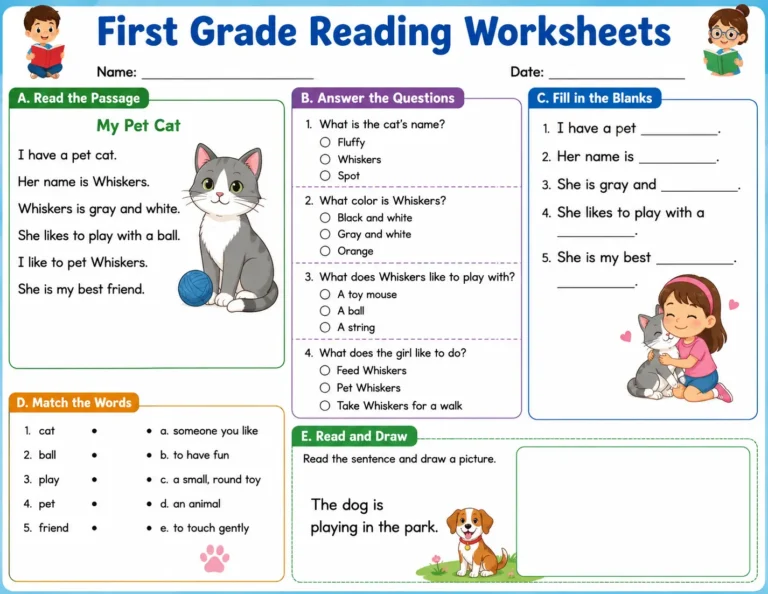
2. Reading Comprehension Worksheets
Reading isn’t just about recognizing words anymore.
Third graders begin analyzing stories, identifying themes, understanding character motivations, and answering detailed comprehension questions.
Good reading worksheets include:
- Fiction passages
- Informational texts
- Short stories
- Poetry
- Main idea exercises
- Context clues
- Vocabulary practice
- Sequencing activities
These activities improve reading fluency while helping children think more deeply about what they read.
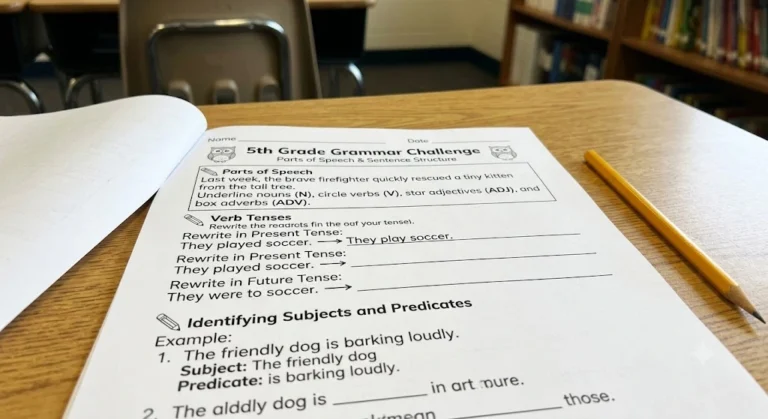
3. Grammar and Language Arts Worksheets
Grammar skills become increasingly important during third grade.
Students practice:
- Nouns
- Verbs
- Adjectives
- Adverbs
- Pronouns
- Punctuation
- Capitalization
- Sentence correction
- Subject-verb agreement
Instead of memorizing grammar rules, worksheets allow children to use them naturally in sentences.
And that’s where real learning happens.
4. Writing Worksheets That Spark Creativity
Many children struggle with writing because they simply don’t know where to begin.
Writing worksheets provide helpful structure through:
- Story starters
- Opinion writing prompts
- Narrative writing
- Friendly letters
- Descriptive paragraphs
- Informative essays
- Journal prompts
- Creative storytelling
Little by little, students become more comfortable organizing their ideas and expressing themselves.
5. Spelling and Vocabulary Activities
A stronger vocabulary improves reading, writing, and communication skills.
Third grade worksheets often feature:
- Weekly spelling lists
- Word searches
- Crossword puzzles
- Matching activities
- Synonyms and antonyms
- Prefixes and suffixes
- Alphabetical order
- Dictionary skills
Kids usually don’t realize they’re expanding their vocabulary because they’re busy solving puzzles.
That’s part of the magic.
6. Science Worksheets for Curious Minds
Children naturally ask questions.
Science worksheets encourage that curiosity while introducing important concepts such as:
- Animal habitats
- Plants
- Weather
- Life cycles
- The solar system
- Rocks and minerals
- Human body systems
- Simple experiments
Hands-on activities combined with printable worksheets make science much more memorable.
7. Social Studies Worksheets
Third graders also begin learning more about communities, geography, history, and citizenship.
Useful worksheet topics include:
- Maps
- Continents
- Landforms
- Government
- Famous historical figures
- Timelines
- Cultural traditions
- Community helpers
These lessons help children better understand the world around them.
8. Fun Holiday Worksheets
Learning doesn’t need to stop during holidays.
Seasonal worksheets make lessons more exciting while reinforcing important skills.
Popular themes include:
- Halloween
- Thanksgiving
- Christmas
- Valentine’s Day
- Easter
- Earth Day
- Back to School
- Summer Learning
Kids often complete these activities without even realizing they’re practicing math or reading.
9. Critical Thinking and Logic Worksheets
Some of the best third grade worksheets challenge children to think differently.
Examples include:
- Logic puzzles
- Sudoku for kids
- Pattern recognition
- Brain teasers
- Coding activities
- Problem-solving exercises
These activities strengthen reasoning skills that benefit every school subject.
10. Printable Worksheets for Homeschooling
Homeschool families often rely on printable worksheets because they’re flexible and easy to customize.
Parents can:
- Choose skill-specific practice
- Review difficult concepts
- Track progress
- Create personalized lesson plans
- Mix worksheets with hands-on learning
It’s simple. Print what you need and teach at your own pace.
11. Worksheets for Fast Finishers
Teachers know that some students finish assignments much earlier than others.
Extra worksheets keep advanced learners engaged with:
- Challenge math problems
- Reading extensions
- Creative writing
- STEM activities
- Vocabulary games
Instead of waiting, students continue learning.
12. Test Preparation Worksheets
Standardized testing can feel stressful.
Practice worksheets help students become familiar with question formats while reviewing important concepts.
Topics often include:
- Reading comprehension
- Math review
- Grammar practice
- Mixed subject assessments
- Timed exercises
Regular practice reduces anxiety and builds confidence before exam day.
13. Interactive Worksheet Ideas
Not every worksheet has to involve a pencil.
Try activities like:
- Cut-and-paste sorting
- Coloring math pages
- Matching games
- Scavenger hunts
- Dice activities
- Board game worksheets
These interactive formats keep students motivated while reinforcing important skills.
14. Tips for Using Third Grade Worksheets Effectively
Worksheets work best when used in moderation.
Here are a few simple tips:
- Keep sessions around 15–20 minutes.
- Celebrate effort, not perfection.
- Mix different subjects throughout the week.
- Review mistakes together.
- Allow short breaks.
- Include educational games between worksheets.
Children stay engaged when learning feels balanced rather than overwhelming.
15. Choosing the Best Third Grade Worksheets
Not every printable is created equally.
Look for worksheets that:
- Match your child’s current skill level
- Include clear instructions
- Feature colorful, engaging designs
- Provide answer keys when possible
- Focus on one concept at a time
- Encourage independent thinking
Quality always beats quantity.
A handful of excellent worksheets will accomplish far more than dozens of repetitive pages.
Final Thoughts
The best third grade worksheets do much more than fill time. They reinforce classroom lessons, encourage independent learning, and help children develop confidence across every subject.
Whether your child needs extra multiplication practice, wants to improve reading comprehension, or simply enjoys solving fun puzzles, printable worksheets provide an easy and effective solution. The key is consistency—not hours of work every day, just a little meaningful practice.
Keep learning enjoyable. Mix subjects, celebrate progress, and remember that every completed worksheet is another small step toward stronger academic success. Sometimes those little steps make the biggest difference.