4th Grade Multiplication Worksheets: 15 Fun Ways to Build Math Confidence
Multiplication is one of the biggest milestones in elementary math. Once students master it, everything from division and fractions to geometry and problem-solving becomes much easier. That’s why 4th grade multiplication worksheets are such a valuable learning tool. They provide structured practice, improve speed and accuracy, and help children gain the confidence they need for more advanced math.
But here’s the thing… not every worksheet is equally effective.
Some simply ask students to solve endless rows of multiplication problems. Others include puzzles, games, word problems, and visual models that actually make learning enjoyable. The best worksheets combine both approaches, giving students enough repetition to build fluency while keeping them interested.
If you’re looking for ways to help your child or students strengthen multiplication skills, this guide covers everything you need to know.
Why Multiplication Matters in 4th Grade
Fourth grade is when multiplication moves beyond simple memorization.
Students are expected to:
- Multiply larger numbers
- Solve multi-step word problems
- Understand multiplication patterns
- Multiply by multiples of 10 and 100
- Use area models
- Apply multiplication in real-life situations
Without regular practice, these concepts can feel overwhelming. That’s where 4th grade multiplication worksheets become incredibly useful.
A few minutes of focused practice every day often leads to noticeable improvement within just a few weeks.
1. Basic Multiplication Facts Worksheets
Every strong math foundation starts with basic multiplication facts.
These worksheets focus on:
- Times tables from 1–12
- Mixed multiplication facts
- Missing factor problems
- Quick review exercises
Students who know their multiplication facts automatically spend less mental energy on simple calculations, allowing them to concentrate on solving more complex problems.
Short daily practice usually works better than long study sessions.
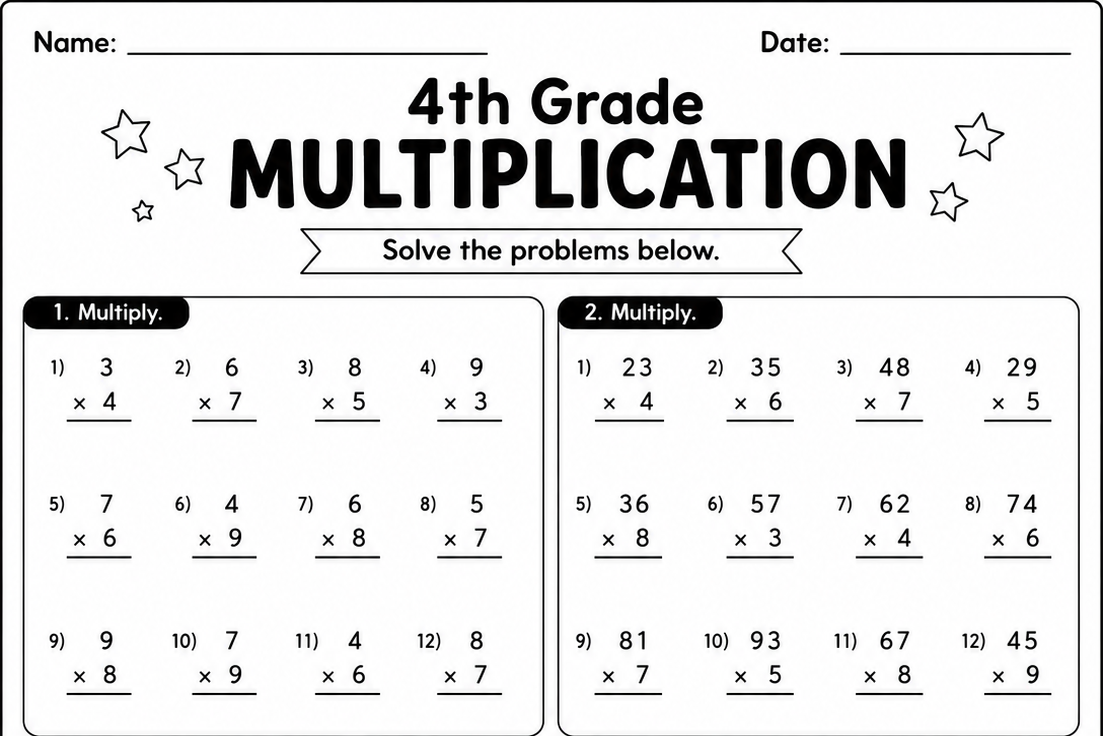
2. Two-Digit by One-Digit Multiplication Worksheets
By fourth grade, students begin multiplying larger numbers.
Typical worksheet activities include:
- 24 × 5
- 67 × 8
- 43 × 9
- 81 × 6
These exercises help children learn proper multiplication procedures while reducing common calculation mistakes.
3. Two-Digit by Two-Digit Multiplication
Now things become more challenging.
These worksheets introduce:
- Long multiplication
- Partial products
- Standard algorithm
- Area model multiplication
At first, students may find these problems intimidating.
But after enough practice… they usually become much more comfortable.
4. Multiplication Word Problems
Real-world math helps students understand why multiplication matters.
Examples include:
- Finding the total number of seats in a theater
- Calculating the number of pencils in several boxes
- Shopping and budgeting problems
- Classroom activity scenarios
Word problems improve:
- Reading comprehension
- Critical thinking
- Mathematical reasoning
They’re often the bridge between knowing multiplication facts and actually using them.
5. Multiplication Arrays and Area Models
Visual learners benefit tremendously from area models.
These worksheets include:
- Rectangular arrays
- Grid multiplication
- Area models
- Equal groups
Instead of memorizing rules, students can actually see how multiplication works.
That visual understanding sticks with them much longer.
6. Missing Number Worksheets
Rather than solving straightforward multiplication problems, students complete equations like:
- □ × 8 = 56
- 9 × □ = 81
- □ × 12 = 96
These activities strengthen:
- Logical thinking
- Fact recall
- Number sense
And they’re surprisingly fun.
7. Multiplication by Multiples of 10
Fourth graders also learn patterns involving:
- ×10
- ×20
- ×30
- ×100
These worksheets teach students shortcuts instead of relying on repeated addition.
Understanding place value becomes much easier through this type of practice.
8. Multiplication Puzzle Worksheets
Math doesn’t always have to feel like homework.
Puzzle worksheets often include:
- Color-by-number multiplication
- Mystery picture activities
- Number mazes
- Crossword puzzles
- Logic challenges
Children often don’t even realize how much they’re practicing.
That’s the beauty of game-based learning.
9. Timed Multiplication Drills
Speed matters—but accuracy comes first.
Timed worksheets help students:
- Improve fact fluency
- Build confidence
- Prepare for classroom assessments
- Develop faster recall
Keep practice sessions short.
Five minutes can be more effective than thirty.
10. Multiplication and Division Mixed Practice
Since multiplication and division are closely connected, many worksheets combine both skills.
Students solve problems like:
- 8 × 9
- 72 ÷ 8
- 6 × 12
- 84 ÷ 7
Practicing both operations together strengthens overall number understanding.
11. Multiplication Challenge Worksheets
Advanced learners often need something beyond basic practice.
Challenge worksheets may include:
- Multi-step problems
- Logic puzzles
- Higher-order thinking questions
- Large-number multiplication
These activities keep gifted students engaged without simply assigning more of the same problems.
12. Seasonal and Holiday Worksheets
Holiday-themed worksheets make math more exciting.
Popular themes include:
- Halloween
- Christmas
- Valentine’s Day
- Easter
- Summer
- Back to School
A festive worksheet can completely change a student’s attitude toward practicing multiplication.
Sometimes that’s all it takes.
13. Real-Life Multiplication Activities
Practical worksheets connect math with everyday experiences.
Examples include:
- Grocery shopping
- Sports statistics
- Cooking recipes
- Travel distances
- Classroom supplies
Students begin seeing multiplication everywhere—not just inside a textbook.
14. Printable Multiplication Games
Interactive worksheets may feature:
- Dice games
- Bingo cards
- Partner activities
- Board games
- Matching exercises
Learning becomes much more engaging when students actively participate.
And honestly, they usually remember more.
15. Daily Review Worksheets
Consistency beats cramming.
Daily review pages often combine:
- Multiplication facts
- Word problems
- Mental math
- Mixed operations
- Quick challenges
Just one worksheet each day helps maintain skills throughout the school year.
Small steps really do add up.
Tips for Using 4th Grade Multiplication Worksheets Effectively
Worksheets work best when they’re used thoughtfully rather than simply assigned in large quantities.
Here are a few helpful strategies:
- Practice for 10–15 minutes each day.
- Focus on understanding before speed.
- Review mistakes together.
- Celebrate progress, even small improvements.
- Mix worksheet types to avoid boredom.
- Encourage students to explain their thinking.
- Use hands-on materials alongside paper practice.
Remember, confidence grows with consistent success.
Common Mistakes Students Make
Even strong math students make multiplication errors.
Some of the most common include:
- Forgetting multiplication facts
- Misaligning numbers during long multiplication
- Skipping carrying steps
- Misreading word problems
- Confusing multiplication with addition
Regular worksheet practice helps identify these mistakes early, making them easier to correct before they become habits.
Benefits of Printable Multiplication Worksheets
Printable worksheets remain popular for good reasons.
They help students:
- Develop stronger multiplication fluency
- Improve accuracy
- Build independent learning habits
- Strengthen problem-solving skills
- Prepare for quizzes and standardized tests
- Practice without needing internet access
Parents appreciate having ready-to-use resources at home, while teachers value the flexibility they provide in the classroom.
Final Thoughts
Choosing the right 4th grade multiplication worksheets can make a significant difference in a child’s math journey. The best worksheets balance repetition with creativity, giving students plenty of opportunities to practice while keeping lessons fresh and engaging.
Whether you’re a parent supporting homework, a teacher planning classroom activities, or a homeschool educator building daily lessons, consistent worksheet practice helps students develop strong multiplication skills that will support future success in mathematics.
Keep sessions short, encourage mistakes as part of learning, and celebrate every improvement. Over time, those daily practice pages turn into lasting confidence—and that’s one of the greatest gifts you can give a young math learner.