7 Teacher Worksheets Every Singapore Parent and Educator Should Use
Worksheets have been part of classrooms for decades, yet they’re far from outdated. In fact, the right teacher worksheets can make lessons more engaging, reinforce important concepts, and help students build confidence one step at a time.
Whether you’re a classroom teacher preparing tomorrow’s lesson or a parent helping your child revise after school, choosing the right worksheet matters. A well-designed worksheet isn’t simply a page full of questions. It should encourage thinking, provide meaningful practice, and match a student’s current learning level.
In Singapore, where the MOE curriculum emphasizes both understanding and application, worksheets remain valuable when they’re used with purpose. Throughout this guide, you’ll learn how to select quality worksheets, avoid common mistakes, and find resources that genuinely support children’s learning rather than adding unnecessary stress.
Why Teacher Worksheets Still Matter in Modern Classrooms
Technology has changed education in many ways. Students now learn through videos, educational apps, interactive quizzes, and even AI-powered tools. Even so, teacher worksheets continue to play an important role because they offer something simple and effective—focused practice without distractions.
When used correctly, worksheets help students:
- Reinforce concepts taught during lessons
- Practise independently
- Identify areas that need improvement
- Prepare for classroom assessments
- Build confidence through regular revision
For teachers, worksheets also provide an easy way to monitor progress. Instead of relying only on verbal answers during class, written work reveals how students think through problems and where misconceptions appear.
Parents benefit too. A worksheet completed at home gives a clear picture of what a child understands and what still needs attention.
The key isn’t using more worksheets. It’s using better ones.
Worksheets Support Different Learning Goals
Every lesson has a different purpose.
Sometimes students are learning a new topic.
Sometimes they’re reviewing old material.
Sometimes they’re preparing for examinations.
Good worksheets are designed with these different goals in mind.
For example:
- A math worksheet may introduce fractions using visual models before asking students to solve equations.
- An English worksheet may begin with vocabulary before moving into reading comprehension.
- A science worksheet might encourage observation and prediction instead of memorising definitions.
This gradual progression makes learning feel manageable rather than overwhelming.
Printable Worksheets vs Digital Worksheets
Both formats have advantages.
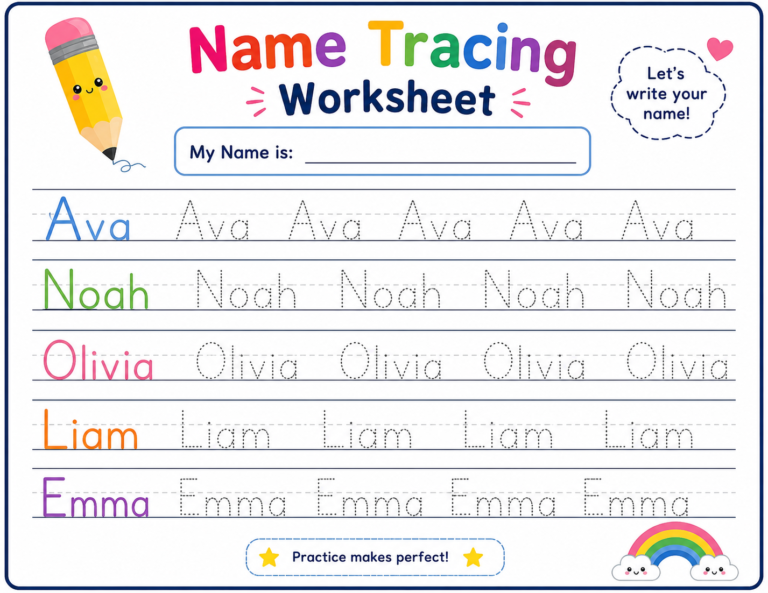
Printable worksheets work well because students can write, highlight, draw, and solve problems directly on paper. Many younger learners also stay focused longer without screen distractions.
Digital worksheets, meanwhile, offer instant feedback and interactive features that can increase engagement.
Many Singapore teachers now combine both approaches.
For example:
- Introduce a concept using interactive classroom activities.
- Reinforce learning with printable worksheets.
- Finish with an online quiz for immediate feedback.
This balanced approach helps students stay interested while still developing strong writing and problem-solving skills.
Choosing Teacher Worksheets That Match the Singapore Curriculum
Not every worksheet found online is suitable for local classrooms.
Many free resources are written for American, British, or Australian curricula. While some activities transfer easily, others use unfamiliar spelling, terminology, measurement units, or learning sequences.
That’s why teachers and parents should always check whether worksheets align with the Singapore curriculum and the MOE syllabus.
A high-quality worksheet should:
- Match the student’s current level
- Use age-appropriate language
- Include clear instructions
- Encourage understanding instead of memorisation
- Build skills progressively
Rather than asking twenty repetitive questions, an effective worksheet often contains fewer but more meaningful tasks.
Features of Excellent Teaching Resources
When reviewing classroom resources, ask yourself a few simple questions.
Is the objective clear?
Students should immediately understand what they’re practising.
Does it encourage thinking?
Questions that ask students to explain answers often produce deeper understanding than simple fill-in-the-blank exercises.
Is the layout clean?
Too much text can overwhelm younger learners.
Good printable learning materials leave enough white space to help students concentrate.
Can it be completed independently?
While some guidance is expected, students should be able to complete most of the worksheet without constant assistance.
Common Types of Teacher Worksheets
Different subjects require different worksheet styles.
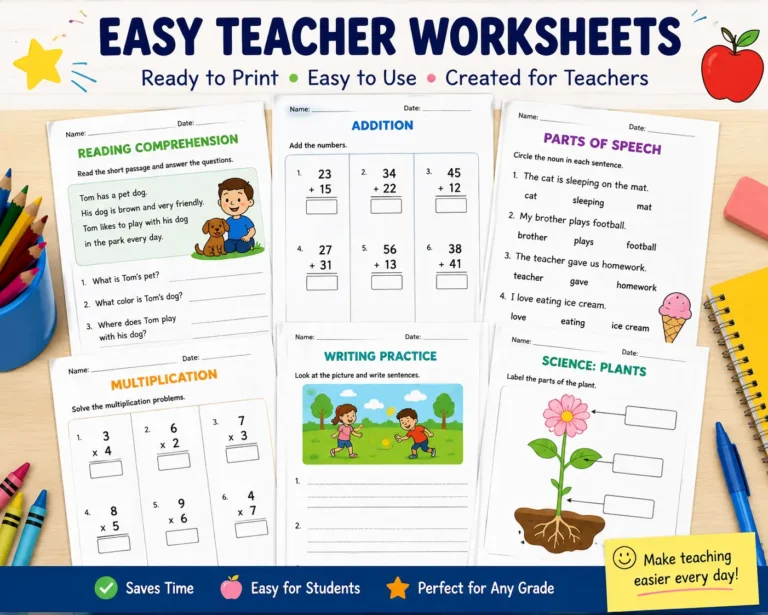
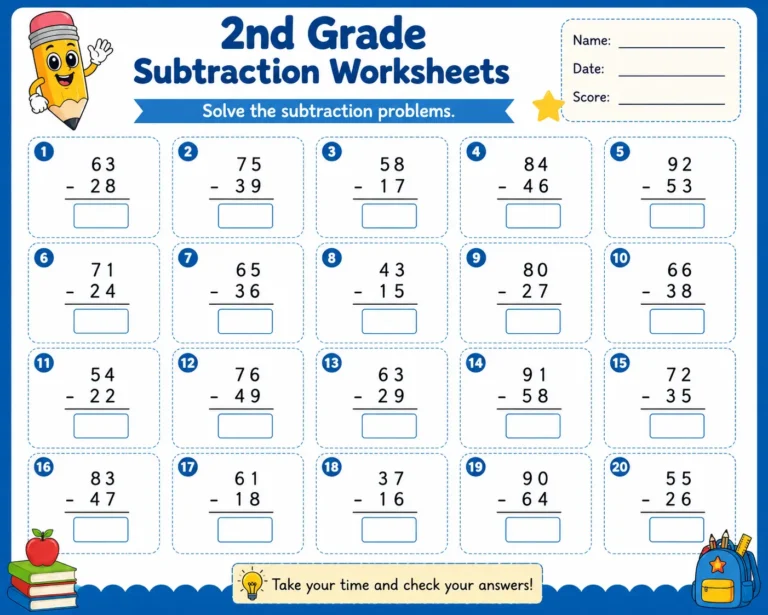
Math Worksheets
These usually include:
- Number operations
- Fractions
- Decimals
- Geometry
- Word problems
- Mental calculation practice
The strongest math worksheets encourage students to explain their reasoning rather than simply writing answers.
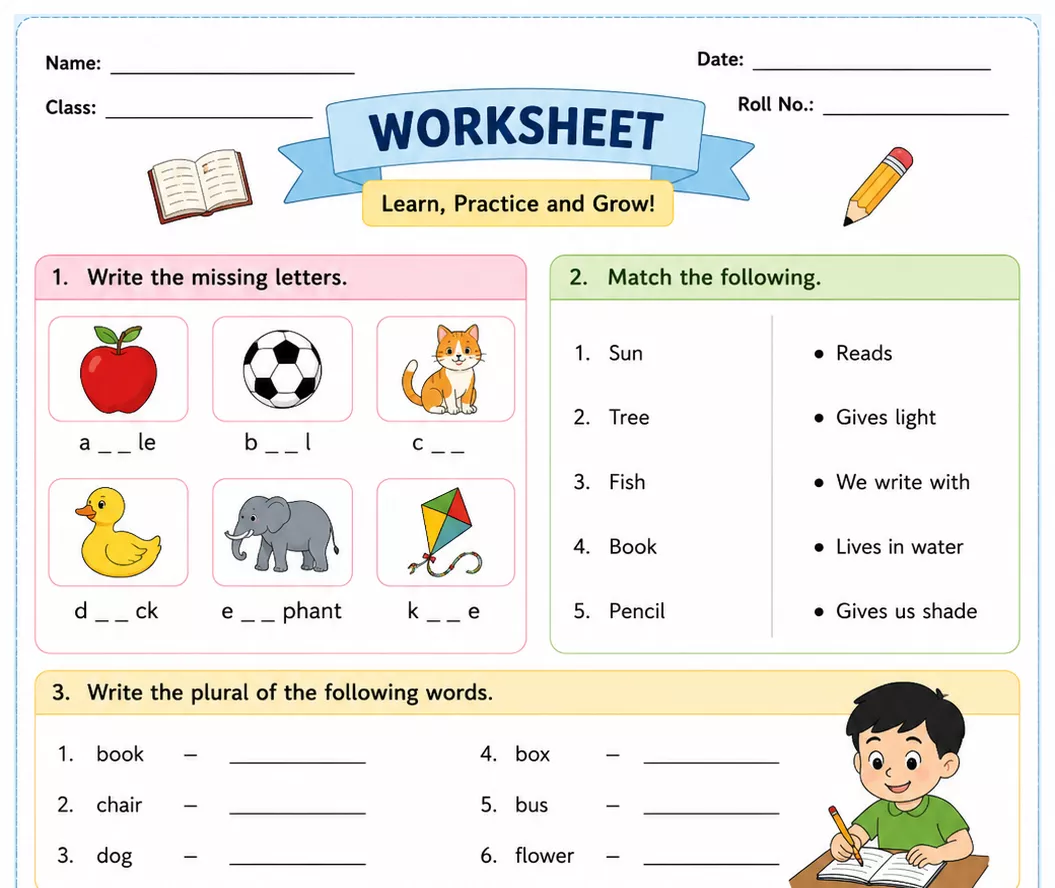
English Worksheets
English activities often focus on:
- Grammar
- Vocabulary
- Reading comprehension
- Writing practice
- Sentence construction
- Editing exercises
Reading comprehension worksheets remain especially valuable because they develop critical thinking alongside language skills.
Science Worksheets
Science worksheets often include:
- Observation activities
- Lab recording sheets
- Classification exercises
- Diagrams
- Scientific vocabulary
- Real-life applications
Rather than memorising facts, students learn how scientific concepts connect to everyday experiences.
Supporting Different Learning Styles
Every child learns differently.
Some students remember information best after reading.
Others need diagrams, hands-on activities, or discussion before ideas become clear.
Good teaching resources recognise these differences.
For example:
- Visual learners benefit from diagrams and charts.
- Logical learners enjoy problem-solving tasks.
- Creative learners respond well to open-ended writing activities.
- Practical learners benefit from real-world examples.
The most effective teacher worksheets combine several learning approaches instead of relying on one format alone.
Making Teacher Worksheets More Effective at Home and in School
A worksheet by itself doesn’t guarantee learning. It’s how you use it that makes the biggest difference.
Think about it this way. Giving a child ten pages of practice without explaining the topic is like handing someone a recipe without showing them where the ingredients are. They might finish the task, but they won’t necessarily understand what they’re doing.
The best teacher worksheets work alongside classroom teaching, discussions, and hands-on activities. They reinforce learning instead of replacing it.
For teachers, worksheets are excellent for checking understanding after a lesson. For parents, they provide structured revision without having to create activities from scratch.
Keep Practice Short but Consistent
Many parents believe that more worksheets automatically mean better results. In reality, quality matters much more than quantity.
A focused 20-minute practice session often produces better learning than an hour of repetitive exercises.
You can create a simple weekly routine like this:
- Monday: Math worksheets
- Tuesday: English reading comprehension
- Wednesday: Science activities
- Thursday: Writing practice
- Friday: Mixed assessment practice
This variety keeps students engaged while reinforcing different skills throughout the week.
Encourage Thinking, Not Guessing
Instead of asking only for the correct answer, encourage children to explain how they reached it.
For example:
Instead of:
What is 36 ÷ 4?
Ask:
How did you work out your answer?
This simple change develops reasoning skills and helps teachers or parents identify misconceptions much faster.
Open-ended questions also build confidence because students learn that explaining their thinking is just as valuable as getting the answer right.
Give Feedback Quickly
Feedback is one of the biggest advantages of using worksheets regularly.
If mistakes aren’t corrected until several days later, students often forget how they solved the questions.
Instead:
- Review answers together.
- Praise correct thinking.
- Explain mistakes calmly.
- Let students try similar questions again.
The goal isn’t perfection. It’s improvement.
Best Places to Find Teacher Worksheets in Singapore
Finding quality teaching resources has become much easier over the past few years.
Some websites provide completely free printable worksheets, while others offer premium collections created by experienced educators.
Here are some of the most useful options.
1. MOE-Aligned Educational Platforms
Many Singapore-focused education websites provide worksheets that closely follow the MOE syllabus.
These resources are especially useful because they reflect the learning sequence students experience in school.
Parents don’t have to worry about unfamiliar terminology or topics appearing too early.
2. Printable Worksheet Libraries
Large worksheet libraries usually include:
- Primary school worksheets
- Preschool worksheets
- Math worksheets
- English worksheets
- Science worksheets
- Holiday activities
- Classroom games
Most allow users to filter resources by age, subject, or difficulty level.
3. Teacher Communities
Many experienced teachers share their own classroom materials online.
These worksheets have often been tested in real classrooms before being published, making them practical and classroom-friendly.
Teacher communities are also excellent places to discover creative lesson planning ideas.
4. Interactive Learning Platforms
Digital worksheets are becoming increasingly popular.
Students can complete activities on tablets or computers while receiving immediate feedback.
These platforms work particularly well for:
- Vocabulary practice
- Grammar exercises
- Mental math
- Reading quizzes
Many schools now combine digital worksheets with traditional printed resources.
Common Mistakes When Using Teacher Worksheets
Even the best worksheet loses its value if it’s used incorrectly.
Fortunately, these mistakes are easy to avoid.
Giving Too Many Worksheets
Some adults assume extra practice automatically leads to higher marks.
Unfortunately, too much repetition can reduce motivation.
Students become tired instead of engaged.
It’s better to complete two excellent worksheets than ten rushed ones.
Choosing the Wrong Difficulty Level
Worksheets should challenge students—but not frustrate them.
If every question feels impossible, confidence quickly disappears.
If everything is too easy, students stop thinking.
Aim for worksheets where children can complete around 70–80% independently while still needing occasional guidance.
Ignoring Real-Life Examples
Worksheets become much more meaningful when connected to everyday situations.
For example:
Instead of asking students to calculate random prices…
Use supermarket shopping.
Instead of measuring imaginary objects…
Measure a dining table, water bottle, or school bag.
Simple changes like these help children understand why they’re learning the topic in the first place.
Focusing Only on Correct Answers
Learning isn’t just about ticking boxes.
Sometimes a wrong answer reveals excellent thinking with one small mistake.
Discussing the process often teaches more than marking the final answer as incorrect.
How to Create Better Teacher Worksheets
Sometimes the perfect worksheet doesn’t exist.
That’s why many educators create their own.
The good news?
You don’t need expensive software or graphic design skills.
Start with one clear learning objective.
For example:
Students will identify adjectives in simple sentences.
Every question should support that single objective.
Avoid mixing grammar, vocabulary, comprehension, and writing onto one page unless you’re creating an assessment.
Keep Instructions Simple
Students shouldn’t spend more time understanding directions than completing the activity.
Instead of writing:
Circle the appropriate vocabulary item that most accurately completes each individual sentence.
Simply write:
Circle the best word.
Clear instructions reduce confusion and allow students to focus on learning.
Add Different Question Types
Variety keeps students interested.
Consider including:
- Multiple choice
- Matching activities
- Fill-in-the-blanks
- Short answers
- Drawing activities
- Problem-solving questions
- Reflection prompts
Mixing formats helps develop different thinking skills while making worksheets feel less repetitive.
The Future of Teacher Worksheets in Singapore
Classrooms are changing, and so are worksheets.
Today, many educators use artificial intelligence, online design tools, and interactive learning platforms to create customised activities in minutes. That doesn’t mean traditional worksheets are disappearing. Instead, they’re becoming more purposeful.
For example, a teacher might use AI to generate practice questions, then review and edit them to ensure they match the Singapore curriculum and the lesson objectives. This saves preparation time while keeping the content accurate and meaningful.
Parents can benefit too. Instead of searching through hundreds of random resources, they can choose printable learning materials that target the exact topic their child is studying.
The most effective approach is a balanced one:
- Use digital worksheets for quick quizzes and instant feedback.
- Use printable worksheets for writing, drawing, and problem-solving.
- Include discussions and hands-on classroom activities to reinforce learning.
- Encourage students to reflect on mistakes and celebrate progress.
Technology is a helpful assistant—but thoughtful teaching is still the key to meaningful learning.
Tips for Teachers and Parents
Whether you’re teaching a whole class or helping one child after school, these simple tips can make every worksheet more effective.
Set a Clear Goal
Before printing a worksheet, ask yourself:
“What should the student know or be able to do after completing this?”
Having one clear objective keeps learning focused and prevents unnecessary practice.
Keep Sessions Positive
Children learn better when they feel encouraged.
Instead of highlighting every mistake, recognise what they did well first. Then work together on areas that need improvement.
Positive feedback builds confidence and motivates students to keep learning.
Mix Worksheets with Real-Life Learning
Worksheets are just one piece of the puzzle.
For example:
- Practise fractions while baking.
- Improve measurement skills by measuring furniture at home.
- Build vocabulary during a family outing.
- Strengthen reading comprehension by discussing a favourite storybook.
Real-life experiences make classroom learning more memorable.
Review Progress Regularly
Save completed worksheets in a folder.
Every few months, look back at older work.
Students often enjoy seeing how much they’ve improved, and teachers or parents can easily spot patterns that need extra attention.
Conclusion
Well-designed teacher worksheets remain one of the most practical learning tools available for both classrooms and home study. When they’re aligned with the MOE syllabus, matched to a child’s ability, and combined with discussion and real-world activities, they become much more than simple practice sheets.
Remember, success doesn’t come from completing the greatest number of worksheets. It comes from using the right ones at the right time. A few carefully selected primary school worksheets, thoughtful reading comprehension exercises, or engaging math worksheets can strengthen understanding far more effectively than hours of repetitive drilling.
Whether you’re a Singapore teacher planning tomorrow’s lesson or a parent supporting after-school revision, focus on quality, consistency, and encouragement. Start by selecting one well-designed worksheet this week, work through it together, discuss the answers, and build from there. Small, steady steps often lead to the biggest learning gains.
1. Where can I find free teacher worksheets in Singapore?
Many educational websites provide free teacher worksheets, including MOE-aligned resources, teacher communities, and printable worksheet libraries. Look for materials that match your child’s level and the Singapore curriculum rather than downloading worksheets simply because they’re free.
2. Are printable worksheets better than digital worksheets?
Neither format is better in every situation. Printable worksheets are excellent for writing practice, problem-solving, and reducing screen time. Digital worksheets provide instant feedback and interactive learning. Many teachers use both together for the best results.
3. How many worksheets should a child complete each week?
There isn’t a fixed number. A few high-quality worksheets completed carefully are usually more beneficial than many repetitive ones. The focus should always be on understanding concepts instead of finishing as many pages as possible.
4. How do I know if a worksheet matches the Singapore curriculum?
Check whether the worksheet follows the MOE syllabus, uses local spelling and terminology, and covers topics appropriate for your child’s level. Resources created specifically for Singapore schools are generally the safest choice.
5. Can teachers create their own worksheets?
Absolutely. Many educators design customised worksheets to match specific lesson objectives and student needs. Creating your own resources also allows you to include local examples, adjust difficulty levels, and personalise learning activities for your class.