Cursive Letters Worksheets Printable: 10 Easy Ways to Make Handwriting
Learning cursive doesn’t have to feel boring. In fact, with the right cursive letters worksheets printable, children can build beautiful handwriting while actually enjoying the process. Whether you’re a parent teaching at home, a classroom teacher, or a homeschool educator, printable worksheets provide a simple, affordable way to help kids practice every letter at their own pace.
The best part? Printable worksheets can be used again and again. Slip them into plastic sleeves, laminate them, or simply print fresh copies whenever needed. That flexibility makes them one of the easiest handwriting resources available.
Let’s explore why printable cursive worksheets are so effective—and how you can get the most from them.
Why Printable Cursive Worksheets Still Matter
Technology is everywhere. Kids type on tablets, laptops, and phones almost every day.
But handwriting still plays an important role in learning.
Research continues to suggest that writing by hand supports memory, improves fine motor skills, and encourages better letter recognition. Cursive writing also develops smoother hand movements because each letter connects naturally to the next.
That’s why many parents are bringing cursive practice back into their learning routine.
A good printable worksheet offers:
- Step-by-step letter formation
- Consistent line spacing
- Guided tracing
- Independent writing practice
- Repetition without becoming overwhelming
Simple…but surprisingly effective.
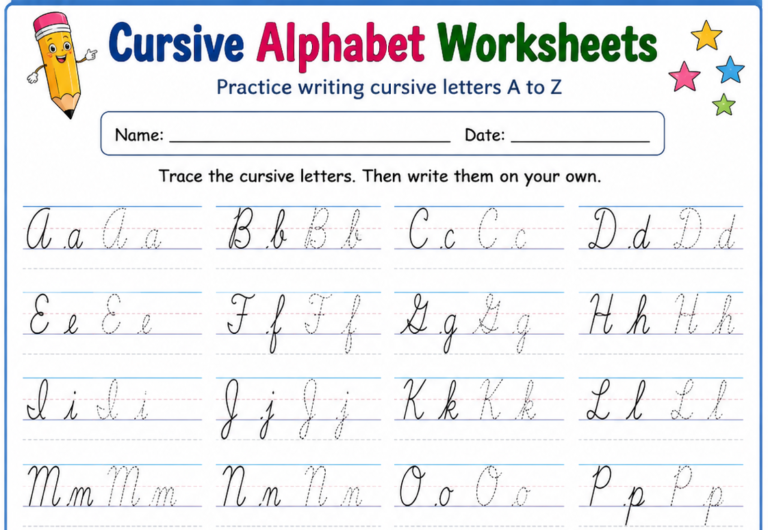
1. Start with Individual Lowercase Letters
Before children begin writing complete words, they should become comfortable forming each lowercase cursive letter.
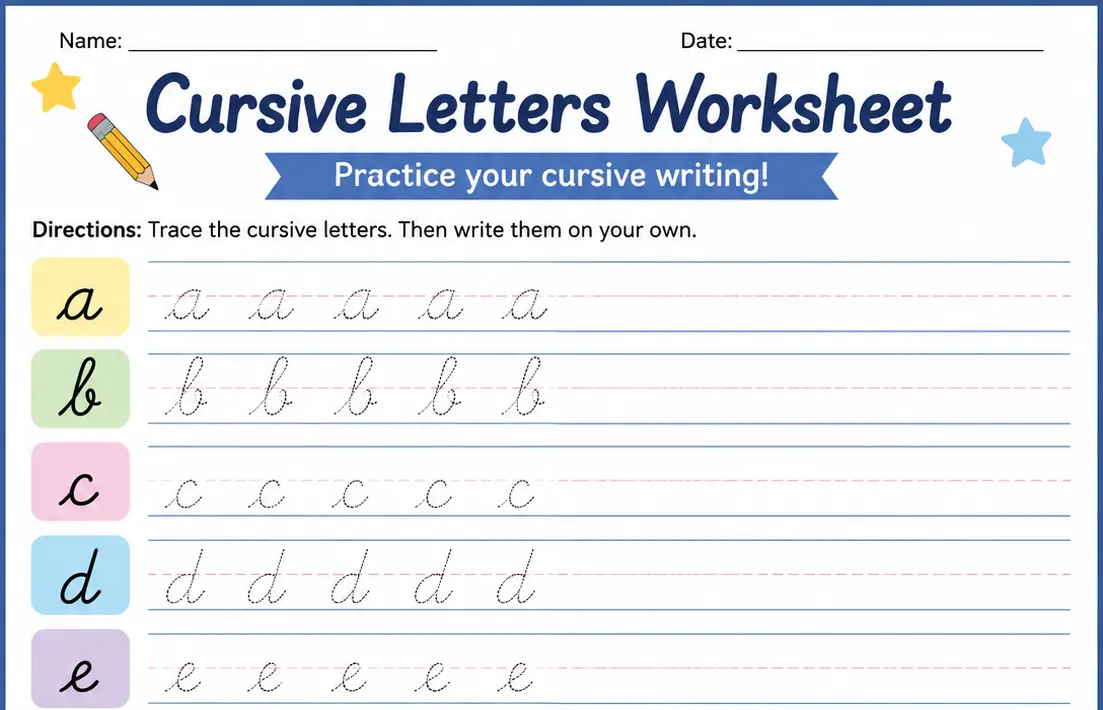
Printable worksheets usually begin with:
- a
- b
- c
- d
- e
…and gradually work through the alphabet.
Each page typically includes:
- Directional arrows
- Traceable letters
- Blank practice lines
- Independent writing space
This gradual progression builds confidence from the very beginning.
2. Practice Uppercase Letters Separately
Uppercase cursive letters often look very different from their printed versions.
Some letters—like Q, F, and Z—can feel especially challenging.
Using dedicated printable worksheets allows children to focus on one capital letter at a time instead of rushing through the alphabet.
Many teachers recommend practicing just two or three uppercase letters during a single lesson.
Less pressure usually means better handwriting.
3. Use Tracing Before Independent Writing
Tracing gives young learners muscle memory.
Instead of immediately expecting perfect handwriting, printable worksheets guide children through repeated tracing exercises.
A typical progression looks like this:
- Trace dotted letters
- Copy faded examples
- Write independently
- Repeat across several lines
This gradual release helps reduce frustration while improving consistency.
4. Practice Letter Families Together
Many cursive letters share similar strokes.
Grouping them together makes learning easier.
For example:
Curve Family
- a
- c
- d
- g
- q
Loop Family
- e
- l
- h
- b
- k
Bridge Family
- i
- u
- w
- t
When worksheets organize letters by movement instead of alphabetical order, children often learn faster.
It’s a small change…but it works.
5. Add Simple Word Practice
Once individual letters become familiar, printable worksheets should introduce short words.
Examples include:
- cat
- dog
- sun
- bird
- tree
- apple
Writing complete words teaches students how cursive letters connect naturally.
And honestly, seeing actual words appear on the page feels much more rewarding than endless rows of individual letters.
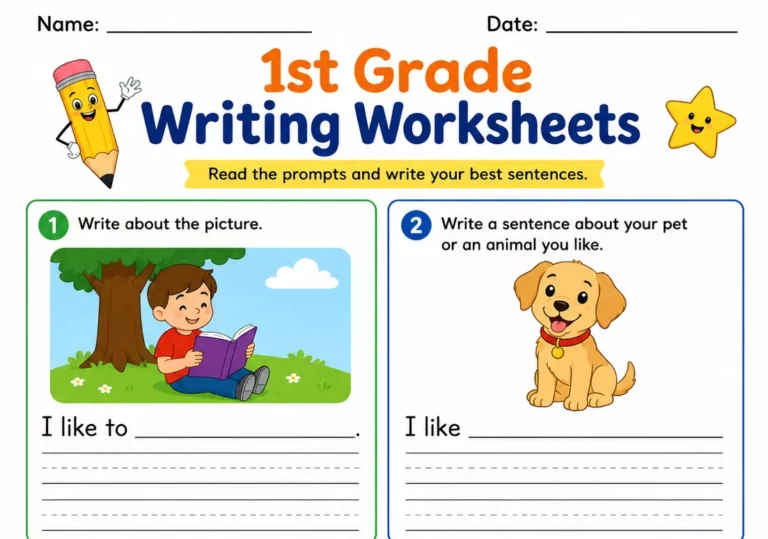
6. Include Positive Sentences
Children enjoy writing meaningful sentences much more than random practice lines.
Good printable worksheets often include examples like:
- I love reading.
- Today is sunny.
- My family is kind.
- Practice makes progress.
- I can write neatly.
These simple sentences improve handwriting while reinforcing reading and spelling skills.
It’s multitasking—in the best possible way.
7. Make Practice Short but Consistent
Long handwriting sessions rarely produce better results.
Ten to fifteen minutes each day is usually enough.
A weekly schedule might look like this:
| Day | Activity |
|---|---|
| Monday | Lowercase letters |
| Tuesday | Uppercase letters |
| Wednesday | Letter connections |
| Thursday | Words |
| Friday | Sentences |
| Weekend | Fun handwriting page |
Consistency matters far more than marathon practice sessions.
8. Turn Worksheets into Fun Activities
Printable worksheets don’t have to feel like homework.
Try adding games such as:
- Rainbow writing using colored pencils
- Highlighting favorite letters
- Handwriting races
- Sticker rewards
- Trace with markers
- Write using glitter pens
Little rewards can dramatically improve motivation.
Especially for younger learners.
9. Print Fresh Copies Whenever Needed
One major advantage of printable worksheets is flexibility.
If a child struggles with the letter S, simply print another page.
Need extra uppercase practice?
Print it again.
Unlike traditional workbooks, printable handwriting sheets never really run out.
Many families even organize them into folders by letter or difficulty level, making future review much easier.
10. Celebrate Progress Instead of Perfection
Beautiful cursive takes time.
Some children improve quickly.
Others need weeks—or months—to develop smooth, consistent handwriting.
That’s perfectly normal.
Celebrate small improvements:
- Straighter lines
- Better spacing
- Cleaner loops
- Improved pencil grip
- Faster writing
Confidence grows when children notice their own progress.
And that confidence often leads to even better handwriting.
Tips for Choosing the Best Cursive Letters Worksheets Printable
Not every worksheet is equally helpful.
Look for printable resources that include:
- Clear directional arrows
- Dotted tracing lines
- Wide writing spaces
- Gradual skill progression
- Both uppercase and lowercase letters
- Word and sentence practice
- Clean, uncluttered layouts
- High-quality PDF printing
Avoid worksheets packed with distractions or overly decorative graphics.
Simple designs help children stay focused.
Common Mistakes to Avoid
Even the best worksheets won’t help if practice habits are poor.
Try to avoid:
- Practicing too many letters in one session
- Rushing through tracing exercises
- Skipping lowercase basics
- Holding the pencil incorrectly
- Ignoring spacing between words
- Expecting perfect handwriting immediately
Remember…
Improvement comes through repetition—not speed.
Final Thoughts
Finding the right cursive letters worksheets printable can make handwriting practice easier, more enjoyable, and far less stressful for both children and adults. Whether you’re introducing cursive for the first time or helping students strengthen their existing skills, printable worksheets provide structured practice that fits almost any learning environment.
Start with individual letters, move into words, then sentences, and keep each lesson short and encouraging. Over time, those small daily practice sessions add up to noticeable improvement.
With patience, consistency, and the right printable resources, every learner can build neat, confident cursive handwriting that lasts for years.