First Grade Addition Worksheets: 10 Fun Ways to Help Kids Build Strong Math Skills
Learning addition is one of the biggest milestones for first graders. It’s the first time children begin combining numbers, solving simple equations, and understanding how math works in everyday life. That sounds like a lot… but it doesn’t have to feel overwhelming.
The right first grade addition worksheets can turn practice into something enjoyable instead of stressful. Kids learn best when activities are colorful, varied, and just challenging enough to keep them interested.
Whether you’re a parent helping with homework, a teacher planning classroom activities, or a homeschool educator creating daily lessons, the right worksheets can make all the difference.
Let’s look at why they matter—and how to choose the best ones.
1. Why First Grade Addition Worksheets Are So Important
First grade is where children develop the basic math skills they’ll use for years to come. Addition becomes the foundation for subtraction, multiplication, problem-solving, and even higher-level math later on.
Good worksheets help students:
- Practice number recognition
- Understand number relationships
- Improve counting skills
- Build confidence through repetition
- Develop independent learning habits
And honestly… confidence matters just as much as getting the right answer.
When children solve problems successfully, they’re much more likely to enjoy learning math.
2. Different Types of First Grade Addition Worksheets
Not every worksheet needs to look the same. In fact, variety keeps young learners engaged.
Some popular worksheet styles include:
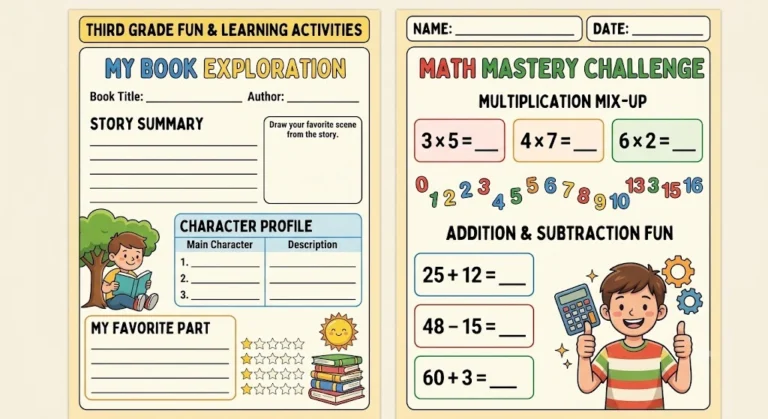
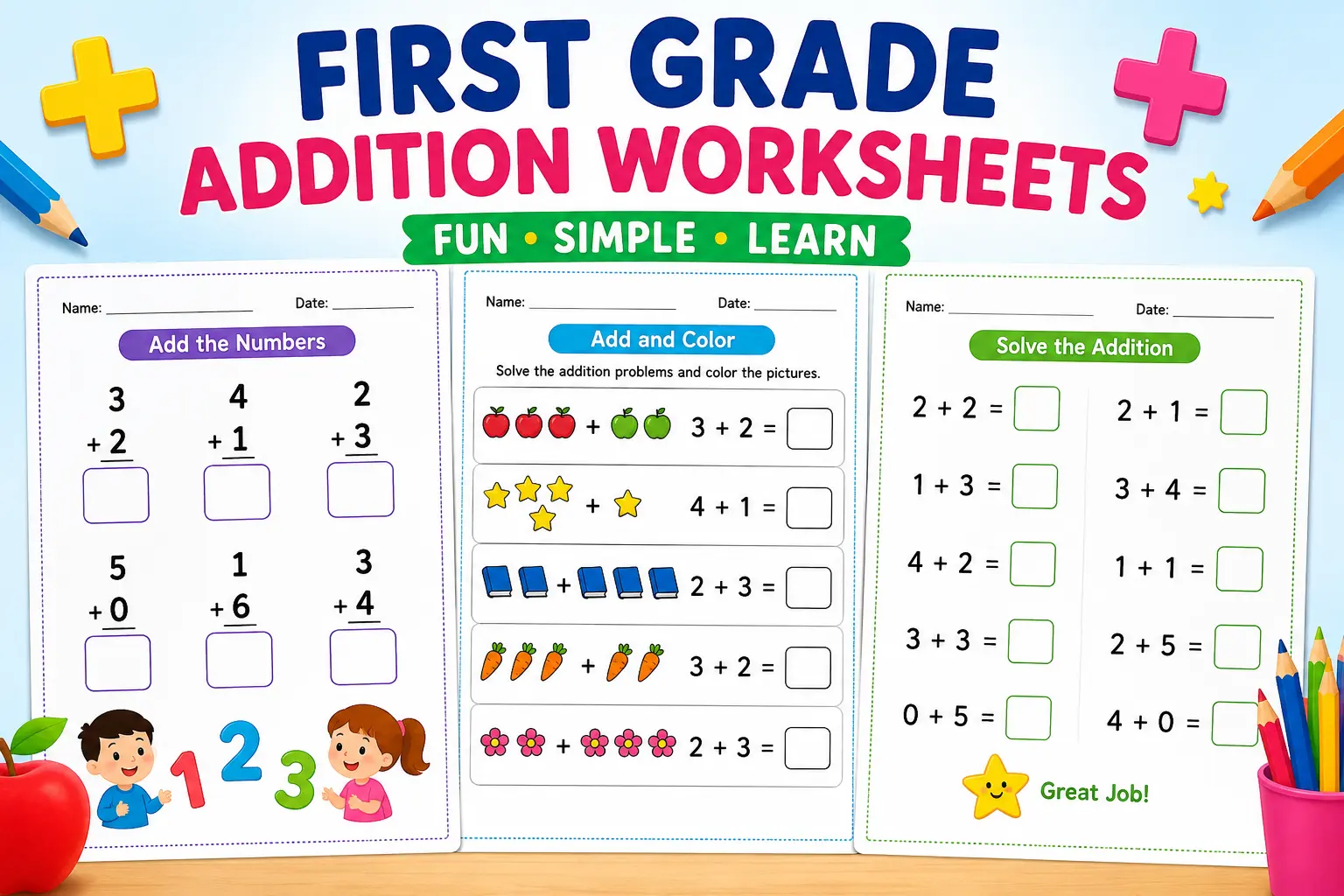
Single-Digit Addition
These worksheets focus on adding numbers from 0 to 9.
Example:
- 4 + 2 =
- 7 + 1 =
- 3 + 5 =
They’re perfect for beginners.
Picture Addition
Children count pictures before solving the equation.
For example:
🍎🍎 + 🍎🍎🍎 = ?
Visual learning helps many first graders understand addition much faster.
Number Line Addition
Number lines teach children how numbers move forward.
Instead of memorizing facts, students actually see addition happening.
Missing Number Worksheets
Example:
- 5 + ___ = 8
- ___ + 2 = 7
These encourage logical thinking instead of simple memorization.
Word Problems
Simple stories make math feel real.
Example:
“Emma has 3 balloons. Her friend gives her 4 more. How many balloons does she have now?”
Kids begin connecting math to everyday life.
3. Benefits of Using Addition Worksheets Regularly
Practice really does make progress.
Using first grade addition worksheets several times each week helps children:
- Improve calculation speed
- Remember basic addition facts
- Reduce math anxiety
- Strengthen concentration
- Build problem-solving skills
- Prepare for classroom assessments
Short practice sessions often work better than long ones.
Ten or fifteen minutes each day is usually enough.
4. Make Learning Feel Like Play
Worksheets don’t have to feel like homework.
Many teachers combine them with fun activities like:
- Color-by-number addition
- Math puzzles
- Dice games
- Counting blocks
- Sticker rewards
- Addition bingo
- Cut-and-paste worksheets
Kids often don’t even realize they’re practicing math.
That’s the sweet spot.
5. Skills Children Develop Beyond Addition
Good worksheets teach much more than adding numbers.
Children also improve:
Critical Thinking
They learn how to solve problems independently.
Fine Motor Skills
Writing numbers neatly strengthens pencil control.
Attention to Detail
Reading each question carefully becomes a habit.
Pattern Recognition
Many worksheets introduce number patterns naturally.
These small improvements support learning across every subject.
6. Choosing the Right First Grade Addition Worksheets
Not all worksheets are equally effective.
Look for resources that include:
- Large, easy-to-read numbers
- Clear instructions
- Fun illustrations
- Age-appropriate questions
- Gradually increasing difficulty
- Plenty of practice without feeling repetitive
Avoid worksheets packed with dozens of difficult questions.
Young learners can lose focus quickly.
Instead, choose quality over quantity.
7. Printable Worksheets vs Digital Activities
Both options have advantages.
Printable Worksheets
Pros:
- No screen time
- Easy to write on
- Great for classrooms
- Can be stored in folders
Digital Worksheets
Pros:
- Interactive
- Instant feedback
- Fun animations
- Convenient for remote learning
Many families enjoy using both.
A printed worksheet in the morning…
A quick math game after dinner.
It keeps learning fresh.
8. Tips for Parents Helping at Home
Parents don’t need to be math experts.
A few simple habits make a huge difference.
Try these ideas:
- Practice for 10–15 minutes daily.
- Celebrate effort, not just correct answers.
- Use coins, toys, or snacks for counting.
- Read word problems together.
- Keep sessions positive.
- Allow children to make mistakes.
Mistakes aren’t failures.
They’re part of learning.
Sometimes kids understand a concept after getting it wrong first.
9. Classroom Ideas for Teachers
Teachers can make worksheets even more engaging by combining them with hands-on activities.
For example:
- Pair students to solve problems together.
- Use worksheet races for review days.
- Create math centers with different worksheet stations.
- Reward completed practice with stickers or classroom points.
- Encourage students to explain how they found each answer.
Discussion helps reinforce understanding.
And children often learn from one another.
10. Signs Your Child Is Ready for More Challenging Addition
Every child learns at a different pace.
Some signs they may be ready for the next level include:
- Solving single-digit problems quickly
- Counting on instead of counting every object
- Completing worksheets with few mistakes
- Enjoying math activities
- Solving simple word problems independently
When these skills become consistent, you can gradually introduce larger numbers and more complex exercises.
There’s no rush.
Steady progress always beats rushing ahead.
How to Keep First Graders Motivated
Young children thrive on encouragement.
Instead of saying:
“You got five wrong.”
Try:
“You solved fifteen correctly—that’s awesome!”
Positive feedback builds confidence.
Small rewards can help too:
- Stickers
- Extra reading time
- Choosing a family game
- Coloring pages
- High-fives
- A favorite snack after practice
Little celebrations create positive learning memories.
Common Mistakes to Avoid
Even with excellent first grade addition worksheets, a few mistakes can slow progress.
Avoid:
- Giving too many worksheets at once
- Practicing only memorization
- Skipping visual aids
- Comparing children to classmates
- Correcting every tiny mistake immediately
- Making math feel like punishment
Children learn best in relaxed, encouraging environments.
Sometimes slowing down actually speeds up learning.
Final Thoughts
The best first grade addition worksheets do far more than teach simple math facts. They build confidence, encourage independent thinking, and help children develop a positive attitude toward learning from an early age.
Whether you’re teaching at home or in the classroom, consistent practice combined with engaging activities can make addition feel exciting instead of intimidating. Mix printable worksheets with games, praise every bit of progress, and keep lessons short enough to hold a child’s attention.
Every solved problem is another small step toward stronger math skills. And over time, those small steps add up to something much bigger—a child who feels capable, curious, and ready for the next math adventure.