Free Printable 1st Grade Worksheets (PDF)
Finding high-quality 1st grade worksheets that are free, printable, and easy to use can save parents and teachers valuable time. Whether a child is learning at home, completing homework, or practicing classroom skills, the right worksheet can reinforce lessons, build confidence, and make learning enjoyable.
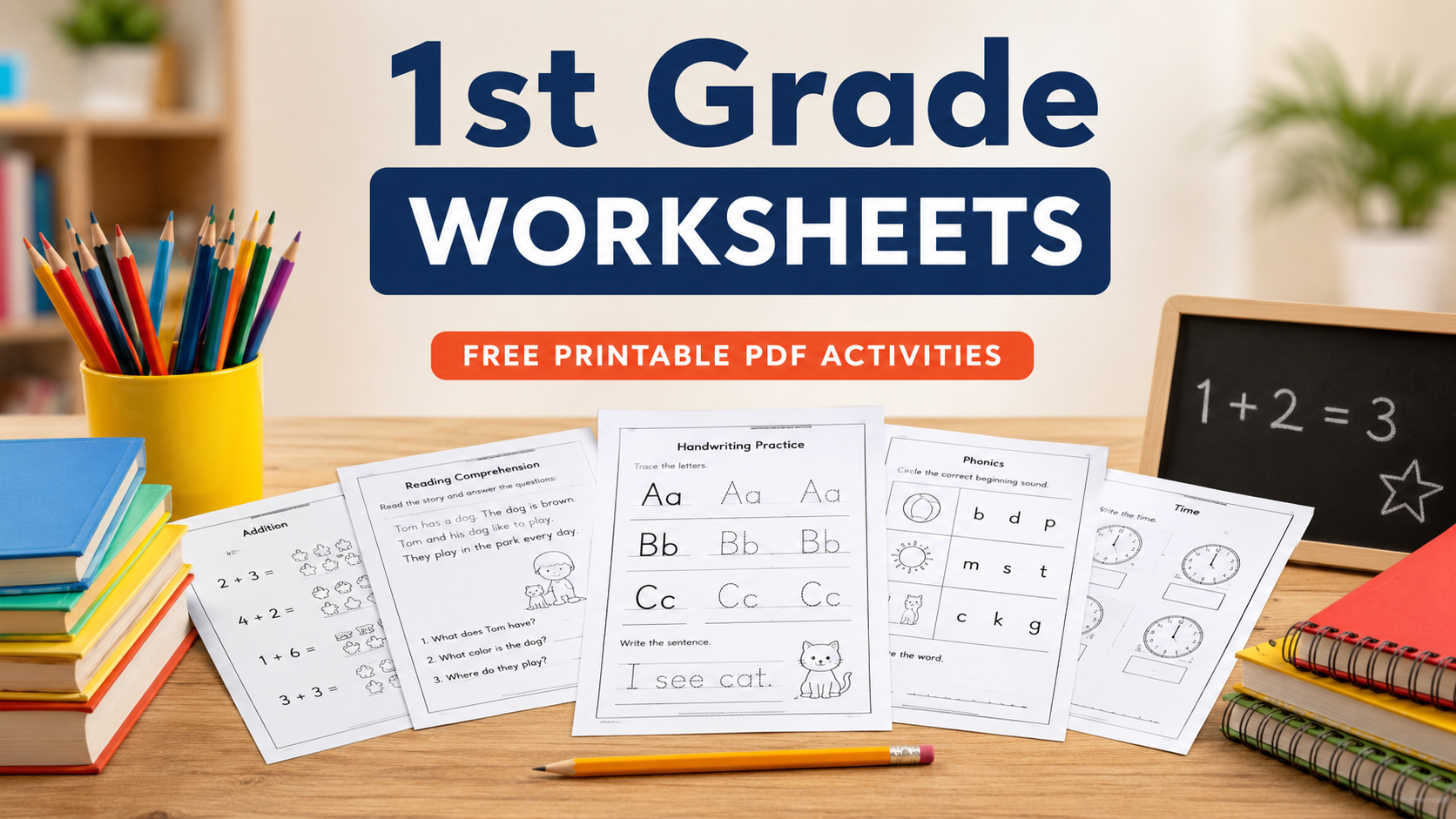
This collection covers the most important first-grade subjects, including math, reading, writing, phonics, grammar, spelling, science, and social studies. Every section explains why each skill matters, what children should learn, and how printable worksheets can support daily practice.
Instead of searching through dozens of websites, this guide brings together everything needed to choose the right first grade worksheets for different learning goals. It also includes practical tips for parents, teachers, tutors, and homeschool families who want to help children succeed.
What Are 1st Grade Worksheets?
Quick Answer:
1st grade worksheets are printable learning activities designed for children in first grade. They help students practice essential skills such as reading, writing, phonics, math, grammar, spelling, science, and problem-solving through structured exercises.
These worksheets are commonly used by:
- Parents for home learning
- Classroom teachers
- Homeschool families
- Private tutors
- After-school programs
Most printable worksheets are available as PDF files, making them easy to download, print, and use repeatedly.
What Skills Should a First Grader Learn?
By the end of first grade, most children are expected to develop skills in:
| Subject | Important Skills |
| Math | Counting, addition, subtraction, place value, time, money |
| Reading | Fluency, comprehension, vocabulary |
| Writing | Sentence writing, handwriting, punctuation |
| Phonics | Letter sounds, blends, digraphs, decoding |
| Grammar | Nouns, verbs, capitalization, punctuation |
| Science | Plants, animals, weather, seasons |
| Social Studies | Families, communities, maps, holidays |
Well-designed printable worksheets provide focused practice in each of these areas without overwhelming young learners.
Benefits of Using Printable 1st Grade Worksheets
Using printable worksheets consistently offers much more than extra homework. When used correctly, they reinforce classroom learning while helping children become independent learners.
Some of the biggest benefits include:
- Builds confidence through regular practice
- Improves reading and math fluency
- Encourages independent learning
- Reinforces classroom lessons
- Makes homeschooling easier
- Provides quick revision before tests
- Helps identify learning gaps
- Creates a structured daily learning routine
Why Parents Like Printable Worksheets
Parents often prefer printable worksheets because they are:
- Easy to download
- Convenient to print at home
- Suitable for short learning sessions
- Affordable compared to workbooks
- Flexible enough to match a child’s pace
Even 15–20 minutes of daily worksheet practice can help reinforce important first-grade concepts.
Why Teachers Use Worksheets
Teachers frequently use worksheets for:
- Morning work
- Homework assignments
- Independent practice
- Small group activities
- Learning centers
- Early finishers
- Quick assessments
Because worksheets focus on one skill at a time, they make it easier to monitor student progress.
Free Printable 1st Grade Worksheets by Subject
Choosing worksheets by subject helps children practice exactly what they need. Instead of completing random activities, students can strengthen one skill before moving to the next.
| Subject | Main Skills Covered |
| Math | Numbers, addition, subtraction, measurement |
| Reading | Fluency, comprehension, vocabulary |
| Writing | Sentences, handwriting, creative writing |
| Phonics | Letter sounds, blends, vowels |
| Grammar | Parts of speech, punctuation |
| Spelling | Weekly spelling patterns |
| Science | Living things, weather, plants |
| Social Studies | Community, geography, culture |
Organizing worksheets this way also helps teachers create balanced weekly lesson plans.
1st Grade Math Worksheets
Math is one of the most important subjects in first grade because it lays the foundation for future learning. The best 1st grade math worksheets focus on building number confidence before introducing more advanced concepts.
Children should first become comfortable recognizing numbers, understanding quantities, and solving simple problems before moving to topics like measurement and money.
Counting and Number Sense
Number sense helps children understand how numbers work rather than simply memorizing them.
Practice worksheets may include:
- Counting objects
- Skip counting
- Missing numbers
- Number comparisons
- Number sequencing
- Greater than and less than
- Number patterns
These activities improve logical thinking while strengthening early math confidence.
Addition Worksheets
Addition worksheets introduce children to combining numbers using visual and written methods.
Common activities include:
- Addition within 10
- Addition within 20
- Picture addition
- Number line addition
- Missing addends
- Fact families
- Word problems
Starting with simple visual exercises makes addition less intimidating for young learners.
Subtraction Worksheets
Subtraction teaches children how numbers relate to one another.
Printable worksheets often cover:
- Basic subtraction facts
- Subtracting within 10
- Subtracting within 20
- Picture subtraction
- Number lines
- Story problems
- Missing numbers
Using everyday examples—such as sharing toys or eating fruit—helps children understand subtraction in real life.
Place Value Worksheets
Understanding tens and ones is an important first-grade milestone.
Practice pages often include:
- Tens and ones
- Expanded form
- Base-ten blocks
- Comparing numbers
- Ordering numbers
Strong place value skills prepare children for larger numbers in second grade.
Measurement Worksheets
Measurement worksheets introduce practical math concepts.
Children learn to measure:
- Length
- Height
- Weight
- Capacity
Simple classroom objects make excellent measuring tools for hands-on practice.
Telling Time Worksheets
Learning to read clocks develops both math and daily life skills.
Worksheets usually cover:
- Hour
- Half hour
- Clock matching
- Drawing clock hands
- Daily schedules
Money Worksheets
Money worksheets teach basic financial awareness.
Topics often include:
- Coin recognition
- Coin values
- Counting coins
- Making simple purchases
These activities connect classroom learning with everyday experiences.
Geometry Worksheets
Geometry introduces children to basic shapes and spatial awareness.
Typical activities include:
- Shape recognition
- 2D shapes
- Simple 3D objects
- Symmetry
- Patterns
Visual exercises make geometry fun and easy to understand.
Word Problem Worksheets
Word problems help children apply math to real situations.
Examples include:
- Shopping
- Sharing toys
- Counting animals
- School supplies
- Daily routines
Reading short stories before solving problems also strengthens comprehension skills.
Quick Math Practice Checklist
- ✔ Count to 120
- ✔ Add within 20
- ✔ Subtract within 20
- ✔ Identify shapes
- ✔ Tell time to the hour
- ✔ Count coins
- ✔ Compare numbers
- ✔ Solve simple word problems
1st Grade Reading Worksheets
Reading skills grow quickly during first grade. At this stage, children move beyond recognizing letters and begin reading complete sentences, short stories, and simple books independently.
The best 1st grade reading worksheets combine phonics, vocabulary, comprehension, and fluency practice. Instead of focusing only on reading words correctly, they also help children understand what they read and build confidence with every lesson.
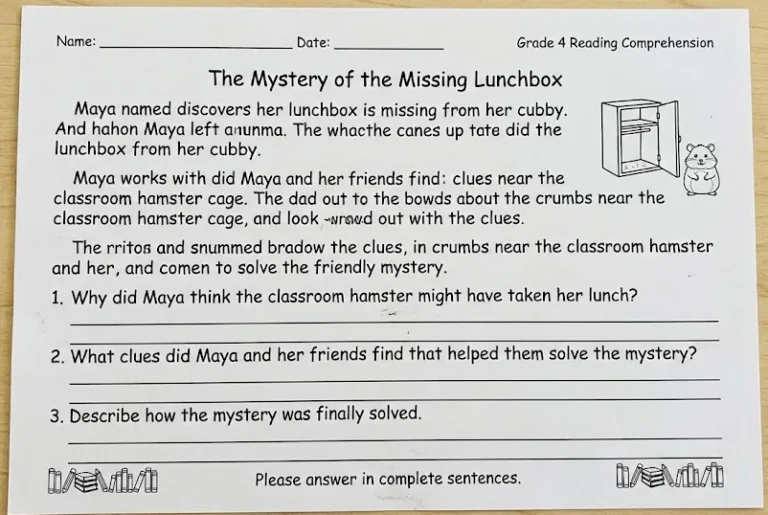
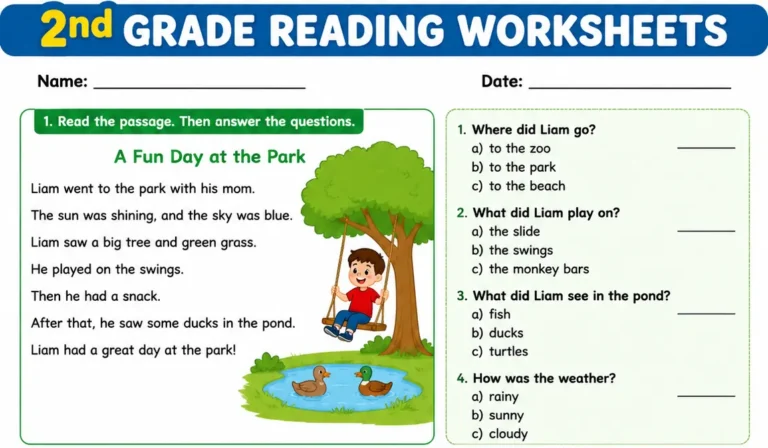
Reading Comprehension Worksheets
Reading comprehension teaches children to think about the meaning of a passage rather than simply saying the words aloud.
A good worksheet may include a short story followed by questions about:
- Characters
- Setting
- Main idea
- Sequence of events
- Cause and effect
- Simple inferences
- Vocabulary in context
Keeping passages short and engaging helps young readers stay focused while practicing important comprehension skills.
1st Grade Writing Worksheets
Writing is an important part of first grade because it helps children express ideas clearly while improving spelling, grammar, and handwriting. The best 1st grade writing worksheets gradually move students from writing individual words to complete sentences and short paragraphs.
Regular writing practice also strengthens reading skills because children begin to recognize sentence patterns, punctuation, and vocabulary more easily.
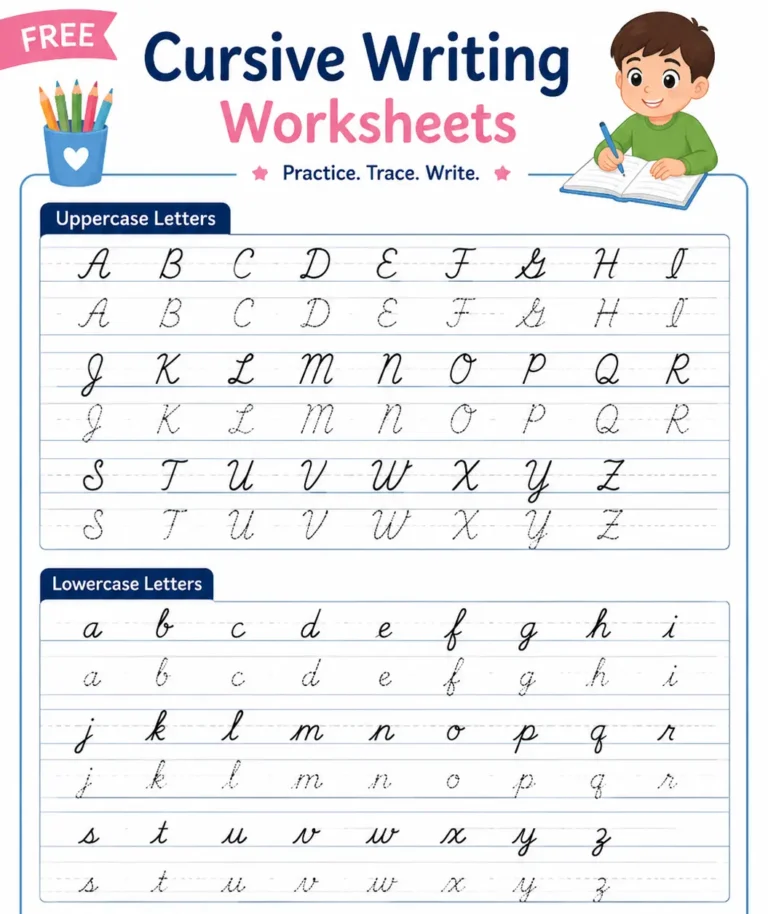
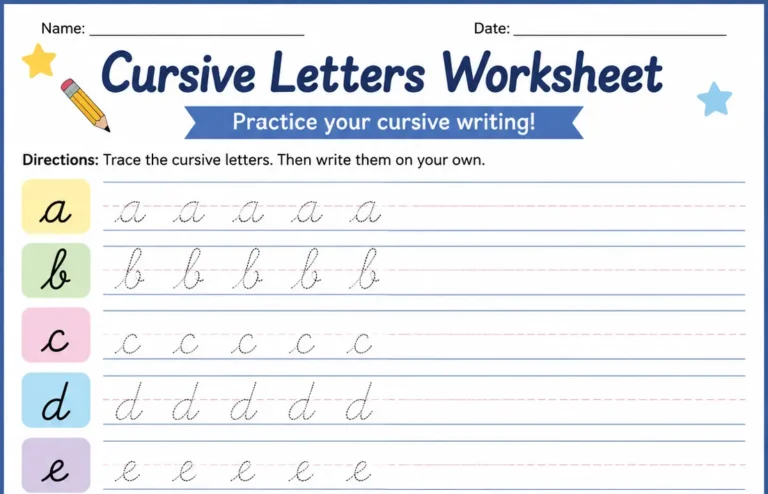
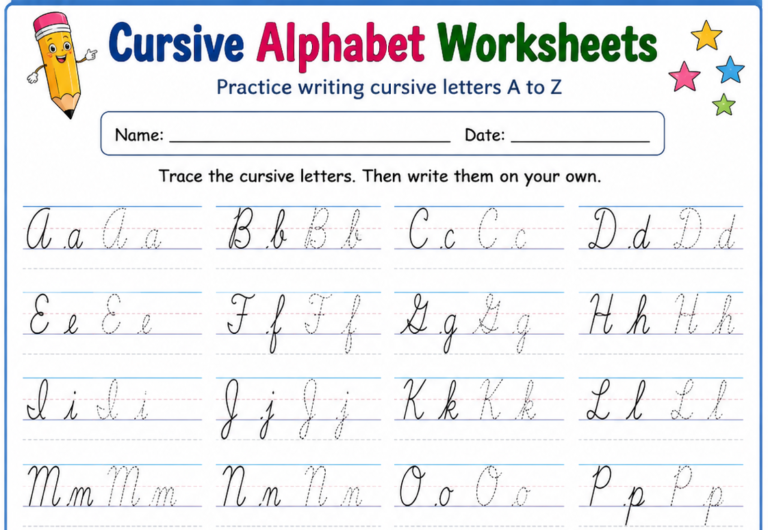
Handwriting Worksheets
Neat handwriting makes written work easier to read and helps children develop fine motor skills.
Common handwriting worksheets include:
- Alphabet tracing
- Uppercase and lowercase letters
- Word tracing
- Sentence tracing
- Copywork exercises
- Pencil control practice
Encourage children to write slowly and focus on forming each letter correctly instead of rushing through the page.
Sentence Writing Worksheets
Once children can write individual words, they begin creating complete sentences.
Practice activities often include:
- Unscramble the sentence
- Complete the sentence
- Write about a picture
- Fill in the missing word
- Build a sentence from word cards
These worksheets teach children how to use capital letters, spaces, and punctuation correctly.
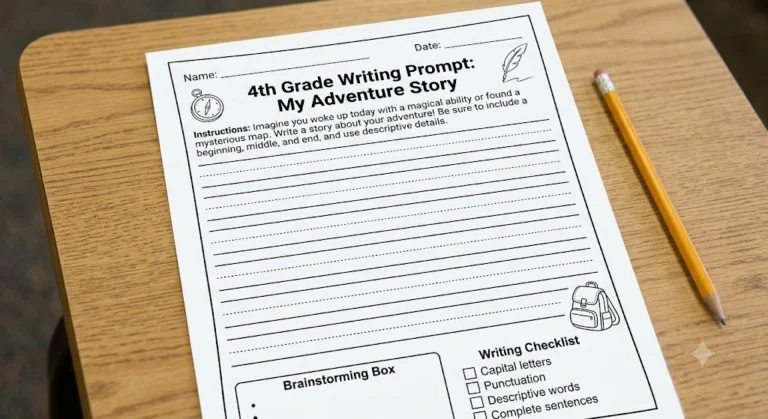
Creative Writing Worksheets
Creative writing encourages imagination while building confidence.
Popular worksheet prompts include:
- My favorite animal
- A fun day at school
- If I could fly
- My family
- My best friend
- What I want to be when I grow up
Simple picture prompts work especially well because they give children ideas without limiting creativity.
1st Grade Phonics Worksheets
Phonics is one of the most important building blocks of reading. It teaches children how letters and letter combinations create sounds, helping them decode unfamiliar words with confidence.
Quality 1st grade phonics worksheets should progress from simple sounds to more advanced reading patterns.
Letter Sounds
Children first practice recognizing individual letter sounds before combining them into words.
Activities include:
- Beginning sounds
- Ending sounds
- Middle vowel sounds
- Matching letters to pictures
CVC Words
CVC (Consonant-Vowel-Consonant) words are often the first words children learn to read independently.
Examples include:
- cat
- dog
- sun
- map
- pen
Worksheets may ask children to:
- Read words
- Match pictures
- Complete missing letters
- Build words
Blends and Digraphs
After mastering simple words, children learn common blends and digraphs.
Examples include:
Blends
- bl
- cl
- st
- tr
- gr
Digraphs
- ch
- sh
- th
- wh
- ph
Practicing these combinations improves reading fluency.
Long and Short Vowels
Vowel worksheets help children recognize pronunciation differences.
Activities include:
- Sort long and short vowels
- Picture matching
- Fill in missing vowels
- Read simple stories
1st Grade Grammar Worksheets
Grammar worksheets introduce children to the basic rules of writing and speaking correctly.
Rather than memorizing grammar terms, children learn through simple examples and everyday language.
Nouns
Children learn to identify:
- People
- Places
- Animals
- Things
Activities often involve matching pictures, circling nouns, or sorting words into categories.
Verbs
Verb worksheets teach action words.
Examples include:
- run
- jump
- read
- write
- sing
Children may complete sentences using the correct verb or match actions with pictures.
Adjectives
Adjective worksheets help children describe nouns.
Examples:
- big
- small
- happy
- fast
- blue
Practice often includes choosing the best describing word for a picture.
Pronouns
Simple worksheets introduce words such as:
- he
- she
- they
- we
- it
Children replace repeated nouns with the correct pronouns in short sentences.
Capitalization and Punctuation
These worksheets teach children when to use:
- Capital letters
- Periods
- Question marks
- Exclamation marks
Correct punctuation makes writing easier to understand and prepares students for longer writing assignments.
1st Grade Spelling Worksheets
Spelling practice improves vocabulary, reading fluency, and writing confidence.
Instead of memorizing random word lists, children benefit from learning words that follow similar spelling patterns.
Popular spelling worksheet activities include:
- Word tracing
- Missing letters
- Unscramble the word
- Word searches
- Crossword puzzles
- Match the picture
- Write each word in a sentence
Weekly spelling practice also helps children recognize common word families.
Common First Grade Spelling Patterns
| Pattern | Example Words |
| -at | cat, hat, bat |
| -an | fan, pan, man |
| -ig | pig, dig, big |
| -op | hop, top, mop |
| Sight Words | said, where, could |
1st Grade Sight Word Worksheets
Sight words are high-frequency words that children should recognize instantly without sounding them out.
Learning these words improves both reading speed and comprehension.
Popular sight word worksheet activities include:
- Trace the word
- Color the word
- Circle the word
- Build the word
- Write the word
- Find the word in a sentence
- Read a short passage
Using one group of sight words each week helps children remember them more effectively than trying to learn many words at once.
1st Grade Science Worksheets
Science worksheets encourage children to observe, ask questions, and explore the world around them.
The best activities combine reading, drawing, labeling, and simple experiments.
Popular Science Topics
- Plants
- Animals
- Insects
- Weather
- Seasons
- Living and non-living things
- Human body
- Five senses
- Earth and sky
Hands-on activities such as growing seeds or observing weather make worksheet lessons more meaningful.
1st Grade Social Studies Worksheets
Social studies introduces children to their family, community, and the wider world.
These worksheets help build awareness of everyday life while encouraging responsible citizenship.
Common Topics
- Families
- Community helpers
- Neighborhoods
- Maps
- National symbols
- Holidays
- Transportation
- Rules and responsibilities
Many worksheets include coloring, matching, simple reading passages, and map activities that are easy for first-grade students to complete independently.
Printable Worksheet Packs (PDF Downloads)
Many parents and teachers prefer complete worksheet packs instead of downloading individual pages every day.
A well-organized 1st grade worksheet packet usually includes several subjects in one printable PDF.
What Should a Good Worksheet Pack Include?
- Math practice
- Reading comprehension
- Writing activities
- Phonics exercises
- Grammar review
- Spelling practice
- Science activities
- Social studies pages
- Answer key
Having everything in one place saves preparation time and provides a balanced daily learning routine.
Weekly vs. Monthly Worksheet Packs
| Type | Best For | Benefits |
| Weekly Pack | Daily practice | Easy to manage, short-term goals |
| Monthly Pack | Long-term learning | Complete subject coverage, less planning |
Daily Practice Worksheets
Short practice sessions are usually more effective than long study periods for young children.
A simple daily worksheet routine may look like this:
| Time | Activity |
| 10 minutes | Reading |
| 10 minutes | Math |
| 10 minutes | Writing |
| 5 minutes | Sight words |
| 5 minutes | Review |
Keeping lessons short helps children stay engaged without becoming overwhelmed.
Morning Work Worksheets
Morning work gives students a calm and productive start to the school day.
Teachers often include:
- Simple math review
- Reading warm-ups
- Sight words
- Sentence correction
- Calendar activities
- Daily journal prompts
These worksheets reinforce previously learned skills while preparing children for new lessons.
Homework Worksheets
Homework should reinforce learning rather than introduce difficult new concepts.
Good homework worksheets are:
- Short
- Easy to understand
- Focused on one skill
- Age appropriate
- Printable
- Independent
Parents can support learning by reviewing completed work together and discussing any mistakes in a positive way.
Homeschool 1st Grade Worksheets
Homeschool families often need flexible learning materials that work with different teaching styles and schedules. Well-designed 1st grade worksheets make it easier to plan lessons while giving children consistent practice in every subject.
A balanced homeschool routine should include reading, writing, math, science, and hands-on activities instead of relying only on worksheets. Printable worksheets work best as reinforcement after a lesson has been taught.
How to Use Worksheets in a Homeschool Schedule
A simple daily plan may look like this:
- Read together for 15–20 minutes.
- Complete one math worksheet.
- Practice handwriting or sentence writing.
- Work on one phonics or grammar activity.
- Finish with a science or creative activity.
Keeping lessons short helps children stay interested and reduces frustration.
Benefits for Homeschool Families
- Easy lesson planning
- Printable anytime
- Covers multiple subjects
- Flexible learning pace
- Tracks progress over time
- Works alongside most homeschool curricula
Classroom Worksheets for Teachers
Printable worksheets remain one of the most useful classroom resources because they support both whole-class instruction and independent learning.
Teachers can use them in many different ways throughout the school day.
Best Classroom Uses
- Morning work
- Homework
- Exit tickets
- Small group instruction
- Learning centers
- Fast finisher activities
- Test review
- Assessment practice
Using worksheets with games, reading activities, and classroom discussions creates a balanced learning environment.
Skills Covered in First Grade
The table below summarizes the most important skills children should practice during first grade.
| Subject | Core Skills |
| Reading | Fluency, comprehension, vocabulary, sequencing |
| Writing | Handwriting, sentences, punctuation, creative writing |
| Math | Counting, addition, subtraction, place value, measurement |
| Phonics | Letter sounds, blends, digraphs, vowels |
| Grammar | Nouns, verbs, adjectives, capitalization |
| Spelling | Sight words, word families, spelling patterns |
| Science | Weather, plants, animals, living things |
| Social Studies | Family, community, maps, citizenship |
Regular review of these skills helps children build a strong academic foundation before entering second grade.
How to Choose the Right Worksheet
Not every worksheet is suitable for every child. Selecting activities that match a student’s current ability keeps learning enjoyable and productive.
Look for Age-Appropriate Content
Choose worksheets that match your child’s current skill level instead of simply following their grade level. If a worksheet is too easy, children may become bored. If it is too difficult, they may lose confidence.
Focus on One Skill at a Time
Worksheets that teach one concept clearly are usually more effective than pages filled with unrelated activities.
Examples include:
- Addition within 20
- Reading comprehension
- Sight words
- Handwriting practice
- Telling time
Choose Clear Printable Layouts
The best worksheets have:
- Large readable fonts
- Simple instructions
- Plenty of writing space
- Clean black-and-white designs
- Minimal distractions
These features make worksheets easier for children to complete independently.
Tips for Parents
Parents play an important role in helping first graders develop positive learning habits.
Create a Consistent Routine
Completing worksheets at the same time each day helps children know what to expect.
Keep Practice Sessions Short
Young learners often concentrate best for 15–20 minutes at a time.
Encourage Independent Thinking
Instead of giving answers immediately, ask questions that help children solve problems on their own.
Celebrate Progress
Praise effort as well as correct answers. Small achievements build confidence and encourage children to keep learning.
Read Every Day
Reading together remains one of the most effective ways to improve vocabulary, comprehension, and writing skills alongside worksheet practice.
Tips for Teachers
Teachers can get more value from printable worksheets by using them as part of a wider lesson rather than as the entire lesson.
Differentiate Instruction
Provide easier or more challenging worksheets based on individual student needs.
Mix Worksheet Types
Alternate between:
- Math
- Reading
- Writing
- Science
- Hands-on activities
This keeps lessons interesting and prevents students from becoming bored.
Review Mistakes Together
Discuss common errors as a class so students understand why an answer is incorrect instead of simply marking it wrong.
Track Progress
Keeping completed worksheets in student folders makes it easier to identify strengths and areas needing extra support.
Common Mistakes to Avoid
Even high-quality worksheets can become less effective if they are used incorrectly.
Using Too Many Worksheets
Children need a balance of reading, discussion, creative activities, and hands-on learning.
Choosing the Wrong Difficulty Level
Worksheets should challenge students without causing frustration.
Skipping Answer Reviews
Reviewing completed work helps children understand mistakes and improve their skills.
Focusing Only on Math
Reading, writing, phonics, grammar, and science are equally important during first grade.
Ignoring Real-Life Practice
Children learn best when worksheets are combined with everyday experiences such as reading books, measuring ingredients while cooking, counting coins, or observing nature.
Expert Tips for Better Learning
- Practice a little every day instead of studying for long periods once a week.
- Combine worksheets with educational games and books.
- Use colored pencils or crayons to make learning more enjoyable.
- Allow children to take short breaks between activities.
- Encourage children to explain their answers aloud.
- Keep completed worksheets in a progress folder to monitor improvement.
- Repeat difficult skills regularly until children feel confident.
Pros and Cons of Printable 1st Grade Worksheets
| Pros | Cons |
| Easy to print at home | Too many worksheets may reduce interest |
| Reinforces classroom learning | Cannot replace hands-on learning |
| Supports homeschool education | Some free websites contain excessive advertising |
| Improves independent learning | Quality varies between resources |
| Covers many subjects | Some worksheets may not include answer keys |
When used alongside reading, discussion, and practical activities, worksheets become a valuable learning tool rather than simply extra paperwork.
Quick Summary Table
| Feature | Benefit |
| Printable PDF | Easy home and classroom use |
| Subject-based worksheets | Focused skill development |
| Daily practice | Builds confidence through repetition |
| Answer keys | Faster review for parents and teachers |
| Multiple subjects | Balanced learning experience |
| Flexible use | Suitable for homeschool and classroom settings |
Frequently Asked Questions
Are 1st grade worksheets free?
Many websites offer free printable 1st grade worksheets, while others provide premium worksheet packs with additional activities. Always check whether downloads require an account before printing.
How many worksheets should a first grader complete each day?
Most children benefit from completing two to four short worksheets daily, depending on their attention span and the difficulty of the activities. Quality practice is more valuable than completing a large number of pages.
Are printable worksheets good for homeschooling?
Yes. Printable worksheets are widely used by homeschool families because they reinforce lessons, provide independent practice, and make it easier to track progress across different subjects.
What subjects should first graders practice?
Children should regularly practice:
- Reading
- Writing
- Math
- Phonics
- Grammar
- Spelling
- Science
- Social studies
A balanced approach supports overall academic development.
Do worksheets replace classroom teaching?
No. Worksheets are designed to reinforce learning rather than replace direct instruction, reading, discussion, and practical experiences.
Should worksheets include answer keys?
Answer keys are helpful because they allow parents and teachers to review work quickly while explaining mistakes accurately.
Are PDF worksheets better than online activities?
Printable PDF worksheets provide a distraction-free learning experience and reduce screen time. Many families combine printable worksheets with educational apps and books for a balanced approach.
How can I make worksheet practice more enjoyable?
Use positive encouragement, keep sessions short, allow breaks, include educational games, and celebrate progress instead of focusing only on perfect scores.
Final Thoughts
The best 1st grade worksheets do much more than provide extra practice. They help children strengthen essential skills in math, reading, writing, phonics, grammar, spelling, science, and social studies while building confidence through consistent learning.
Whether you are a parent supporting homework, a teacher planning classroom activities, or a homeschool educator creating daily lessons, choosing well-organized free printable 1st grade worksheets can make learning more effective and enjoyable.
Focus on age-appropriate activities, encourage regular practice, and combine worksheets with books, discussions, educational games, and real-world experiences. This balanced approach helps first graders develop strong academic skills that will support their success throughout elementary school and beyond.