Multiplication Worksheets Grade 3: 10 Fun Ways to Build Strong Math Skills
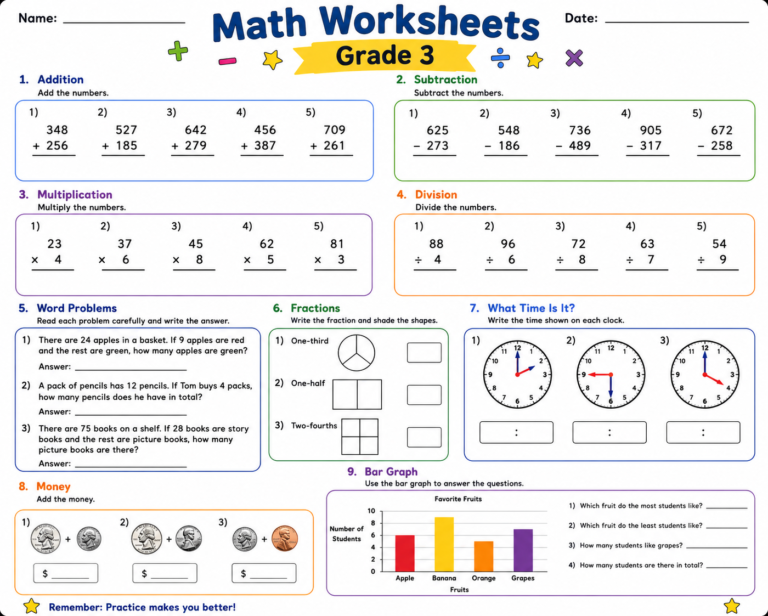
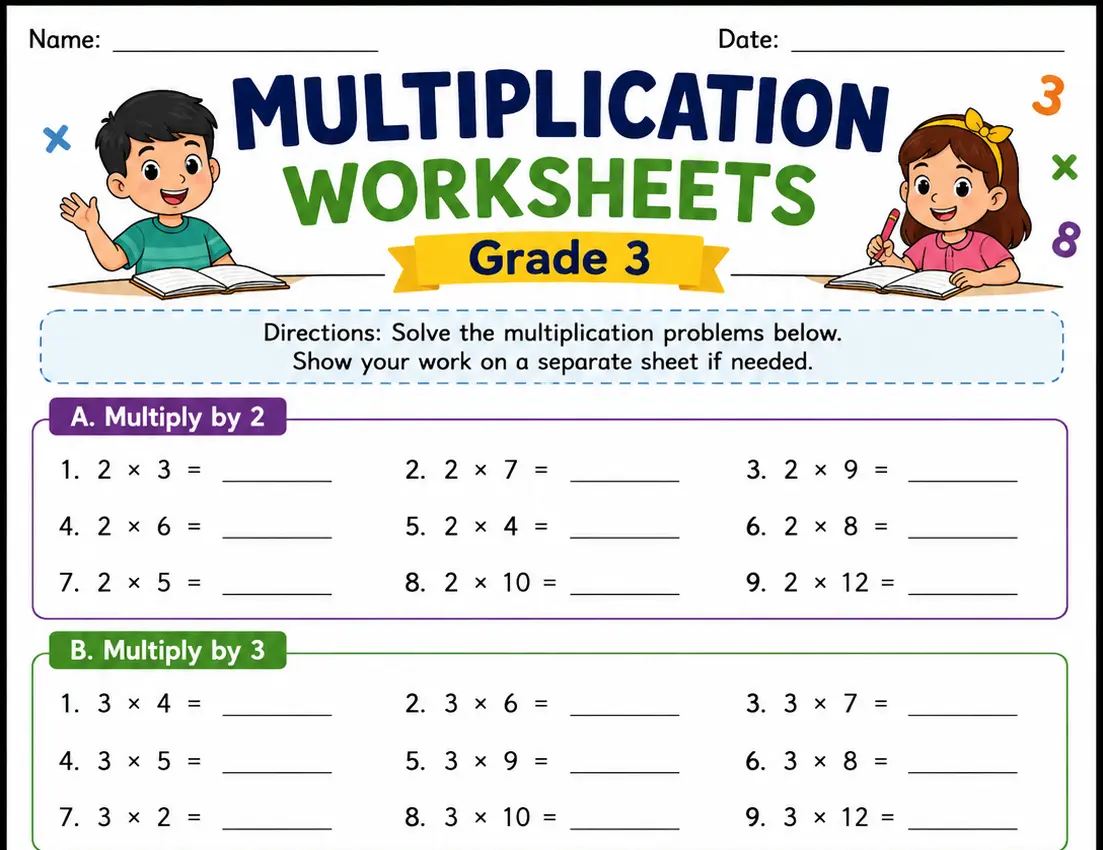
Third grade is where multiplication really starts to click. It’s also the stage where many children either gain confidence in math—or begin to feel overwhelmed. That’s why multiplication worksheets grade 3 remain one of the most effective learning tools for parents, teachers, and homeschool families.
A good worksheet isn’t just about answering rows of problems. It gives children a chance to recognize patterns, improve speed, and understand how multiplication works in everyday life. And honestly, that’s what makes the biggest difference.
If you’re looking for engaging ways to help your child master multiplication facts, this guide covers everything you need to know.
Why Multiplication Matters in Grade 3
Grade 3 is typically the first year students move beyond simple addition and subtraction into multiplication and division. This foundation supports nearly every future math topic, including:
- Division
- Fractions
- Area and perimeter
- Algebra
- Word problems
- Measurement
Without a strong understanding of multiplication, later math lessons become much harder.
That’s why practicing with multiplication worksheets grade 3 consistently—even for just 10 to 15 minutes a day—can make a noticeable difference.
1. Start with the Basics
Before children memorize multiplication tables, they should understand what multiplication actually means.
For example:
- 3 × 4 means 3 groups of 4.
- 5 × 2 means 5 groups of 2.
Worksheets that include:
- Equal groups
- Repeated addition
- Skip counting
- Arrays
help children build conceptual understanding instead of relying only on memorization.
That small difference pays off later.
2. Practice Multiplication Facts One Table at a Time
Trying to memorize all multiplication facts at once can feel overwhelming.
A better approach?
Focus on one multiplication table before moving to the next.
A common progression looks like this:
- ×2
- ×5
- ×10
- ×3
- ×4
- ×6
- ×7
- ×8
- ×9
- ×11
- ×12
Many multiplication worksheets grade 3 organize practice this way, making learning much less stressful.
Children also enjoy seeing their progress after mastering each table.
3. Use Visual Worksheets
Not every child learns the same way.
Some students remember facts faster when they see pictures rather than numbers alone.
Great visual worksheet activities include:
- Dot arrays
- Groups of objects
- Number lines
- Color-by-multiplication pages
- Picture puzzles
These activities make multiplication feel more like a game than homework.
And kids usually don’t even realize how much they’re practicing.
4. Include Word Problems
Real-world examples help children understand why multiplication matters.
Instead of solving:
6 × 4 = ?
They might answer:
“There are 6 baskets with 4 apples in each basket. How many apples are there altogether?”
Word problems encourage students to:
- Read carefully
- Identify important information
- Choose the correct operation
- Explain their thinking
This builds both reading and math skills at the same time.
5. Mix Easy and Challenging Questions
Worksheets shouldn’t contain only difficult problems.
They also shouldn’t be too easy.
The best multiplication worksheets grade 3 gradually increase in difficulty.
For example:
Easy section:
- 2 × 6
- 5 × 3
- 10 × 4
Intermediate:
- 7 × 6
- 8 × 4
- 9 × 3
Challenge section:
- Missing factors
- Mixed multiplication facts
- Two-step word problems
Children stay motivated because they experience success before tackling harder questions.
6. Add Fun Activities
Let’s be honest.
Rows of multiplication problems can become repetitive.
Adding games keeps practice exciting.
Popular worksheet activities include:
- Multiplication mazes
- Crossword puzzles
- Secret code worksheets
- Color-by-answer pages
- Bingo cards
- Cut-and-paste matching games
- Multiplication wheels
Even reluctant learners become more engaged when math feels interactive.
7. Encourage Daily Practice
Consistency beats long study sessions.
Instead of completing ten worksheets in one day, try:
- One worksheet every weekday
- Five to ten minutes of review
- Weekly quizzes
- Weekend revision games
Children retain multiplication facts much better through regular repetition.
It doesn’t have to take an hour.
Sometimes fifteen focused minutes are enough.
8. Review Mistakes Together
Making mistakes is part of learning.
When children complete multiplication worksheets grade 3, don’t just mark answers wrong.
Instead, ask questions like:
- How did you get this answer?
- Can you draw the groups?
- What multiplication fact does this remind you of?
- Is there another way to solve it?
These conversations help children understand the process instead of simply correcting numbers.
That’s where real learning happens.
9. Combine Multiplication with Division
Once multiplication becomes familiar, begin introducing related division facts.
For example:
6 × 4 = 24
24 ÷ 4 = 6
24 ÷ 6 = 4
Seeing this relationship strengthens number sense.
Many grade 3 worksheets include both operations together, helping students understand fact families naturally.
10. Celebrate Progress
Learning multiplication is a journey.
Children enjoy seeing how much they’ve improved.
Simple rewards can include:
- Stickers
- Certificates
- Progress charts
- High-fives
- Choosing the next worksheet
- Extra reading time
- Family game night
Positive encouragement often motivates children more than pressure ever could.
And confidence grows with every success.
What Makes Great Grade 3 Multiplication Worksheets?
Not all worksheets are created equally.
The best ones usually include:
- Clear instructions
- Large, easy-to-read numbers
- Plenty of practice space
- Answer keys
- Mixed question formats
- Word problems
- Visual models
- Progressive difficulty
Quality worksheets keep children engaged while reinforcing important math concepts.
Tips for Parents
Supporting multiplication at home doesn’t require special training.
A few simple habits can make a huge difference.
Try these ideas:
- Practice multiplication during grocery shopping.
- Count groups of objects around the house.
- Use flashcards for five minutes each day.
- Play multiplication board games.
- Ask quick multiplication questions while driving.
- Encourage children to explain their thinking aloud.
Little moments add up over time.
Tips for Teachers
Teachers can maximize worksheet effectiveness by using them creatively.
Consider:
- Partner activities
- Math stations
- Timed challenges
- Small group review
- Exit tickets
- Homework practice
- Morning warm-ups
- Independent learning centers
Mixing worksheet practice with games and discussion keeps students interested throughout the school year.
Common Challenges Grade 3 Students Face
Every learner struggles with different multiplication facts.
Some common challenges include:
- Confusing multiplication with addition
- Forgetting multiplication tables
- Mixing up similar facts
- Solving word problems
- Working too quickly and making careless mistakes
- Losing confidence after incorrect answers
The solution usually isn’t more pressure.
It’s more practice—combined with encouragement and patience.
Benefits of Using Multiplication Worksheets Regularly
Children who practice consistently often develop:
- Faster mental math
- Better problem-solving skills
- Stronger number sense
- Greater confidence
- Improved classroom performance
- Better preparation for division and fractions
Over time, multiplication becomes automatic rather than something students have to figure out each time.
That’s a big milestone.
Final Thoughts
Learning multiplication doesn’t happen overnight. Every child progresses at a different pace, and that’s perfectly normal. The key is providing regular practice that feels encouraging rather than overwhelming.
Well-designed multiplication worksheets grade 3 help children build fluency, improve confidence, and develop the problem-solving skills they’ll use throughout their academic journey. Whether you’re a parent helping after school or a teacher planning classroom activities, choosing engaging worksheets with a mix of visuals, word problems, games, and gradual challenges can make learning enjoyable.
Keep practice short, celebrate small victories, and remember that consistency matters far more than perfection. With the right resources and a positive attitude, grade 3 students can build a solid multiplication foundation that supports years of future math success.