2nd Grade Reading Worksheets: 10 Fun Ways to Build Strong Reading Skills at Home
Learning to read is one of the biggest milestones in second grade. At this stage, children are moving beyond simple words and short sentences. They’re learning to understand stories, recognize vocabulary, answer questions, and read with confidence. That’s exactly why 2nd grade reading worksheets can make such a big difference.
The right worksheet isn’t just another school assignment. It becomes a fun activity that helps kids practice reading without feeling overwhelmed. Whether you’re a parent, teacher, or homeschool educator, printable worksheets offer an easy way to reinforce classroom learning while keeping children engaged.
Let’s look at some of the best types of second-grade reading worksheets and why they work so well.
Why 2nd Grade Reading Worksheets Matter
By second grade, children are expected to:
- Read short stories independently
- Improve reading fluency
- Build a larger vocabulary
- Understand the main idea
- Answer comprehension questions
- Make predictions while reading
- Identify characters and settings
These skills don’t develop overnight. Practice is the key.
And that’s where 2nd grade reading worksheets become incredibly valuable. They give children regular opportunities to read, think, and respond at their own pace.
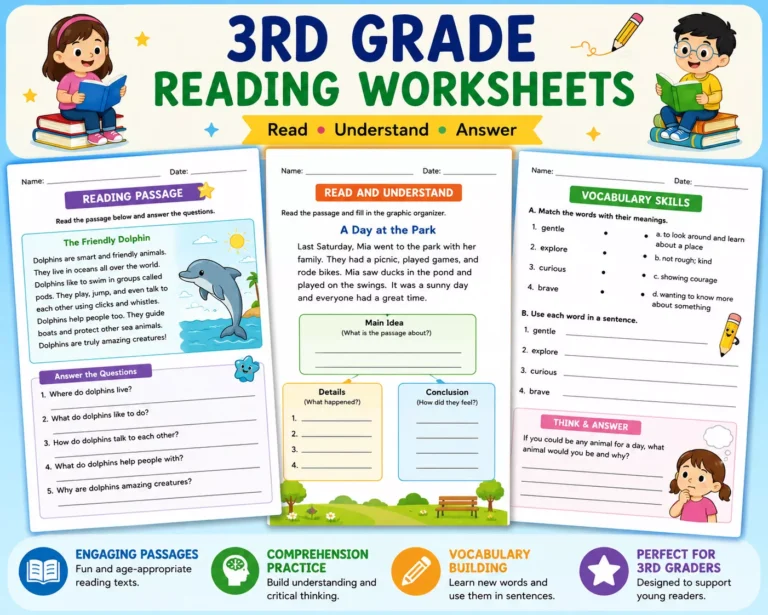
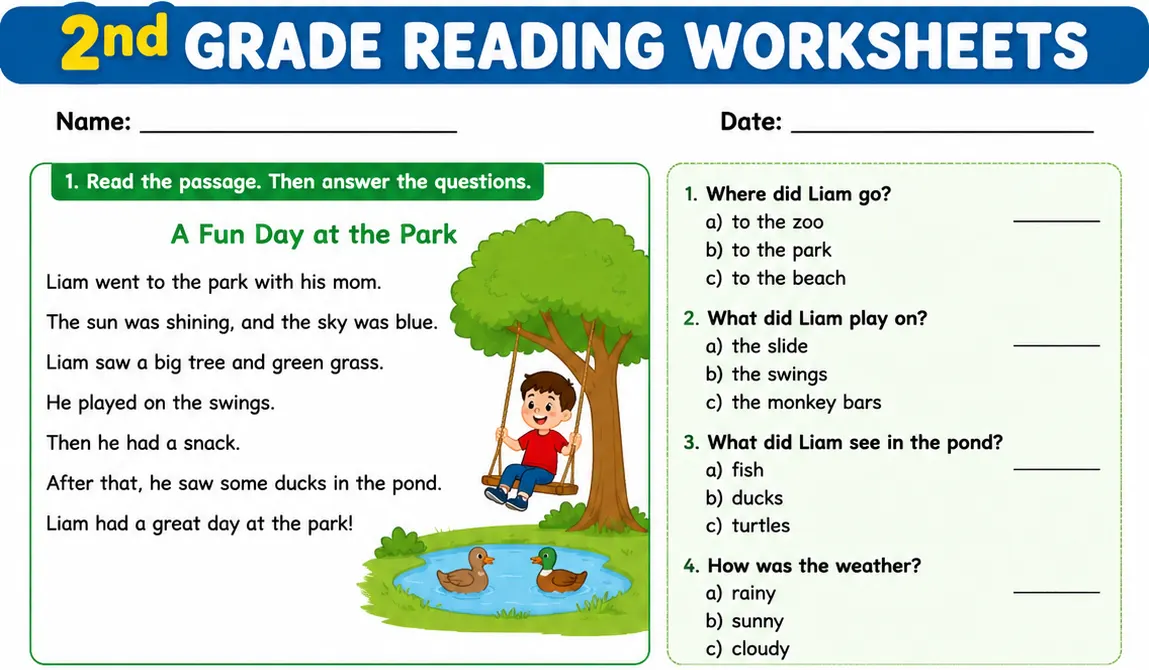
1. Reading Comprehension Passages
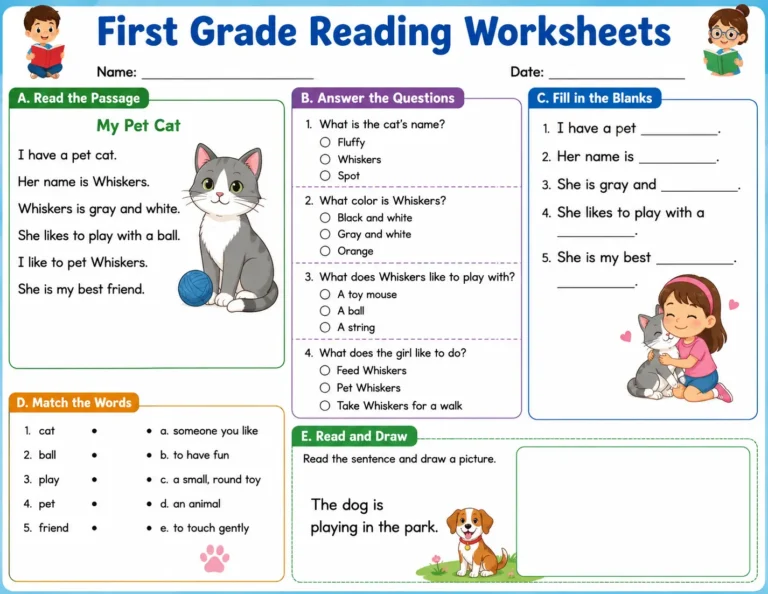
Reading comprehension worksheets are among the most popular resources for second graders.
Children read a short passage and answer questions based on what they’ve read.
These activities help students:
- Understand story details
- Improve memory
- Identify important information
- Develop critical thinking
Some worksheets use fiction stories, while others focus on nonfiction topics like animals, weather, or space.
The variety keeps learning interesting.
2. Phonics Practice Worksheets
Even in second grade, phonics remains important.
Many students still need extra practice with:
- Long vowel sounds
- Silent letters
- Blends
- Digraphs
- Compound words
- Prefixes and suffixes
Phonics worksheets strengthen decoding skills, making reading smoother and faster.
And honestly…better decoding usually leads to better comprehension.
3. Vocabulary Building Activities
A strong vocabulary helps children become confident readers.
Vocabulary worksheets often include:
- Matching words with meanings
- Fill-in-the-blank exercises
- Synonyms and antonyms
- Word searches
- Context clue activities
Learning new words through reading helps students remember them naturally instead of simply memorizing definitions.
4. Story Sequencing Worksheets
Can your child tell what happened first, next, and last?
Story sequencing activities teach students to organize events in the correct order.
These worksheets improve:
- Logical thinking
- Reading comprehension
- Memory
- Writing skills
They’re especially helpful after reading short stories.
Kids often enjoy cutting and arranging picture cards too.
5. Sight Word Practice
Although many sight words are introduced in first grade, second graders continue expanding their list.
Sight word worksheets may include:
- Reading sentences
- Word tracing
- Crossword puzzles
- Matching games
- Sentence writing
Recognizing common words instantly improves reading speed and confidence.
6. Reading Fluency Exercises
Fluency means reading accurately, quickly, and with expression.
Fluency worksheets usually feature:
- Short passages
- Repeated reading practice
- Timed reading activities
- Sentence drills
The goal isn’t reading as fast as possible.
It’s reading smoothly while understanding the text.
Big difference.
7. Main Idea and Supporting Details
One of the biggest reading goals in second grade is identifying the main idea.
These worksheets teach children to:
- Find the central message
- Recognize supporting facts
- Separate important information from minor details
Once students master this skill, reading becomes much easier.
And classroom assignments become less intimidating too.
8. Fiction vs. Nonfiction Worksheets
Second graders should understand that not every story is fictional.
Worksheets comparing fiction and nonfiction help children identify:
- Facts
- Opinions
- Story elements
- Informational text features
- Real-world topics
This prepares students for more advanced reading in later grades.
9. Character and Setting Activities
Who are the characters?
Where does the story happen?
Simple questions—but they’re essential.
Character and setting worksheets encourage students to pay attention while reading and remember important story details.
Many activities include:
- Character traits
- Story maps
- Setting descriptions
- Compare-and-contrast charts
They’re fun, creative, and surprisingly effective.
10. Reading Response Worksheets
Instead of simply answering multiple-choice questions, reading response worksheets ask students to think a little deeper.
For example:
- What was your favorite part?
- What lesson did the story teach?
- How would you change the ending?
- Which character did you like most?
These open-ended questions encourage creativity while strengthening comprehension.
Kids often enjoy sharing their own ideas.
Tips for Using Reading Worksheets Effectively
Worksheets work best when they’re used consistently—but not excessively.
Here are a few helpful tips:
- Keep sessions between 15 and 20 minutes.
- Mix different worksheet types each week.
- Read together before completing activities.
- Celebrate effort, not just correct answers.
- Let children choose topics they enjoy.
- Use colorful worksheets whenever possible.
- Encourage reading aloud.
Learning feels much easier when it’s enjoyable.
Printable vs. Digital Worksheets
Today’s parents have more options than ever.
Printable worksheets offer:
- Less screen time
- Easy writing practice
- Hands-on learning
- Simple organization
Digital worksheets provide:
- Interactive activities
- Instant feedback
- Easy access anywhere
- Fun animations
Both formats have advantages.
Many families actually combine both depending on the day’s schedule.
What Makes a Great 2nd Grade Reading Worksheet?
Not every worksheet is equally effective.
The best ones usually include:
- Age-appropriate vocabulary
- Clear instructions
- Engaging illustrations
- Short reading passages
- Thought-provoking questions
- Gradually increasing difficulty
A good worksheet should challenge children—but never frustrate them.
That’s the balance every teacher aims for.
Final Thoughts
The best 2nd grade reading worksheets do much more than keep children busy. They strengthen comprehension, expand vocabulary, improve fluency, and help young readers develop confidence one page at a time.
Whether you’re teaching in a classroom or helping your child at home, consistent reading practice makes a lasting impact. Mix comprehension passages, phonics activities, vocabulary games, sequencing exercises, and reading responses to keep learning fresh and enjoyable.
Remember, every great reader starts with small daily habits. Just 15 to 20 minutes of focused reading practice each day can lead to remarkable progress over time. With engaging worksheets and plenty of encouragement, second graders can build the skills they need to become lifelong, confident readers.