Cursive Worksheets Printable Free: A–Z Writing Practice
Cursive worksheets printable free pages give kids and beginners an easy way to practice handwriting at home or in the classroom. Cursive worksheets are practice pages that teach learners how to form letters with correct strokes and connect them into words and sentences.
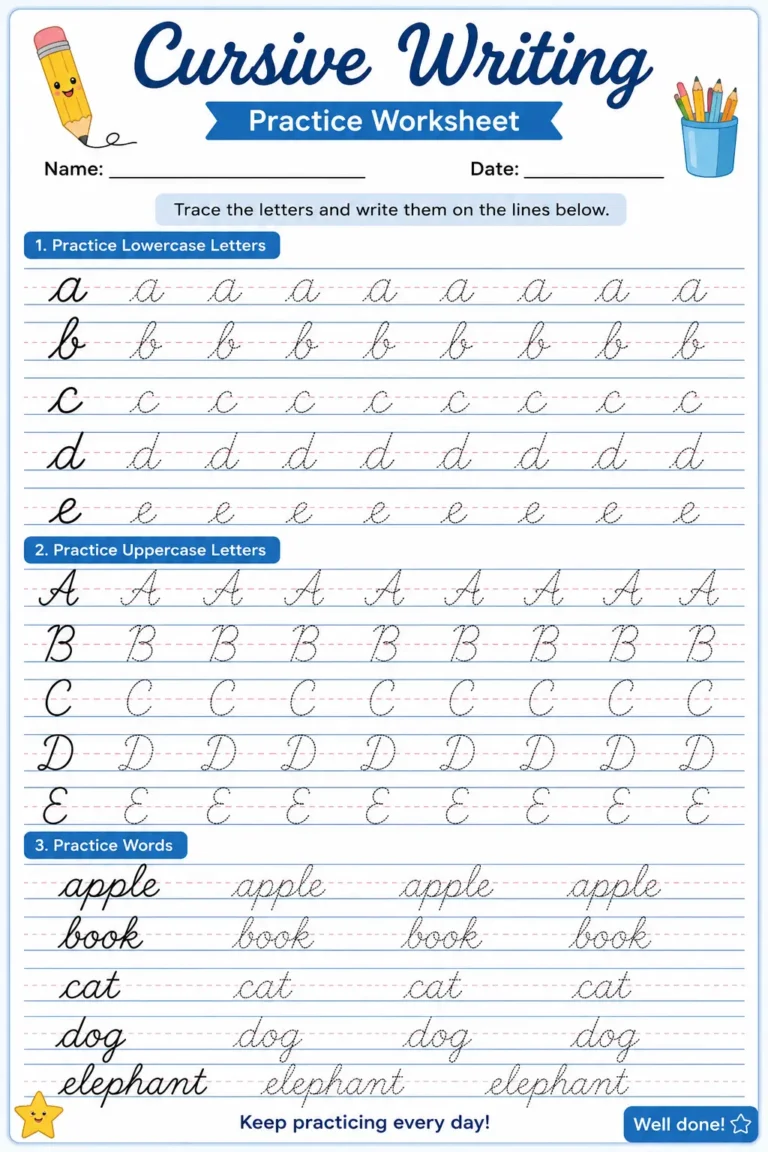
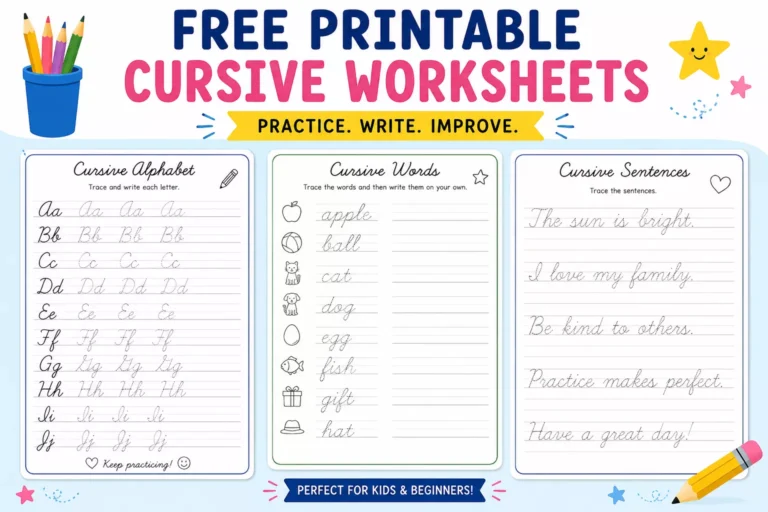
cursive worksheets printable free can help children practice cursive letters A to Z, uppercase cursive letters, lowercase cursive letters, letter tracing, and basic letter joins. After learning individual letters, learners can move on to cursive words, spelling practice, and short sentences.
Parents and teachers can use printable cursive worksheets for regular handwriting sessions, while beginners can use them to build confidence through repeated practice. Cursive worksheets PDF pages can also be printed and kept in a folder for daily or weekly handwriting exercises.
TL;DR
- Free cursive alphabet practice: Practice cursive letters from A to Z with guided examples.
- Uppercase + lowercase: Learn capital and small cursive letters with clear writing patterns.
- Letter tracing: Build better letter formation through repeated tracing exercises.
- Letter joins: Practice connecting letters smoothly to form complete words.
- Words and sentences: Move from individual letters to spelling and sentence writing.
- Printable/PDF practice: Print cursive worksheets at home or use them as classroom pages.
- Grade-level options: Find suitable practice for kindergarten, beginners, elementary students, and older learners.
What Are Cursive Worksheets?
cursive worksheets printable free are practice pages that teach learners how to write letters in a flowing style, with many letters joined together within a word. Instead of lifting the pencil after every letter, cursive writing uses connected strokes that help create a steady writing rhythm.
Each worksheet usually focuses on letter formation, showing where a letter begins, how its strokes move, and where the pencil should finish. Learners can start by tracing a model and then write the same letter on their own. This repeated practice helps them become familiar with cursive letters and their shapes.
Good cursive handwriting also depends on pen control and pencil control. Children need to hold the pencil comfortably, follow the writing lines, and keep their letters at a similar size. Simple exercises can help them work on spacing, direction, and consistent letter strokes.
Cursive handwriting worksheets give learners a place to repeat these skills without rushing. Regular handwriting practice can make it easier to move from individual letters to connected words and, later, complete sentences.
Cursive Worksheets Printable Free: What Can You Practice?
Cursive worksheets printable free pages can cover much more than basic alphabet writing. Learners can begin with individual letters, practice their shapes and strokes, and then move toward connected words and short sentences. This makes it easier to choose a worksheet based on the learner’s current writing level.
Cursive Alphabet A to Z
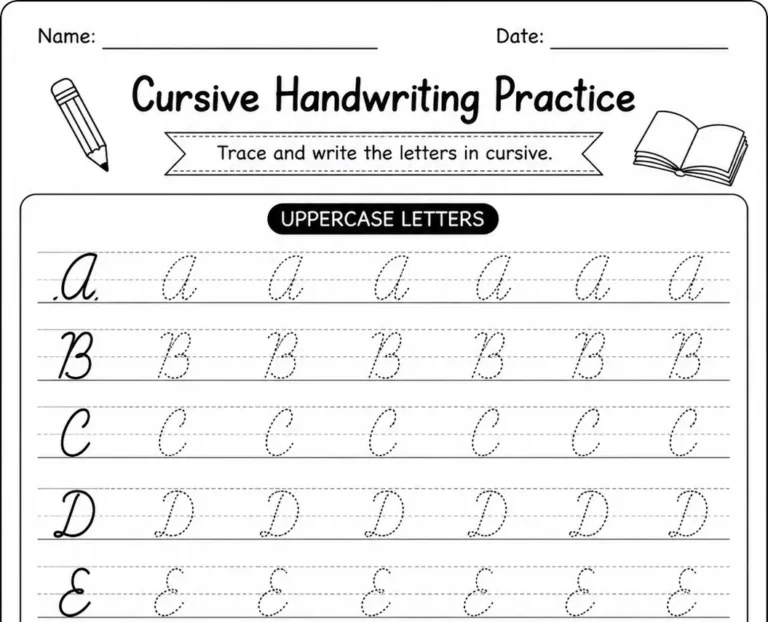
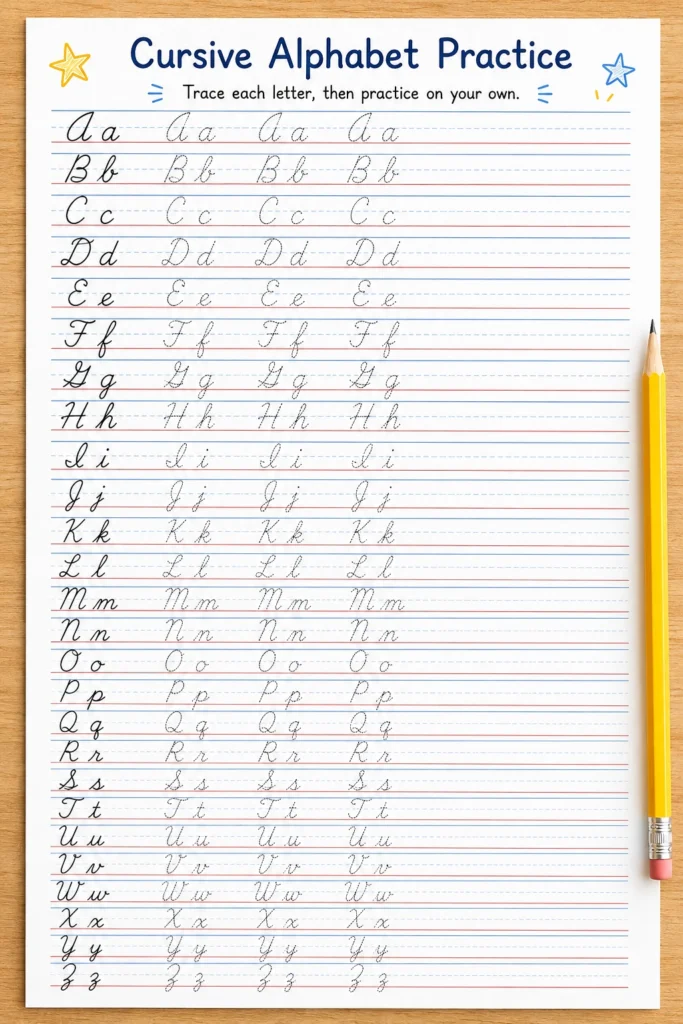
Cursive alphabet worksheets give learners practice with every letter from A to Z. Repeating each letter helps them remember its shape, starting point, and finishing stroke.
Uppercase and Lowercase Letters
Students can practice uppercase cursive letters and lowercase cursive letters separately. Capital letters are useful for names and sentence beginnings, while lowercase letters appear more often in everyday writing.
Letter Tracing
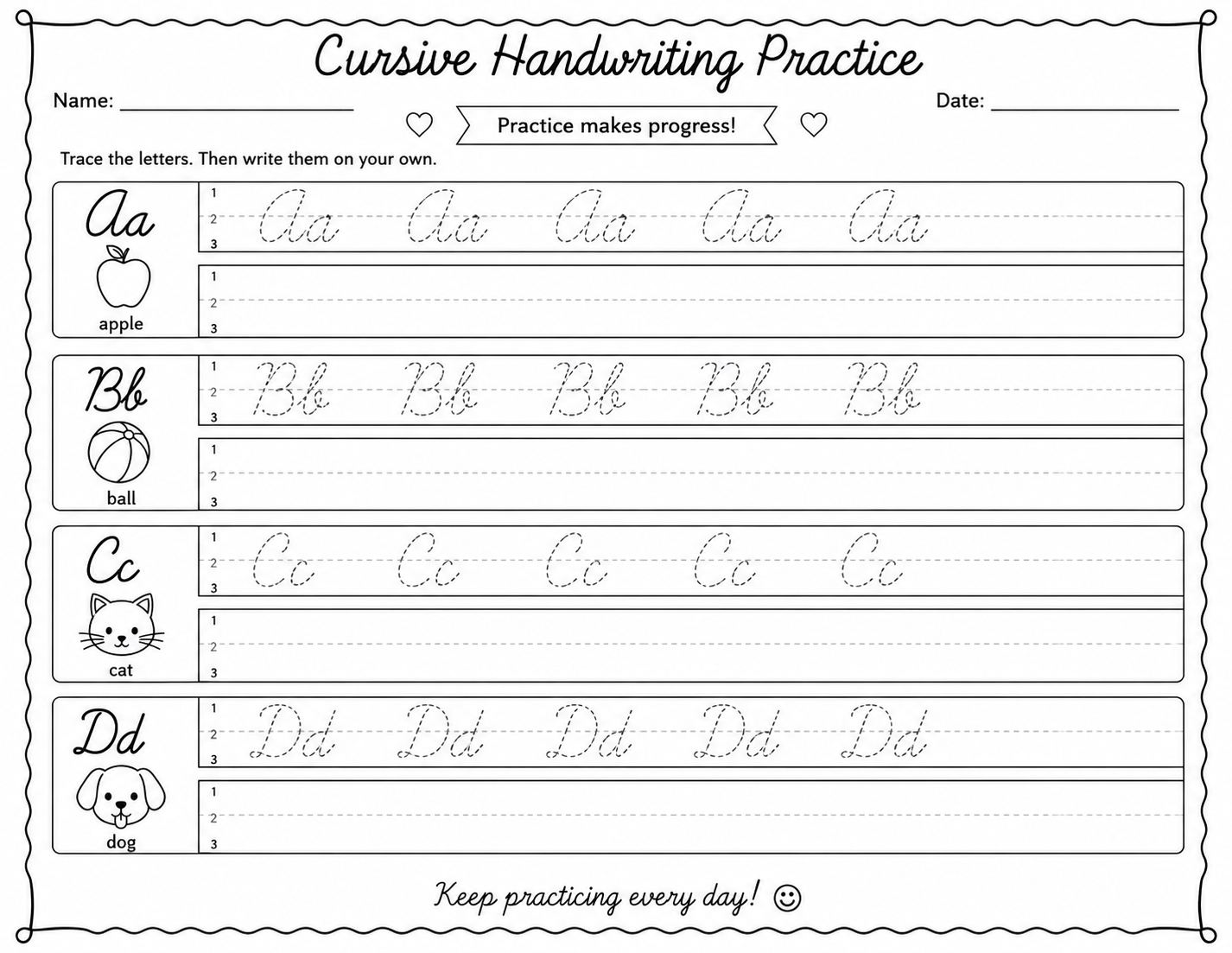
Cursive letter tracing worksheets provide dotted or guided examples that learners can follow with a pencil. After tracing, they can write the same letters without guides.
Connecting Letters
Once individual letters feel familiar, learners can practice connecting letters. These exercises focus on smooth joins, spacing, and consistent strokes.
Words and Sentences
Cursive word practice takes learners beyond single letters. Cursive words worksheets and sentence pages can include simple vocabulary, spelling practice, and short sentences for independent handwriting practice.
Free Cursive Alphabet Worksheets A–Z
Free cursive alphabet worksheets help learners practice cursive letters A to Z step by step. Each page can focus on letter shape, starting points, strokes, and repeated writing practice.
- A–Z practice: Learn each cursive letter in alphabetical order.
- Capital letters: Practice uppercase letters used for names and sentence beginnings.
- Small letters: Build confidence with lowercase cursive letters used in everyday writing.
- Alphabet tracing: Follow guided letters before writing without help.
- Letter formation: Focus on the correct starting point and stroke direction.
- Repeated practice: Write each letter several times to improve control and consistency.
Uppercase Cursive Letters
Uppercase cursive letters need extra practice because their shapes can differ from regular print letters. Use worksheets with clear models and enough writing space.
Lowercase Cursive Letters
Lowercase cursive letters are used frequently in words, so beginners should practice them regularly. Start with tracing, then copy the letters independently as confidence grows.
Cursive Letter Tracing Worksheets
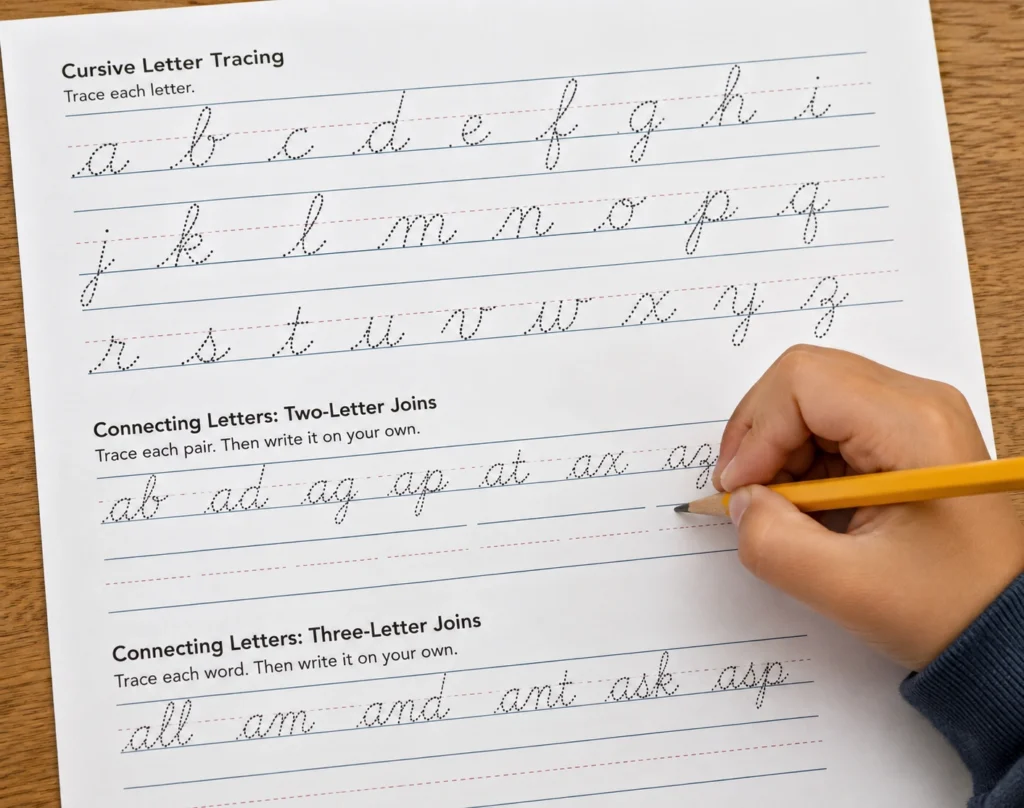
Cursive letter tracing worksheets give beginners a clear starting point for learning letter shapes and strokes. Tracing letters helps children get used to the movement of the pencil before they try writing each letter on their own.
A simple practice routine can include these steps:
- Trace the model: Follow the dotted or guided cursive letter carefully.
- Repeat the letter: Write the same letter several times to remember its shape.
- Write without dots: Try the letter independently after tracing.
- Check size and spacing: Keep letters on the line and leave similar spaces between them.
- Repeat difficult letters: Give extra practice to letters that feel harder to form.
These exercises support alphabet tracing, pencil control, and basic handwriting skills. Beginners can start with individual letters before moving to connected words. Short practice sessions using cursive writing practice sheets can also make it easier to build steady writing habits.
For young learners, tracing should not be rushed. The goal is to follow the correct direction and form each letter carefully. With regular practice, children can gradually move from guided tracing to independent cursive writing.
Cursive Letter Joins and Connecting Letters
Cursive writing becomes easier to read when letters connect in a smooth and consistent way. Cursive letter joins help learners move from single letters to complete words without stopping after every character. Start with simple two-letter joins, then move to three-letter combinations as writing control improves.
Practice simple pairs such as an, in, on, and at, followed by short words such as cat, sun, and red. Focus on how the ending stroke of one letter meets the next. Keep joined letters close together while leaving enough space between separate words.
Cursive connecting letters can feel difficult at first, especially when two letters have different joining points. Encourage learners to keep the pencil moving naturally and repeat difficult combinations. Once basic joins feel comfortable, move from individual letters to short words as the next step in cursive writing practice.
Cursive Words and Sentence Practice
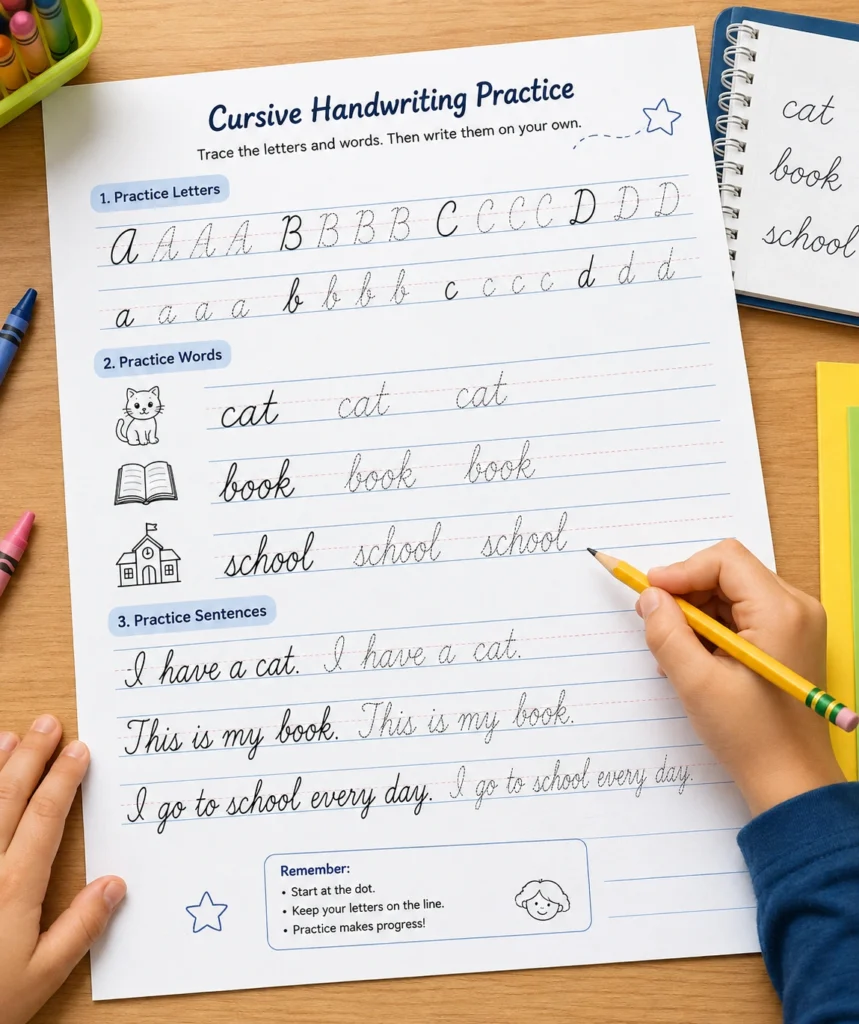
After learning letters and joins, learners can move to cursive word practice. Start with short words such as cat, dog, sun, book, and school, then move to longer words as writing control improves.
Cursive Word Practice
Cursive words worksheets help learners trace, copy, and write words independently. They can also support cursive spelling practice with familiar vocabulary.
Cursive Sentence Writing
Cursive sentence worksheets help learners practice complete sentences such as I like to read and The sun is bright. Focus on word spacing, capital letters, punctuation, neat handwriting, and smooth letter connections.
Cursive Worksheets by Grade Level
Cursive practice can look different at each learning stage. Younger children may need tracing and basic letter strokes, while older students can work on connected words and sentences. Choosing the right level keeps practice simple and manageable.
| Grade / Learner | Recommended Practice | Worksheet Focus |
| Kindergarten | Basic letter shapes | Tracing and letter strokes |
| Grade 1 | Uppercase + lowercase | Letter formation |
| Grade 2 | Letter connections | Joins and simple words |
| Grade 3 | Word practice | Spacing and writing fluency |
| Beginners | Guided tracing | A–Z and basic joins |
| Older students | Independent writing | Words and sentences |
Kindergarten cursive worksheets can focus on tracing and pencil control. First grade cursive worksheets can introduce uppercase and lowercase letters, while 2nd grade cursive worksheets can add joins and simple words. For 3rd grade cursive worksheets, word spacing and writing fluency become more useful.
Beginners can start with guided A–Z practice, while elementary cursive worksheets can gradually move toward independent writing. Teachers and parents can choose cursive worksheets for students based on their current writing skills rather than age alone.
How to Use Printable Cursive Worksheets
Using printable cursive worksheets is simple when practice follows a clear order. Start with basic letters and gradually move toward words and sentences.
- Choose the right level: Pick worksheets that match the learner’s current writing ability.
- Start with tracing: Follow the letter guides to learn the correct shape and stroke direction.
- Practice uppercase and lowercase: Work on capital and small letters separately before combining them.
- Work on letter joins: Practice connecting two or three letters smoothly.
- Move to words: Write short words first, then try longer words as confidence grows.
- Practice sentences: Use short sentences to work on spacing, capitals, and punctuation.
- Repeat difficult letters: Give extra practice to letters or joins that need more attention.
Cursive worksheets to print can be used at home, in class, or during homeschool lessons. After a cursive worksheets download, print several copies for repeated practice. Regular printable handwriting practice can help learners develop better pencil control and more consistent writing habits.
How to Practice Cursive Handwriting at Home
Regular cursive handwriting practice at home can be simple and manageable. Keep sessions around 10–15 minutes so learners can stay focused without getting tired. Use a comfortable pencil grip and place the paper at a slight angle that feels natural for writing. Follow the guide lines to keep letters at a similar height, and pay attention to the space between words.
Don’t rush through the worksheet. Slow, careful writing gives learners more control over each letter stroke. If a particular letter or join feels difficult, repeat it a few more times before moving ahead. Start with tracing and guided examples, then ask the learner to write the same letters and words independently. This gradual practice can help improve pencil control, letter formation, spacing, and overall handwriting skills.
Cursive Worksheets PDF: Print and Practice
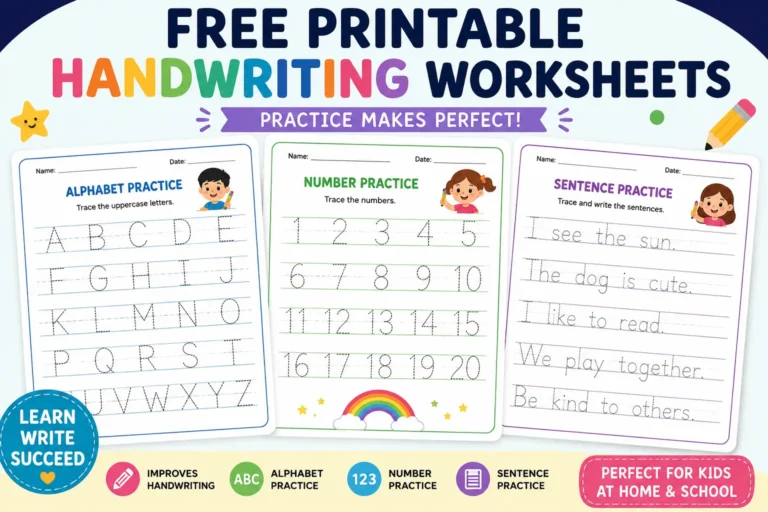
Cursive worksheets PDF pages make it easy to save and print handwriting practice whenever needed. A free cursive worksheets PDF can include alphabet tracing, uppercase and lowercase letters, joins, words, or sentences for different learning levels.
Before printing, check that the page fits your preferred A4 or Letter paper size. Black-and-white printing works well for handwriting sheets and can make it easy to print multiple copies for repeated practice. A cursive writing PDF can be kept in a folder for home practice or used by teachers during classroom activities.
Choose a printable cursive writing PDF with clear letters and enough writing space. Free handwriting worksheets PDF pages are also useful when learners need extra practice with difficult letters, words, or sentences.
Cursive Worksheet Types at a Glance
Different worksheets support different parts of handwriting practice. Beginners can start with alphabet and tracing pages, while learners with more experience can move to joins, words, and sentences.
| Worksheet Type | Best For | Main Skill |
| Alphabet Worksheets | Beginners | A–Z recognition |
| Letter Tracing | Early learners | Letter formation |
| Uppercase Practice | Students | Capital letters |
| Lowercase Practice | Beginners | Small letters |
| Letter Joins | Developing writers | Connecting letters |
| Word Worksheets | Intermediate learners | Word formation |
| Sentence Worksheets | Advanced practice | Writing fluency |
| Blank Practice Pages | Independent writers | Neat handwriting |
Who Can Use Free Cursive Worksheets?
Free cursive worksheets can support different learners, age groups, and teaching settings. The practice level can be adjusted based on writing ability, from simple letter tracing to words and sentences.
Cursive Worksheets for Kids
Cursive worksheets for kids are useful for learning letter shapes, tracing, joins, and basic words. Younger learners can start with large guided letters before moving to independent writing.
Cursive Worksheets for Beginners
Beginners can start with A–Z alphabet practice, lowercase letters, and simple letter connections. Short sessions can make cursive writing for kids easier to manage.
Cursive Worksheets for Parents
Cursive worksheets for parents can be used for home handwriting practice. Parents can print a few pages and give children regular practice with letters, words, and sentences.
Cursive Worksheets for Teachers
Teachers can use cursive worksheets for teachers during classroom writing lessons, extra practice, or individual support. Classroom cursive worksheets can also be useful for small-group activities.
Homeschool and Elementary Students
Homeschool cursive worksheets can fit into regular handwriting lessons, while elementary students can use them to practice spacing, letter formation, and writing fluency.
Frequently Asked Questions
What are cursive worksheets?
Cursive worksheets are practice pages that help learners form letters, connect them, and write words or sentences in cursive handwriting.
Where can I find free cursive worksheets?
You can find free cursive worksheets with A–Z letters, tracing exercises, joins, words, and sentences in printable and PDF formats.
How can I practice cursive writing?
Start with letter tracing, then practice uppercase and lowercase letters. Move to joins, words, and short sentences as your writing improves.
What age should kids learn cursive writing?
Many children begin cursive writing during the elementary school years. The right time depends on their handwriting skills and school curriculum.
Can I print cursive worksheets at home?
Yes. Printable cursive worksheets can be printed on A4 or Letter-size paper for home practice, classroom activities, or homeschool lessons.
Start Your Cursive Writing Practice
Cursive worksheets printable free pages give learners a simple way to practice handwriting from basic letters to complete sentences. Starting with A–Z tracing, then moving to uppercase and lowercase letters, joins, words, and sentences can make practice easier to follow.
Parents, teachers, homeschool learners, and students can choose worksheets based on their current writing level. Printable PDF pages also make it easy to repeat difficult letters and keep regular practice at home or in the classroom. A few focused minutes each day can help learners build better letter formation, spacing, pencil control, and writing fluency.